Monday, April 09, 2012

JM ARCHIVE: WEB SITES: TOM PAINE/ ARTHUR C. CLARKE (1996-1997)

Copy of CEQUEL PLUS1159

All this digital activity led me to join forces with Richard Quarrell and Gordon Adgey to found a web company as a spin-off of Richard’s company Cequel. Hence the name Cequel Plus. Hence the logo: C=+. You can tell Richard was a graphic designer. Out of the maelstrom of projects that circulated round Cequel Plus in those heady digital days I would like to highlight two:

PAINE IN THE NET

CEQUEL PLUS1159

‘Paine in the Net’ was the title of the first proper site for Tom Paine on the internet, which our company built and launched at the Jubilee Room at the House of Commons on July 4th 1996 – the first and possibly only time this great radical and writer had been celebrated in the House. Tony Benn MP was present as was Lewes’ then Conservative MP, the late Tim Rathbone.

It was a truly special affair designed to generate media attention for the site and to link Paine’s ideas and writings with the work of a number of campaigning groups - Charter 88, Liberty, the Campaign for the Freedom of Information and Demos - who were seeking to stimulate debate about democratic values in the digital age.

ARTHUR C. CLARKE

CEQUEL PLUS2160

This review appeared in the Financial Times on 30th June 1997. I got to do a phone interview with the great man when he was at  his home in Sri Lanka. Arthur died less than a year later. See Previous Post: IN MEMORIAM/ARTHUR C. CLARKE

JM ARCHIVE: CONNECTED (1996-1998)

CONNECTED 1115

Following on from my magazine piece, the Daily Telegraph were the first British newspaper to launch a digital supplement, called CONNECTED, to which I contributed the following pieces:

CONNECTED 4118

Illustration: Ivan Allen

April 30th 1996 Centre-page spread cover story:                 Wired Island : The shock waves of the Internet are rippling through local communities as industry, schools and councils join in digital partnership. Opening text mainly on the European Telecities project with a big feature on Brighton with a box on Cambridge

LOVINSCROP

Illustration: Simon Bartram                                                                 June 3rd 1997  Centre-page spread: Digital weapons deployed in war on waste: An ‘efficiency revolution’ is beginning to take root in Western industrial culture. John May talks to Amory Lovins, one of its most resourceful advocates. PREVIOUS POST: Read the whole article here

CONNECTED 6120

Illustration: Laurent at Live & Line                                                   June 11th 1996  Centre-page spread cover story:     The smart money is on plastic: The ‘key to the information age’ or a tool for government control of its citizens? By the millennium, credit card-sized computers may be used in everything from a single European currency to a phone card.

CONNECTED 7121 

CONNECTED 8122

CONNECTED 9123

Photos by Steve Pyke:

A linked series of three interview with Paddy Ashdown for the Liberals, Margaret Beckett for Labour and Lord Cambourne for the Conservatives, published in the issues of  June 25th, July 2nd & July 9th 1996. I asked them all the same basic questions: Do you think there is a new industrial revolution going on? If so, what’s the plan?At that time, The Libs were way ahead in the wired stakes.

imageIllustration: Bill Butcher

August 13th 1996  Centre-page spread: New Points of Reference: The British Library’s role is changing and its new Euston Home will be major centre for digital texts and a focal point for Internet communication. PREVIOUS POST: Read the whole article here

CONNECTED 10124

Illustration: Barbara Bellingham                                                           Nov 5th 1996  Centre-page spread: Countdown to the age of digital TV: BBC Television turned 60 on Saturday – and the end of the medium as we know it is upon us.

CONNECTED 11125

Jan 7th 1997  Centre-page cover story: HAL’s heir – the quest for artificial intelligence: How close are we to building anything like the famous cinematic computer? 


  PREVIOUS POST: Read the whole article here

CONNECTED 12126

Illustration: Computer reconstruction of the public granary at Entella, Sicily.                                                                                                 Oct 14th 1997 Centre-page spread: Digital digs dust down the past: Archaeology is emerging from the shadows. John May reports on new tools that can offer unprecedented insights into ancient life.

CONNECTED 13127

Dec 2nd 1997  Centre-page spread: To boldly plumb the deepest depths: A new type of submersible craft based on the principles of flight may soon help to reveal the secrets of the oceans.

CONNECTED 14128

Dec 9th 1997  Centre-page spread: The big picture is set to get bigger: Widescreen cinema may have as big an impact as the talkies. So what does it offer and how are film companies reacting ?

CONNECTED157

March 5th 1998  Centre spread: World without frontiers: In the realm of electronic communication there are no borders. John May reports on efforts to map man’s new global space.

CONNECTED 15129

April 30th 1998  Cover story: For full text see NEXT POST

JM ARCHIVE: COMPUTER ART (1998)

CONNECTED 15129

This is a reprint of a story from Connected (see Previous Post), published on April 30th 1998 and reprinted here for the first time.

          It was 30 years ago today, computers learnt to play

Thirty years ago, a ground-breaking show about comput­ers and the arts was staged at the Institute of Contemporary Arts (ICA) in London.

Entitled "Cybernetic Serendipity" and orga­nised by Jasia Reichardt, it encom­passed a broad range of work in the fields of pure and applied graphics, electronic music, robotics, choreog­raphy and others.

The exhibition was described as demonstrating "how man can use the computer and new technology to extend his creativity and inventive­ness". In the catalogue Reichardt wrote: "The aim is to present an area of activity which manifests artists' involvement with science, and scien­tists' involvement with the arts; also to show the links between the ran­dom systems employed by artists, composers and poets, and those involved with the making and use of cybernetic devices.''

To this end the exhibition was divided in three main sections: Com­puter-generated graphics, computer-animated films, music composed and played on computers, and computer poems and texts; Cybernetic devices as works of art, cybernetic environ­ments, remote-control robots and painting machines; Machines dem­onstrating the use of computers and an environment dealing with the his­tory of cybernetics.

"Cybernetic Serendipity," wrote Reichardt, "is prematurely optimis­tic. There are no heroic claims to be made because computers have so far neither revolutionised music, nor art, nor poetry, in the same way that they have revolutionised science."

Thirty years later, how far have we come in realising these visions? Is it possible now to make "heroic claims" for a revolution in the arts through computer and communica­tion technologies? Have science and art become more integrated as a result of digital technologies?

CONNECTED 16130

Let's begin on firm ground. We live in a world of computer-generated graphics. The black-and-white pen plotter images and early wire-frame and ray-tracing experiments dis­played at the ICA look primeval today, like paintings from the Las-caux caves of Aquitaine. Movies, television, advertising, games, graphics and art itself are saturated with images either generated or ma­nipulated by computers.

A similar revolution has occurred in the sciences. "Scientific visualisa­tion" using computers has enabled us to model molecular structures, the inside of a thunderstorm, the birth of stars and the destruction of the ozone layer — producing images and ani­mations of great beauty. This inte­gration of science and art, imagina­tion and technology is the most explosive development since the invention of photography and will be just as destabilising.

Photography radicalised painting, relieved it from the burden of just depicting reality and allowed abstraction, cubism, surrealism and other developments to follow. Now photography is being radicalised by digital technology. In the move from film to disk, from chemical to silicon, photography is freed to explore a big­ger canvas. The synergy between photography and computers via scanners and Photoshop has already produced a flood of powerful new images and techniques that stretch and manipulate reality.

What about music? Music compos­ed and played on computers was in its infancy in the Sixties. The first Moogs were finding their way into the hands of rock musicians and clas­sical composers. Now computers and other digital technologies rule music. The pre-Millennium soundtrack is dominated by electronic tones and beats; by digitally enhanced remixes of earlier grooves.

Computer poetry and prose may not have taken off, but the effect of computers on writing of all kinds has been seminal. Not only have millions changed their working practices, moving to word processing as a com­position tool, but developments in multimedia have also highlighted the increasing interest in hypertext and other non-linear narratives. The In­ternet has spurred the development of interactive fiction, with writers all over the world contributing electron­ically to the narrative drive.

Computing has also contributed a heap of new language which is being woven into the fabric of our general language. Email on the Internet is the biggest boom in note and letter writing since the birth of the postal service and the invention of the post­card in the 19th century.

Cinema and TV are facing similar radical change. Rare is the movie that has not been tweaked by com­puters. Digital editing is becoming industry standard, digital cameras will become increasingly common. The whole process — from concep­tion to realisation, from distribution to exhibition — will soon be a contin­uous digital stream. On the content side, we are returning to the grand cinema of spectacle and illusion; moving forward to television that is multi-channel and interactive.

We have moved from cybernetic serendipity to computer creativity and connectedness — for let us not forget that all of the above move­ments and tendencies are reflected and enshrined on the Internet, itself a whole new medium of expression, the bastard offspring of the nuclear bomb, the silicon explosion and the global telephone network.

So, 30 years on, heroic claims are indeed in order. Digital technologies are catalysing, empowering and transforming the business, practice and content of art. Their impact will intensify in the next few years. But one thing has not changed: the atti­tude of the art and educational establishments. Digital art may have taken over in the real world but intellectually and critically it remains to be recognised. (Indeed, they are still arguing over whether photography is art.)

This is not an argument for abandoning the pencil and easel, the chisel and book, nor for abandoning centuries of craft skills and art prac­tices that continue to thrive.

It is rather an argument for expanding our perspective, for understanding how the lives of cre­ative people are being affected by the immersive nature and pervasive spread of digital and technologies, for redefining the role of the artist in a digital world.

FROM THE GENERALIST ARCHIVE

COMPUTER ART2132 COMPUTER ART3133

The original programme for ‘Cybernetic Serendipity’, published in 1968 as a special edition of the magazine Studio International. Price was 25 shillings. Cover design by Franciszka Themerson (in two bits because too big for my scanner)

COMPUTER ART1131

This multi-authored study, ‘Cybernetics, Art and Ideas’ was published in hardback by Studio Vista in 1971. The cover illustration is based on Return to Square B. Computer Technique Group, Tokyo.

According to Wikipedia, Jasia Reichardt (1933- )edited Art News and Review, the weekly paper devoted to the fine arts in the 1950s. She was assistant director at the Institute of Contemporary Arts, London (ICA) 1963-1971, where she organized the exhibit Cybernetic Serendipity and wrote the book of the same name. She served as director of the Whitechapel Art Gallery 1974-1976.

Sunday, April 01, 2012

DIGITIZED: A NEW HISTORY OF THE COMPUTER SCIENCE REVOLUTION

COMPUTER1102

THE GENERALIST has been completely absorbed over the last couple of weeks with this new history of computers – a subject on which I have previous form. We knew about Turing in the 1970s. In the 1980s I worked on a book on computer graphics. In the 1990s I wrote an extensive 12pp piece on the upcoming digital revolution for The Telegraph magazine (1994), set up a web company and researched and wrote a lengthy chronology on ‘The History of Communications: 1749-2001’ for the Arthur C. Clarke website we created, funded by Cable & Wireless. As a result, THE GENERALIST Archive holds an extensive collection of books, magazines, images, videos and ephemera on communications and computing which, as a result of reading this book, I am now cataloguing.

*

‘Digitized’ is a great introductory broad-brushstroke history, from the 1930s to the present day, of the computer science revolution that has fundamentally changed a wide variety of other scientific disciplines and  affected every aspect of our daily lives.

Peter J. Bentley writes; ‘Computer processors and software represent the most complex designs humans have ever created. The science of computers has enabled one of the most extraordinary transformation of our societies in human history.’

The book covers the development of the computer hardware and software, the theories and concepts that lay behind them, and the lives, careers, and thoughts of the pioneering scientists. It documents the birth and growth of the Internet, artificial intelligence (AI) and computer graphics, and charts developments in medical imaging, genetic algorithms, robotics and many other fields and applications.

For me the real revelations were the life and achievements of Claude Shannon – the father of communications, information theory and cryptography – and those of two British pioneers who I was previously unaware of Maurice Wilkes (the father of British computing, both in hardware and software, who died at the age of 97 in 2010) and Peter Kerstein, who played a significant technical and political role in making the Internet a network of networks (and is still working at the Dept of Computer Science at UCL in London).

The author has created a strong narrative that skilfully interweaves pen portraits, technological milestones and  key ideas  -  presented first in a technical/scientific form and then explained using simply expressed metaphoric models understandable by a general reader.

The result is a satisfying and invigorating book, packed with intriguing facts and brain-stirring concepts. It provides a holistic picture of the origins of our digitally connected world. An exciting story, well told.

Digitized by Peter J. Bentley is published by Oxford University Press.

image [According to his author-provided bio on Amazon: Dr. Bentley is a maverick computer scientist known for his creative thinking and high-impact research. For over a decade he has funded his research at UCL through writing popular science books. He also accidentally had a number one best selling iPhone app.]

image

Another popular history of computer science, authored by Ian Watson, is being published by Springer this year. You can read all about it on his blog site: http://universal-machine. blogspot.co.nz/

The lead story on the blog at present is: ‘I’m Getting A Bionic Hand.’

‘I've been keeping this a big secret because it's fairly awesome. I research in artificial intelligence and robotics and have had a research project in development for a while now. It involves replacing my right hand with a robotic bionic hand. Needless to say I've had quite a mission getting this past Auckland University's Human Participants Ethics Committee. They were totally against it for months, but eventually realized that the only way I could develop the capabilities of the robotic hand and its neuro-computing control link was by replacing my own hand, given that I couldn't find any other willing volunteer locally.’

DIGITIZED 2: ALAN TURING YEAR 2012

image

www.turingcentenary.eu/

June 23rd 2012 is the centenary of Alan Turing’s birth in London and a whole calendar of events are being organised and staged [see website above] to celebrate this remarkable man who Nature recently hailed as ‘one of the top scientific minds of all time’. The magazine’s special issue on Turing at 100 (much of which can be read on-line). In the opening essay Tanguy Chouard writes:

'This special issue sweeps through Turing’s innumerable achievements, taking us from his most famous roles – wartime code-breaker and founder of computer science – to his lesser known interests of botany, neural nets, unorganised machines, quantum physics and, well ghosts.’

There is an excellent essay by Andrew Hodges, the author of ‘Alan Turing: The Enigma’ first published in 1983 [a Centennial edition is coming out this year]. It is a widely considered one of great scientific biographies. Hodges maintains a website on Turing here: www.turing.org.uk/

Hodges’ book had a huge role to play in stimulating fresh interest in Turing’s work and revealing the tragedies of his personal life. In the intervening years, his reputation, writes Hodges, has gone from ‘zero to hero’. Yet their remain wrongs to be righted.

Pete J. Bentley begins his book with Turing and his ideas permeate the entire narrative. According to Bentley’s account, in 1952 Turing’s house was burgled. He reported it to the police and the culprit turned out to be a man who Turing had had a gay relationship with. As homosexuality was illegal at that time, Turing was charged and prosecuted for gross indecency. Found guilty, he was offered the option of prison or chemical castration (injection with female hormones). He chose the latter.

Bentley writes ‘It is claimed that Winston Churchill said Turing’s work was the greatest single contribution to victory in the Second World War’. Turing had also been awarded the OBE.  Yet his security clearances were revoked (he’d been working at GCHQ) and, for the rest of his short life, he was scrutinised by the security services.

In 1954, he was discovered dead, with a half-eaten apple by his side that had traces of potassium cyanide on it. Friends, colleagues and family believed his death was accidental; the verdict at the inquest was suicide.

Sir Roger Penrose unveiled a blue plaque in his memory in 1998 and said of him: ‘The central seminal figure in this computer revolution was Alan Turing, whose outstanding originality and vision was what made it possible.’

Subsequently a petition was launched which succeeded in getting the Government to issue an apology. The then Prime Minister Gordon Brown’s message  - published in The Telegraph - said in part:

I am pleased to have the chance to say how deeply sorry I and we all are for what happened to him. Alan and the many thousands of other gay men who were convicted, as he was convicted, under homophobic laws, were treated terribly. Over the years, millions more lived in fear in conviction. I am proud that those days are gone

It concluded:

So on behalf of the British government, and all those who live freely thanks to Alan's work, I am very proud to say: we're sorry. You deserved so much better.


Government rejects a pardon for computer genius Alan Turing 

(The Guardian/The Northern Blog)

The campaign continues

If you are a UK citizen consider signing the e-petition to grant Turing a pardon

http://epetitions.direct.gov.uk/petitions/23526

In the MY HERO feature in the Review section of the Saturday Guardian (12.11.2011), the great children’s writer Alan Garner recalled the stocky jogger who used to go running who was obsessed by mathematics and biology.  He writes:

‘We had one thing in common: a fascination with Disney’s Snow White and the Seven Dwarfs, especially the transformation of the Wicked Queen into the Witch. He used to go over the scene in detail, dwelling on the ambiguity of the apple, red on one side, green on the other, one of which gave death. We had both been traumatised by Walt.’

He concludes; ‘He died of cyanide poisoning. By his body was an apple, partly eaten. The apple was not tested for cyanide. His name was Alan Turing.’


image

During the course of producing these posts it was suggested to me that the Apple logo related to Turing’s death. It appears its origin was rather more prosaic.

According to its graphic designer Rob Janoff, the “bite” in the Apple logo was originally implemented so that people would know that it represented an apple, and not a tomato. It also lent itself to a nerdy play on words (bite/byte), a fitting reference for a tech company. 

          Source: www.edibleapple.com

DIGITISED 3: WILLIAM LATHAM

WILLIAM LATHAM2104

William Latham with Computer Sculptures. 1988

Peter J. Benchley’s book devotes several pages to the work of William Latham. Strangely, I heard about the book from William himself when I bumped into him again - after a gap of some 15 years -  at a recent show in Brighton inspired by Turing, and featuring a variety of science/art works and objects – including contributions from my son Alex May and his partner Anna Dumitriu. Small world.

WILLIAM LATHAM3105

I think the first time I saw William’s work was in a piece he did for the New Scientist [27th January 1990] entitled  ‘Sculptures In The Void’, which was published to coincide with an exhibition of work he had done at the IBM UK Scientific Centre. The show toured Britain at 10 venues from Jan ‘89 to Sept ‘90.           I saw it at the Natural History Museum and most impressive it was – huge framed images plus computers running evolving shapes and forms. This was exciting stuff. Fractals had already jumped out of the scientific press and into the mainstream and William’s work did the same.

WILLIAM LATHAM4106 WILLIAM LATHAM6108 WILLIAM LATHAM8111 WILLIAM LATHAM9112 WILLIAM LATHAM7109 WILLIAM LATHAM7110

Top: British and Japanese exhibition catalogues;                      Centre: ‘Evolutionary Art and Computers’ by Stephen Todd and William Latham  published by Academic Press in 1992; ‘Organic Art’ – A Living Screen Saver and 3D Image Generator. Produced by Computer Artworks and distributed by Warner Interactive Entertainment. 1996                                                                                       Bottom: Invite to Organic Television at London’s Royal Festival Hall (March 1994) – a 34-screen video installation.

Later in the 1990s I and my colleagues had established Cequel Plus (C=+) a web business in London’s Victoria district and it was here that I met William again whom, by this time, was living near me in Ditchling. The result of our conversations was a book proposal  entitled ‘The Mutation Manifesto: ‘The ArtLife and Science of William Latham’ which I pitched in to Thames & Hudson – with no success as it happened. This was the profile attached to the pitch:

Using natural forms as his inspiration, Latham and his computer collaborators have developed software that generates and mutates forms and shapes to create an entire parallel universe of creatures and environments that stretch the imagination and the rules of aesthetics.

Born in 1961, the son of a musician and a molecular chemist, Latham has travelled from a deep fine art background to the worlds of science, fashion, multimedia and computer games.

His academic credentials are impeccable. He was a Ruskin School of Drawing and Fine Art scholar at Oxford University from 1797-82, where he attained both a BFA and MA. He was Henry Moore scholar at the Royal College of Art in London, where he was taught by Eduardo Paolozzi, Keith Critchlow, Paul Huxley and Christopher Frayling. He lectured on graphic design at Middlesex Poly and was a Research Assistant at St Martins.

Latham had by now discovered computers and rediscovered his early love of natural forms. He was able to develop both interests while a Research Fellow at the IBM Scientific Centre at Winchester from 1988-93.

Here, with collaborator Stephen Todd, he was able to realise his personal visions, through the development of powerful computer modelling software, which he then used to create his unique artworks.

During this period he was travelling the world on IBM's money, meeting people like Benoit Mandelbrot (the Godfather of fractal mathematics). Richard Voss (the fractal landscape guru), Bruce Sterling (leading cyberpunk writer) and Richard Dawkins (the leading hard-core Darwinist).

His experiences at IBM led him to develop a business -Computer Artworks Ltd - which works successfully in computer games, multimedia, film and tv graphics and in the fashion and music industries.

Largely ignored by the official art world, Latham's work has nevertheless found a enthusiastic audience amongst scientists and artists who respond to his cybernetic/ organic forms.

Part entrepreneur and businessman, part animator and aesthete, Latham is very much an 'artist' of his time, he says: "I believe the Home Entertainment system will be the conduit of information in the future and art needs to come out of that."

William is currently Professor of Computing at Goldsmith’s, University of London. He is also CEO of Games Audit Ltd, a small company specialising in Project Management and Games Auditing for Banks and Investors. He has an extensive website on his work here.

Monday, March 26, 2012

THE RETURN OF THE 78

This is a post I never expected to write: the return of the 78rpm record. What the heck! The message came from the label TOMPKINS SQUARE, announcing the first of a series of releases in the 78rpm 10inch vinyl format. They are previously unreleased recordings by from Luther Dickinson (North Mississippi Allstars) and Ralph Stanley. A limited edition of 500 copies of each will be launched on Record Store Day 2012.

image

Josh Rosenthal, owner of Tompkins Square comments: “A lot of new turntables play 78’s, and many 78 collectors listen to their records on modern equipment. Tom Waits, Elvis Costello and Nick Lowe have all recently released 78’s. So I thought it would be fun to start a line of them.”

On November 19th, 2009 Preservation Hall Recordings released 504 limited edition hand-numbered 78 rpm vinyl records featuring two tracks by the Preservation Hall Jazz Band with very special guest Tom Waits.  The tracks are “Tootie Ma Was A Big Fine Thing” , and “Corrine Died On The Battlefield’ , originally recorded by Danny Barker in 1947, and considered to be  the earliest known recorded examples of Mardi Gras Indian chants. The tracks are taken from Preservation: An album to benefit Preservation Hall and the Preservation Hall Music Outreach Program (available on CD). Other guest artists include: Richie Havens, Ani DiFranco and Pete Seeger.

THE GENERALIST was fortunate to see The Preservation Hall Jazz Band in Brighton in June 2007, in company of the great maestro of New Orleans music Alan Toussaint [who I interviewed] You can hear the interview on the AUDIO GENERALIST: www.thegeneralist.co.uk See also Previous Posts: New Orleans Preservation Band and New Orleans/Allen Toussaint

image In 2010, Elvis Costello released four tracks from his album ‘National Ransom’ on two limited edition 78rpm discs. The whimsical message on his website still reads as follows:

LUPE-O-TONE: PURVEYORS OF FINE FLAT PHONOGRAPH RECORDS & CYLINDERS SINCE 1913. OUR MOTTO IS “EGO SUM SATUS INFREMO”
LUPE-O-TONE PRESENT 78 RPM DISCS IN FULL LYCANTHROPIC SOUND. TWO VERY LIMITED EDITIONS, JUST TWENTY-FIVE PRESSINGS OF EACH TITLE, NUMBERED AND AUTOGRAPHED BY THE ARTIST
“A SLOW DRAG WITH JOSEPHINE” b/w “YOU HUNG THE MOON”
AND “JIMMIE STANDING IN THE RAIN” b/w “A VOICE IN THE DARK” BY THE LUPOTONIANS WITH VOCAL REFRAIN BY ELVIS COSTELLO


image


The Nick Lowe ‘78, now on Ebay.


Rock ‘n’ roll 78s are a hot, but sometimes overlooked commodity

An extract from a great 2011 article on the website of the excellent Goldmine record-collector’s mag. Read full version here

Today, rock ’n’ roll 78s are among the hottest commodities in the record-collecting world, with any survey of America (or the U.K.’s) most-valued records of the era literally bursting with high-ticket 78s. ..

The reason is that 78s were not built to last. They were manufactured from shellac, a compound derived from a natural resin secreted by the Lac beetle of southeast Asia. This material is extremely durable and was ideal for the 78s’ primary purpose – being rotated at high speeds while a thick steel needle passed over them. Unfortunately, it is also frighteningly brittle. Even with the most stringent precautions, mailing a 78 means taking its life in your hands, while simply transporting one from one room to another can feel like juggling fine crystal. The 78s that today sell for high prices on the collector’s market are not rare because few were made, as is the case with many of the most valuable 45s of the same period. They are rare because few have survived unbroken.


The 78 was developed by Emile Berliner, a German citizen who emigrated to the U.S. in 1870. A pioneer of sound technology, he developed the flat disc technique (to replace the bulky cylinders then in use) during the mid-1880s, unveiling his prototype at the Franklin Institute in 1888. His first discs were etched in zinc using chromic acid; from there he moved to celluloid and rubber before hitting upon shellac in 1891. It is a testament to his foresight that shellac remained the industry standard for the next 50-plus years. (Vinyl began creeping into fashion during the mid-1950s.)

image

Jenny Hammerton - a DJ of 78s - explores why the old discs are still alive and kicking. The 78rpm record lasted longer than any other format. Enrico Caruso recorded on 78s and Beatles records were cut on 78s in India in the late 1960s. And for some the old grooves and the heavy shellac discs are still the best. Record collectors swear the sound quality of 78s has never been surpassed and young aficianados are cutting their new pop songs on 78s. Sound artists and composers meanwhile are drawn to the patina of age that the old records carry in their scratch and hiss and some are making new music out of old noises. In the digital world where music has shrunk to invisible sound files, the wind up gramophone, a metal stylus and a box of heavy aromatic 10 inch discs seem more and more like precious and necessary demonstrations of the reality of things.

Listen to this great programme here

PREVIOUS POSTS:

THE RETURN OF THE 7-INCH SINGLE

THE DEATH OF THE CASSETTE?

CASSETTE REVIVAL

Friday, March 23, 2012

EARTHED: CHINA: THE FIRST GREEN SUPERPOWER?

Winds of change blow through China as spending on renewable energy soars. 

SEE PREVIOUS POSTS:

CHINA KICKS OFF THE GREEN ENERGY, LOW-CARBON ,ENERGY EFFICIENCY, GREEN TRANSPORT REVOLUTION

THE DESERTEC INDUSTRIAL INITIATIVE

OBAMA: GREEN NEW DEAL

GORE WATCH: THE SMART GRID

  • INSIDE DOPE: MAMA COCA

    image

    http://www.mama-coca.de/viewpage.php?page_id=10

    Earlier this month, the Bolivian President Evo Morales once more addressed a UN anti-drugs meeting to try and right a historic wrong.

    Under the 1961 UN Single Convention on Narcotic Drugs, the coca leaf was declared an illegal substance and it called for the elimination of coca-chewing within 25 years of the convention coming into effect in 1964. Some chance.

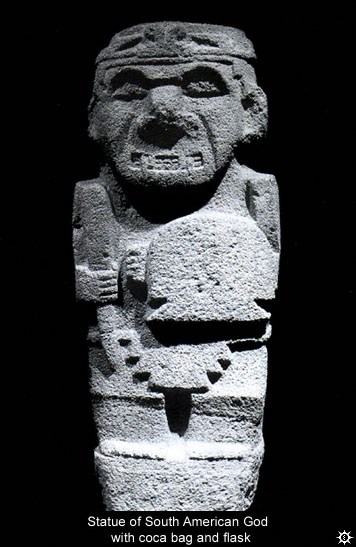
    As Morales points out, the coca leaf has been part of Bolivian culture for thousands of years for sacred, cultural and practical reasons – drinking coca tea helps alleviate the effects of high altitude.

    Coca tea is just one of numerous products made from second-rate leaves, which include sweets, marmalade and soap. Only the best coca leaves are used for chewing.

    Morales was a coca leaf farmer who became leader of the ‘cocalero’ (coca famers) union before being twice voted in as President of Bolivia. It was the first time in the whole history of Latin America that an indigenous candidate became president of a republic.

    According to The Guardian Weekend, in February 2012 ‘The UN’s drugs board slammed Morales for defending coca’s non-narcotic use, saying it went against international drug conventions, and for not doing enough to combat its illegal trade. But Morales maintains he cannot defeat traffickers without a reduction in cocaine use in the west.’ The UN claim that 36,000 tonnes of coca leaf a year are produced in Bolivia by the illegal coca trade to produce cocaine.

    These two videos (with English subtitles) show Morales’ speech at the 52nd session of the Commission on Narcotic Drugs of the High-level Segment/Vienna/March 11-12 2009, during which he pops a coca leaf in his mouth.

    COCA1100

    THE GENERALIST first became aware of coca leaf and it culture thanks to this remarkable book by Antonil. which, for the first time in the West, reported on the ‘war on drugs’ – which was already taking place on the continent. This is a rare signed copy of the first edition, No 86 of a limited edition of 350 copies, published by Practical Paradise COCA2101Publications.  I was given the copy when I went to interview the author in 1981.

    The book’s blurb reads: ‘Being conceived in terms of a quest for the mythological spirit which resides within the coca bush, MAMA COCA is both a searing indictment of the monopolization of the cocaine traffic by the reactionary security forces, and a passionate defence of the habit of chewing coca leaves in their natural unrefined state.’

    The material in the book was collected in Colombia on a two-month trip in 1971 and ‘a longer permanence’ in the Caucau area throughout 1973 and 1974. Antonil is the pen name of Anthony Henman who is still active on this subject and others. Here is a recent photo and an interesting and powerful 2003 interview with him from stopthedrugwar.org.

    Anthony Henman@Hacia un Cambio de Paradigma

    Presentación del informe final de la Comisión Latinoamericana Drogas y Democracia:Hacia un Cambio de Paradigma, Centro de convenciones Colegio Médico. 8 febrero 2010. Foto:Luis Gavancho. http://legalizaperu.wordpress.com/galeria/antony-henman/

    In 1978, Cambridge-educated anthropologist and author Anthony Henman published "Mama Coca," a groundbreaking work of ethnobotanical anthropology that for the first time showed Westerners not only the indigenous coca culture of the Andes but also the beginnings of the politics of coca and cocaine prohibition and how they impacted traditional cultures. Since then, Henman has continued to work as an anthropologist and expert on psychoactive substances in the Western Hemisphere, and was honoured with a keynote address at the Global Social Thematic Forum in Cartagena, Colombia, this week. DRCNet spoke with Henman in Cartagena on Tuesday evening.

    The Week Online: How did you come to write "Mama Coca," and what happened once it was published?

    Anthony Henman: I first came to Colombia in the early 1970s. Things were wide open then; there was an open cannabis market in Bogota, and cocaine was just beginning to appear. At that point, I wasn't really interested in cocaine; I was more of a toker at the time. In 1973, I finished my university studies at Cambridge and was offered a job in Popayan, the regional capital of the traditional coca growing area in Colombia. It was very much a part of the gringo trail at the time, with all kinds of travelling hippies coming through town. There was very good weed, the Colombian red bud. And then there was the very traditional country scene as well.

    I was amazed at peoples' different reactions to the coca leaf. Having lived through all that, and given my interest in the plant and its traditional use, I couldn't ignore what was beginning to happen at the time. That was the first area that set up cocaine processing kitchens, although they produced pounds, not tons. And the cocaine always came out different, sometimes pink, sometimes off-white, which proved that is was coming from a number of small labs, not the monopoly business we have now. Actually, I doubt that even today it is as much a monopoly as portrayed by the media.

    "Mama Coca" was originally conceived as a classic conventional anthropological description of coca use, and cocaine was not originally part of what I had planned. But cocaine was coming on top of the traditional use, and I couldn't ignore it.

    While people were interested in the ethno-botanical stuff, what made "Mama Coca" notorious was that it was the first time anyone got into print with criticisms and allegations against the war on drugs and the drug warriors. There was a chapter in the middle of the book that dealt with that.

    For my efforts, I got harassed by immigration officials for years to come, and in Britain the book was seized by police and the publisher was prosecuted under the Obscene Publications Act. I guess they read the act broadly, since it is supposed to cover works likely to "corrupt or deprave." We got a lot of notoriety in the press, but it didn't do us much good, since all the copies had been seized and were sitting in a warehouse. The prosecution lost the case in 1984, but it still took us nine more months to get the books back, and by then everyone had lost interest.

    It's a good example of how official harassment can be effective even when they don't have a good legal case. It wasn't too good for my career as an author either, because it discouraged British publishers from publishing books about drugs or ever having anything to do with me again.

    image

    SOURCE: mamacoca.org

    WOL: What have you been doing since then?

    Henman: I've done research on lots of other sorts of drugs and drug use. I studied mushrooms in Wales for my doctoral thesis, and I did a lot of work on drug prescribing and needle exchange programs in Liverpool and New York, including a major evaluation of needle exchanges in the late 1990s in New York. It was an annual report for the Department of Health. I've also published a few papers about empowering drug users and their organizations in that context.

    WOL: Are you affiliated with the organization Mama Coca?

    Henman: No. They asked my permission to use the name, and I said of course. We also correspond all the time, but I am not a member.

    WOL: What are you doing these days?

    Henman: I'm working on a research project in Peru on mescaline-containing cacti, specifically the San Pedro. There are three different species of San Pedro, with slight differences among the three. I'm trying to collect as many as I can in their native environments. I am not a chemist, so I try to feel what the difference may be by subjective experimentation. I've tried different ways of preparing it, but it still tastes pretty awful. Still, it is very much the basis of traditional medicine in northern Peru and coastal Peru. It is the basis for divination and curing, but I find the doses they use for those purposes disappointingly small. People feel a little strange, but they don't really trip. The curanderos, however, are a different story; they sip it all day long. It is not discussed as a drug problem; in fact, it is even legal in the US, and you will find it in every garden store that carries cacti, because it is very good for root stock. It spread all around the world as root stock, and that was before anyone knew it contained mescaline.

    My main interest has always been the coca leaf, but while it has interesting botanical, medicinal and ethnographic aspects, it is a subject that is becoming over-determined by the current politics of the cocaine business -- the violence, the corruption, all that -- so it difficult to talk about coca leaves as a traditional path in Colombia. You can do that in Bolivia or Peru, where it is still legal, but here in Colombia, when the public hears coca, it thinks of Pablo Escobar. I find it tedious and tiresome that one cannot talk about the interesting uses of coca in Colombia. This drug prohibition and drug trafficking nightmare will eventually end, or if not, the whole planet will be destroyed by it. I hope drug law reform will end this nightmare and people can get back to understanding these plants as they really are.

    WOL: How do you look at coca?

    Henman: Coca is not just an object for our consumption, but a historical subject in itself. First, we have to erase from our minds the image of the damned leaf. Coca doesn't deserve the sobriquet. It's a plant, and like every other species, it wants to reproduce. It is a hermaphrodite, it is very fertile, and it is chock full of alkaloids. It is a dangerous plant, some say, a liar, a traitor. But I say that this slander of the coca plant is hideously repugnant. After 50 years of war against coca, we have not met one goal of the anti-coca policies. The plant continues to reproduce. Even worse, every time there is a change of ministers, they come out with the same banalities about how they will fight the plant endlessly and how they will win. They can't win, but they always say they are on the verge of winning. A war against coca can never bring anything positive to the planet, despite what they say. We have to change our perspective completely and become at peace with coca as it deserves, for it is a plant with many virtues. Perhaps they can't eradicate coca because the objective is mistaken; perhaps it is because the real objectives of the war on drugs have nothing to do with their declared objectives. But I think this will pass; I can imagine a day when it is cultivated on a legal basis wherever it is advisable.

    This war on coca is violence and killing without end. They say they are doing this killing and poisoning for the good of all. How absurd! It is absurd because what they accomplish is to make coca part of a malignant trade all over the planet. This has people thinking about the legalization of coca. That would be good. It would eliminate the negative aspects, especially the criminal aspect, which, after all, are not part of the coca plant, but part of drug prohibition.

    *

    COCA DRINKS

    image

    This is a coca-based energy drink, launched in Colombia in 2005.

    According to Sibylla Brodzinsky, writing from Bogota for The Guardian [14.12.05]: ‘The drink is the colour of cider, has a tea-like aroma and is described as tasting like a cross between lemonade and ginger ale.’

    According to a 2007 post on the blog Rob’s Place:

    image Colombia’s president Alvaro Uribe.. has now decided to focus on coca products made by the country’s indigenous Indians, the sale of which, outside Indian reservations, will now be banned. The main item affected is , a coca-based energy drink… which has become an alternative to the real thing, aka Coca-Cola among Colombia’s kids. It’s obvious what prompted this new measure: pressure from Coca-Cola. No matter that the US giant itself uses coca in the flavouring for its own fizzy drink (allegedly): the Nasa Indian tribe, who make Coca Sek, are still being told that their brew infringes the 1961 treaty banning the distribution of products with the slightest trace of coca.

    Brodzinsky interviewed Kirsten Watt, a Coca-Cola spokeswoman in Atlanta: ‘As for its ingredients, Coca-Cola was tight lipped. “Cocaine has never been an ingredient,” Ms Watt said, though she declines to say whether cocaine-free coca extract is part of the drink’s secret recipe, as has been widely reported.’

    image

    THE PERUVIAN EQUIVALENT – COCA MAX           www.cocamax.com/

    image

    POSTER SHOWING THE MEDICAL BENEFITS OF COCA

    www.cocamax.com/

    A bottle of newly launched energy drink Coca Brynco on a bed of coca leaves that Bolivians traditionally chew and are an ingredient of cocaine

    BOLIVIA launched their energy drink Coca Brynco in January 2011. According to the Daily Mail:

    ‘It has been hailed by the Bolivian government as an important step in its efforts to promote coca's health benefits and develop legal uses for its leaves.

    ‘Two years ago, another group of Bolivian entrepreneurs launched a coca-based energy drink called Coca Colla but it failed to make an impact.

    ‘But Coca Brynco's production manager, Jhonny Vargas, was optimistic the planned $million (£620,000) investment would pay off.

    'Our aim is to cover the whole of Bolivia and start exporting to neighbouring countries,' he said, adding that the plant would initially use 500lbs of coca leaves per month.’


    PREVIOUS POSTS:

    INSIDE DOPE; DRUG LAWS, DRUG WARS

    INSIDE DOPE; DRUG LAWS, DRUG WARS2

    INSIDE DOPE: DRUG LAWS, DRUG WARS3

    INSIDE DOPE: PABLO ESCOBAR