Saturday, May 07, 2022

RAVING UPON THAMES: AN UNTOLD MUSICAL HISTORY

The Generalist has a great interest in the history of British music and a belief that the true story has not been told or not told properly. This why 'Raving Upon Thames' by Andrew Humphreys - a former Time Out editor  - is so valuable and why its garnered 4 stars from Mojo.

Back in May 6th 2016 I published a post entitled on two books: COUNTERCULTURE UK & THE BRITISH BEAT EXPLOSION. The second publication, edited by J.C.Wheatley was subtitled Rock 'n' Roll Island and was focused on Eel Pie Island in the Thames - one of the hotspots of the music scene in Britain from the 1950s onward. A 160pp paperback with lots of photos it was the first proper account of this place that I had read. 


Andrew Humphreys book is twice the size and focuses not only on the Island but the whole scene around Richmond, the Kingston Art School, the early music festivals and the counter culture  of the town and district in exceptional detail. Two maps on the inside covers of the book give a geographical outline. All quotes are carefully sourced and indexed and must represent years of work methinks.

It is well known that Eric Clapton, Jimmy Page, Pete Townshend and Jeff Beck were all living in the district. This area was the training ground for the Rolling Stones and the starting out showcase point for a wide variety of musicians and musical styles, from Blues, R& B, folk, metal, psychedelia and punk rock, It was bohemian quarter of great importance in the development of  British music, comparable to Soho and Liverpool. Wave after wave of successful bands and musicians passed through and enjoyed the coffee shops, record shops and hang-out places of which only some survive today. Its a grand story, well told. 

 'Raving Upon Thames' has a lot to say about the Yardbirds. In a previous post in April 22nd 2012 THE TOP TOPHAM/JOHN IDAN BAND: THE YARDBIRDS AND BEYOND there is an interview I did with the bands first guitarist Top Topham.

I did take the stage at Eel Pie Island once as a DJ with my brand new copy of Led Zeps first album which had just been released on 31st March 1969. Can't remember the gig.

Andrew is not only the author of the book but is also the publisher as he's set up his own imprint called Paradise Road which aims to publish books about London. Two planned titles are The Marquee Story by Robert Sellers and Nick Pendleton and Denmark Street by Peter Watts. Looking forward to those.  


Thursday, May 05, 2022

FLAMIN' GROOVIES by NICK KENT

This is the Flamin' Groovies playing their first gig in Britain for many years at the Pattern Club in Brighton on May 1st. They played a tight set of sharp songs that hit the spot from note 1. Led by Cyril Jordan's guitar work the band line-up is Chris Von Sneidern (vocals and guitar),Tony Sales (drums) and Arom Ellis (bass) - all fine players with  impressive musical cvs. The last time I'd seen the Flamin' Groovies live was when they played back-up band to Iggy and the Stooges first legendary gig in the UK on July 15th 1972 at the Scala in London. We hung out with them at that time and Cyril remembered those days. I gave him a copy of our underground newspaper Frendz from 23rd June 1972 which features this great piece by Nick Kent published here for the first time since then.
                                                                              *

As I recall it was the second week of July back there in 1970 — prime time for a righteous dose of dem ole Summertime Blues. At that time, Frendz' celebrated rock writer was living in a one-horse town, still picking his nose and possessing a touching appearance of dog-eared innocence which the excesses of Ladbroke Grove were so soon to remove from his benign features. But believe me readers, I was going through the torments of hell. Let me clue you into some of the weights then being forcibly placed on my frail shoulders. My folks were hustling me to get some sort of vocational job. I was sweating and itching a lot and my girlfriend was having a period. Jesus, there wasn't even a good dirty movie on worth going to see. I was somewhat distraught over my circumstances and my condition may well have degenerated even further into the realms of self-abuse or even a possible teenage nervous breakdown were it not for a hot tip given to me by a good friend of mine concerning a piece of black plastic which he claimed could cure all ills and turn frantic desolation into unrelieved ecstasy. This record was 'Flamingo' and had been made by a group with the, uh, shall we say 'unlikely' name of the Flamin’ Groovies.

 Well I sold my Crosby, Stills and Nash albums, trucked on down to the nearest record store which stocked imports, suspiciously surveyed the cover (who were all these ugly mothers in their high fashion psychedelic clothing anyway?) and finally laid out the cash.

I had been informed, by the way, that this album contained the most killer rock n' roll recalling a spirit which had been celebrated before Chuck Berry left Chess to go to Mercury, Jerry Lee Lewis took up with country music and Pete Townsend had started believing he was a genius.

 Well, I got home, put the platter on the player and sat back waiting for the charge. About eight beats through the first number, I got a sinking feeling in my stomach, twelve beats later I almost puked. What is this shit? God, the band sounded like they were working out in a garage somewhere, while the lead singer seemed to have been doing the vocal track while he was f...ing a dog and eating boiled sweets at the same time. It was certainly primal but then so is gorilla fart.

This, of course, was before I had been fully turned on to the deliciously joyful noise of pure punk rock, preferring the more 'civilised' sounds going down and around at that time. However I persevered and by the end of July I had become quite attached to it. By the middle of August, the album was the only thing I ever played. Yes, friends, it took some doing but I had eventually broken down the barriers and turned my back on the flaccid bourgeois 'music' of the 'progressive rock' musician, in order to really get my rocks off from listening to high energy punk consciousness rock-a-boogie.

 The Flamin' Groovies were the acorn gospel and I, in turn, became a fanatical believer. I now recall how my social life was almost completely ruined when, at 'hip, cool' parties, I insisted on subtly slipping in a Groovies album between 'Atom Heart Mother' and Joni Mitchell. This would cause hippies to drop their joints and tear up their kaftans in fits of rage and impotence.

 The answer was simply that they couldn't take it, and many times the Spirit of Woodstock was temporarily destroyed as I was bodily thrown out of their parents' houses. I even started getting a bad reputation as some kind of hoodlum, but by that time, I didn't care.

 I was well stocked with killer records by the Kingsmen, the Seeds, Mitch Ryder and the Detroit Wheels, the Cordettes, Question Mark and the Mysterians — you name it, I was on the look out for it. But my Groovies' albums always took precedence over everything else and I'd play 'Roadhouse' and 'Have you seen my baby?' as a kind of ritual every night before I crashed out.

But enough of this unnecessary banter and down to business The Groovies have since moved over to low-energy complacent old England to become what I hope and am quietly confident over, the ace partying rock n’ roll band that this country has needed for so long. Sort of like the Pink Fairies but without the constrictively tight community thing and a far flashier stage act. To put it simply, the Flamin’ Groovies deliver in no uncertain manner- you wanna hear some hot licks? Well drummer Danny Mihm and bassists George Alexander are the crew to check out. Wanna hear some real neat songs? Well hits just keep on coming when the band starts working out – everything from ‘Roll Over Beethoven’ and 'Nervous Breakdown' to third generation rockers like 'Sweet Jane' and the band's own 'Teenage Head'. Tell ya, if the full force of the Groovies doesn't get you up and jiving, then you'd better check yourself out at a morticians. Call them the best rock n' roll band currently resident in this country if you want to, I won't argue with you, and until Iggy Pop starts showing off his class, and the MC5 prove themselves more together and capable of 'doin' it', than what we had to put up with on their last tour, that's the way it's going to stay.

The Groovies can cut any English band under the impression that they're playing 24 carat rock n' roll to a frazzle. Simple as that. What those greasy rock revival bands who work the circuits in this country can never comprehend is that rock n' roll in its pure '50s form never really died. Sure, it went down a lot of times during the '60s but the energy was always there whatever games we as a generation got ourselves into. Rough diamonds were being produced all down the line, whether they were the Stones' work-outs or those early vital Who tracks or the Kinks, or the Young Rascals and the Velvets in New York City. And now we're thick into the third-generation rock comin' at ya straight from the frayed nerve-ends of the Teenage Wasteland.

What makes the Groovies a vital and exceptional band in this context is their ability to work on the music of all three generations and make everything they do quite believable. The four tracks they have laid down in the studios since they've been here, really show this. 'Talahassie Lassie' ('She my Talahassie Lassie/Down in FLA') which is pure delicious first generation camp, and three original numbers. 

The originals, and all of them are classics, are 'Shake Some Action' which is kinda like second-generation Who, worked with an energy and enthusiasm that the 1972 Who would find hard to muster; 'You To re Me Down' has vocal harmonies somewhere between Lennon and McCartney and the Everley Brothers, a song styled around the kind of stuff the Beatles used to do when they were really a group, a middle break straight out of early Who and lyrics recalling first generation teenage heart-break confessions fodder: the production, as Danny Mihm states, sounds just like 1964 Beatles produced by Phil Spector, but the overall sound is pure Flamin' Groovies, and it's a gas. 

Best of all, though, is 'Slow Death' which is pure lethal third-generation mainline rock. The song's about smack and as such stands right there with Lou Reed's 'I'm Waiting for the Man' and 'Heroin' as the ace song to deal with the subject. Building on one fine, fine riff, the whole thing moves with an urgency akin to some of the better stuff the Stones have just put out. The song was written in Detroit by Jordan and the old vocalist, Roy Loney. 'We'd moved out of 'Frisco because there was nothing happening, and headed over to the Mid-West. When we got there though, we found that everyone was 'jonesed' out. Roy just wrote the lyrics down as a natural reaction to what was going on there.' 'Slow Death' is being released as a single with 'Talahassie Lassie' as the B side. Watch out.

The Groovies, as the Chosen Few, were one of the very original San Francisco bands, along with The Charlatans and the Mystery Trend. Always a freakish band (using the word to recall a time when it really meant something) they found themselves often rejected, as their style of rock n' roll conflicted with the psychedelic music being laid out at the time. "Everyone was taking acid and laying out those long jams and raga solos, and when we came on and played short, straight rock numbers, they'd either think we were a comedy act or else they'd throw things at us." 

The Groovies were one of the prime movers in the whole San Francisco movement, though. They took over the old Fillmore Auditorium after Bill Graham had moved the Fillmore West set-up to the Carousel Ballroom, in order to put on dances which captured the spirit of the original environment. Also they took the weird step of cutting and releasing their first record themselves. The record, an EP entitled 'Sneakers' was recorded and mixed in ten hours. Ten thousand pressings were made and the whole bitch is now a real collector's item. Finally a neat contract was signed with Epic, who paid so much for the actual contract they couldn't afford to give them adequate publicity so, they moved to Kama Sutra, who again left them hamstrung by lack of publicity.

 The critics dug the music though. Guys like Richard Meltzer would turn up to sessions and the band became the all-action partying combo to see. By the time 'Teenage Head', their third and best album so far, was released both Loney the vocalist and Tim Lynch, second lead guitar player, had split. Lynch had been busted for dope, while Loney, originally an actor, had lost interest and had therefore become a pretty uninspiring front man. 

So Jim Farrell, a fine slide player, took over from Lynch (mostly all the guitar playing on 'Teenage Head' is Cyril Jordan's work by the way) and Chris Williams, just 18-years old and the front man for ex-Charlatan Mike Wilhelm's band, Loose Gravel, became the vocalist. Pissed by the lack of action and the apathy of San Francisco, and scared by the zombie-like state of places like Detroit, they decided to get it together to move to England.

 Cyril, easily the leader and decision maker of the band, came ahead to check out the outlets and general potential of the country, liked what he saw and moved the whole shebang to these fine shores. The band then went up to Rockfield to cut some sides produced by Dave Edmunds (who has just released his excellent first album 'Rockpile'), played the Bickershaw Festival, and are now busy or mixing the new sides, drinking and smoking dope and getting ready for the live gigs they are going to be doing towards the end of June.

The Groovies themselves are one of the few real groups I've met. They all live together and drink and socialise together and their personalities seem to complement each other. Danny's the drummer so naturally he's the funny one. George is the bass player so he's sort of quiet but blends in nicely. Jimmy's the second lead guitarist so he looks dedicated and smiles a lot. Chris is the vocalist so he looks kind of moody (he has two front teeth missing which is classy if nothing else) and he went to the same mental hospital as James Taylor (a good conversation topic) and there's Cyril who's the leader and main hustler for the band. Cyril learnt his hustling techniques under the careful tuition of his old buddies Kim Fowley and Rodney Bingenheimer. Together they used to crash Beach Boys and Jan and Dean concerts and get backstage and talk with Brian Wilson (that was before Brian freaked out, by the way).

Cyril is a real rock n' roller who wears mirrored shades and clicks his fingers a lot but if anyone is going to be the superstar it'll be Chris. He's not that strong a vocalist and his moves are derivative, but, like Rick Derringer who took over Johnny Winter's band even when Winter was on the stage, he's got a certain charisma which stems directly from his youth and enthusiasm.

But he's emphatic when he states: "There's only one real superstar in the world, and that's Elvis. Listen, for the last ten years, Elvis has been recording crap and making shitty films, but everyone just dismisses them, y'know, and says — 'Elvis—oh wow! he was great'. Now when someone like McCartney turns out crap, everyone really puts him down but Presley is above everyone, man. He can do anything and people won't condemn him outright."

"What disgusts me about the old rockers is like how they cruise on their reputation. Chuck Berry — I love Chuck Berry — I mean we wouldn't be here right now if it weren't for Chuck Berry and his guitar licks but nowadays he just goes to a gig, picks up with just any band he's given — no rehearsals, nothing — he doesn't even tune his guitar. He goes on and plays this lousy set with this song called 'I want to play with myself' or 'My Ding-a-ling' — it's the old 'Reelin and Rockin' thing y'know — which he plays for about 15 minutes. And the crowd eat it up. God, when I saw him I was puking up backstage. It was disgusting . I mean Bo Diddley is fat and old, y'know, and the Everley Brothers put on this crappy show, but at least they can still sing. But Chuck Berry — and this man is an artist." Ah, what old age and show business can do to an inspired rocker! 

The Groovies are concerned with pulling all the stops out on the track —drawing forth all the innocence and pure teenage excitement the original possessed. And they succeed. No more, no less. Because the band knows exactly what rock n' roll is all about — where it was way back when and where it is now. They're hip to its sense of fun and fully aware of the drive and urgency needed to get behind an inspired performance. And there's nothing artsy-fartsy or pre-conceived about their act.

The band eventually go back into the recording booth to put the finishing touches to the track they're doing tonight, which is 'Talahassie Lassie'. Freddie Cannon, who did the original, has grown a paunch and a goatee, appears occasionally on things like the Dick Clark Show and tries to trade off his lack of talent on his former name-and-intentions — they just wanna play the music they love and make a success of it —and if that sounds corny then it's supposed to. Just pick up on the double-album released by Buddah — 'The Flamin' Groovies which is actually 'Flamingo' and 'Teenage Head' in one package. Put it on with absolutely no expectations whatsoever. You'll only be disappointed. Just let it get to you and then the rush will be all yours. No shit. Hey, and by the way, does anyone know where I can get hold of some old sides by Cannibal and the Headhunters?

Sunday, April 24, 2022

The Return of An African in Greenland


Back in April1983, I travelled to Paris to spend three days with Tété-Michel Kpomassie and his family who made me most welcome. The Sunday Times magazine commissioned me to write a piece on his remarkable book. The piece was rejected at time. You can read it along with a  more detailed account of my trip in the two previous posts on The Generalist in November 2009.

https://hqinfo.blogspot.com/2009/11/archive-african-in-greenland-1.html

https://hqinfo.blogspot.com/2009/11/archive-african-in-greenland-2.htm

Many years later I am delighted to say that his wonderful book with a new Afterword has just been published by Penguin Modern Classics and is now available in eight other languages.

Reading the new material takes me back to how wonderful his writing style is. He has always kept impeccable diaries and the level of detail he brings to his accounts is impressive to say the least. He not only made three further trips to Greenland over the years but also made two epic journeys around Africa ten years apart to 16 countries. His mission was to enable young Africans to learn about Greenland and to open their minds about the outside world.

Monday, April 18, 2022

MIDLIFE: HUMANITY'S SECRET WEAPON

This intense book by psychotherapist Andrew Jamieson arrived in the post unexpectedly, which was handy as I was speaking to several friends who appeared to be grappling with it. Back in the day I myself went through the midlife thing as did the author of this book. His mother had suffered the same but in her 80s which triggered him to write this valuable work. There are so many interesting aspects to this subject that I have ended up taking copious notes

The idea of mid-life crisis has ancient provenance in the Odyssey and many other stories, Most memorably in Dante's Inferno when the traveller says: 'Midway through this life upon which we are bound, I woke to find myself in a dark wood where the right road was wholly lost and gone.' 

The combination of inner demons/outer misfortune are the central difficulties that force an adaptation to take place which releases dormant potentialities leading to 'a deeper sense of meaning and purpose, greater fulfillment, less troubled, a richer engagement with our own true natures and the world around us'

This is a necessary experience in our emotional development. The role of the midlife crisis is a significant part of our evolution as a species.

Only two mammal species have a post-reproductive life that lasts longer than their reproductive life - Killer Whales (Orcas) and Homo Sapiens. The Orca pods are led by very old female whales who know the ways of the ocean.

Freud and Jung met for the first time for Sunday lunch in Vienna in 1907. Both were to suffer a midlife crisis. Their presence and competing ideas permeate this book. 

Freud had built his reputation and a following with his theory of the centrality of the Pleasure Principal (his term for sexuality) in driving our behaviour. To the trauma of his friends and colleagues, he went on to challenge his own theory in 'Beyond The Pleasure Principle' in which he unveiled his Repetition theory. 

He had come to believe that there really does exist in the mind a compulsion to repeat which he now claimed was  more potent that the sex drive. That human beings have an obsessive desire to continue patterns of behaviour that are injurious to them because the 'familiar' is much stronger than the creative and must be preserved at all costs. This is the neurotic dysfunctional response we fall back on when faced with difficult situations. It triggers a regression into infantile behaviour patterns first experienced in childhood  and amplified by the emotional culture of their original family.

Jung had gained success and notoriety in the period 1895-1900 and underwent a gruelling midlife breakdown from1913-1917, a period he wrote about in 'Memories, Dreams and Reflections'. He searched out his earliest memories which proved to be the key to the secret pages of his mind. He realised he had a mother problem - lack of trust and love  - and  insecurity due to his father's unreliability. He turned to nature.

"I happened to myself" he said. He realised he was two very different personalities. The first was for the outer world - school, university and profession. The second was his true self - mysterious, unpredictable, enigmatic. That is why he needed two marriages and two homes. He was a public figure (extrovert) and solitary creative (introvert) - both terms he coined.

He was revived by being put in charge of an internment camp holding 10,000 British prisoners which improved his health and encouraged  him to work on his new theory which was published as 'Psychological Types' in 1921. His concept was called individuation. He believed that at the core of our personalities lies a set of innate potentialities that we are given a lifespan of up to 90 years to discover and express. At some stage we are liberated to be a unique individual in which fundamental aspects of out true nature are consciously present. He likened it to the genetic code in the acorn that has the capacity to transform its tiny form into a mature oak tree.

But this transformation is impeded by the layers of protective defence from early infancy which will deny us contact with and the expression of our authentic individuality. This is a more powerful mechanism than the urge to repeat says Jung. Its the time when the innovative drive to break out of the confines to make its first appearance. This is the experience of the midlife crisis.

Jung believed the purpose of life was to move beyond the endless wheel of repetition into a state of being that takes us into a whole new realm of experience, of inner exploration and self-discovery. Two competing drives in every human psyche is our fate. Always to be both. Our deep desire to remain the same and our unrelenting desire to develop and change. Can we combine to create a unified theory?

So now we come the infant trauma and a small sub organ of the brain which was first discovered by surgeons in the 1500s but we only discovered what role it plays when MRI brain scans identified it in more detail 400 years later. This organ is named Hippocampus which is the Greek word for seahorse because that's what it looks like.

It has many roles but is especially designed of one critical task - to keep the Amygdala under control. This a cluster of almond shaped cells, situated near the  base of the brain. It regulates response to threats. When aroused it becomes disruptive, undisciplined and panic stricken. It releases high-octane adrenalin from the adrenal glands which are situated throughout our body which enables us to run, jump and flee. All the adrenaline is rarely used up and  remains in our bodies where it converts into cortisol which impacts on our serotonin and dopamine levels that provide us with feelings of confidence and contentment. Our feelings of well-being diminish and be replaced by feelings of permanent danger. This is most intense in our early years. This is because the Amygdala is fully developed when the baby is in its 8th month. The Hippocampus takes three years to be effective.

When a baby is born is the most extreme trauma of its life. Just before birth excessive adrenaline from  the amygdala is injected into the brain. This is etched in the unconscious of every individual. The baby is feeling claustrophobic, with near death terror until it is born into blinding light and a sense of release and liberation. 

Early infantile trauma is a crucial field of study. The infant senses it's powerless and vulnerable. If maternal care is withdrawn the adrenalin will fill it with a fear of abandonment. The mid-life crisis offers the opportunity to overcome and repair damage from the primitive agonies during birth or infancy. Jung also wrote about the family shadow we carry around from these early years that needs also be dispelled. There is a whole fascinating  chapter on cases studies of this.

Andrew Jamieson's also provides fascinating stories of the midlife crises of Beethoven, Michelangelo, Tolstoy, two American Presidents - Lincoln and Roosevelt, and the extraordinary lives of George Eliot and Marie Curie.

I was fascinated to learn that Jung had invented the term synchronicity in conjunction with Wolfgang Pauli who was one of the founders of quantum mechanics. Jung also coined the term persona - a compromise between the individual and society as to how a man should be. The presentation of self in everyday life. Psychological clothing. I was also glad to know of the Chinese thought Wu Wei (Let things happen) and Lao Tzu's idea of action through non-action.

In mid-life there is a gap. One life is ending, one life beginning. A critical transformation. A rebirth. Its called a liminality.

The book quotes from 'The Soul' by Francis Newman which reads: 'There are two families of children on this earth - the once born and the twice born'.

This valuable book has opened my mind and understanding to new trains of thought, fresh healing ideas and a radical new view of childbirth. Andrew Jamieson writes in a clear manner and presents complex thoughts in an accessible fashion. This book will help and comfort many and will pay repeated reading.

The book is published in attractive style by Notting Hill Editions


Friday, April 08, 2022

ENDEAVOUR TO RISE


My dear friend Lindsay Rudland has written a wonderful book on her life with another volume to come. She was a nurse for 46 years mainly working in mental health care. Her next book will cover this aspect of her life in more detail. Lindsay is a natural raconteur, unafraid of revealing the most intimate aspects of her personal life which others would blanch at. Her life has been adventurous, risky, full-on and full also of love and care for others. In later life she has found her guru and shares her experiences. Her down-to-earth chatty style is refreshing, entertaining, intelligent, inspiring and very real. I am convinced that this book will encourage women, young and old, to endeavour to rise. Lindsay has found her healing voice and her words and experiences will comfort many women struggling with similar issues. She's passing on the love and enlightenment she's found. She's the real thing. I'm honoured to be your friend.

[Available from Amazon]

Tuesday, February 23, 2021

TRIBUTE TO LAWRENCE FERLINGHETTI


Just heard that Lawrence Ferlinghetti has died at the age of 101. One of the greatest of the Beat poets, creator  and custodian of the City Lights book store. A towering figure whose work will last forever. Almost 20 years ago we managed to get a live internet feed with Ferlinghetti from San Francisco to the Komedia in Brighton. We are hoping to get it up on-line as soon as possible.

SLEEVE NOTES

This CD-Extra you hold in your hand is an audio and video record of a unique Beat webcast, a live performance at City Lights in San Francisco beamed via the internet directly to a live audience at the Komedia in Brighton on May 3rd 2002. 

This webcast was filmed live on DV in San Francisco, encoded and transmitted using RealPlayer software, and sent via the Net to a laptop linked to a data projector. 

For more than four years now in Brighton, England, we have been organising events like these which we call 'The New Beat Experience', multimedia 'happenings' with poetry slammed in amongst, bands, singers, digital lightshows, movies and a cool dj. Inspired by the Beat poets of the '50s and the 'Arts Labs' of the old '60s underground scene, we are keeping the vibe moving into the new millennium. 

Lawrence Ferlinghetti's performance on that night knocked us all on our ass. The intense anticipation had been building all night as we wrestled with the technology at both ends. We had five bands on the bill; four had come and gone before finally the thumbs-up came and there was the Man himself. His magisterial presence, his powerful intonation, his resonant language burst from the screen. It was overwhelming and emotional. 

None of us there will forget it and we are delighted to be able to share the experience with the rest of you out there in beat world. Hope you enjoy the buzz. 

Lawrence Ferlinghetti is one of the most influential  and important poets of the Beat generation. Born March 24th, 1919 in Yonkers, New York, he joined the Navy during the War and was sent to Nagasaki just weeks after the Bomb had been dropped and was also involved in the Normandy D-Day invasion. 

After the war, he studied at the Sorbonne in Paris and, having finished his doctoral dissertation, went to San Francisco in 1951. He and Peter Martin started producing a magazine called 'City Lights' in an office in SF's North Beach, and decided to open a bookshop on the floor below. City Light's Books, the first all-paperback shop in the US when it opened in June 1953,is now world-famous. 

Two years later, Ferlinghetti launched City Lights Books as a publishing company which, in 1956, published 'Howl' by Allen Ginsberg - an event which provoked cries of obscenity, led to his arrest and a landmark First Amendment trial which set an important new legal precedent - allowing the lawful publication of a controversial work if it has redeeming social importance. By 1979, the book had sold 800,000 copies and has been reprinted many times. 

Ferlinghetti's own poetry collection 'A Coney Island of the Mind' was published in 1958 and has since sold nearly one million copies and been translated into nine languages. He continues to write and publish and is now the official Poet Laureate of San Francisco. 

John May 

Just put Lawrence Ferlinghetti in the search box top left for numerous Previous Posts on Ferlinghetti and the Beats.

See great short film here: https://www.nytimes.com/2021/02/23/obituaries/lawrence-ferlinghetti-dead.html?smid=tw-sha


Sunday, December 13, 2020

THE HARRY SMITH B SIDES / DUST TO DIGITAL


Harry Smith is haunting me. A figure of huge fascination. 

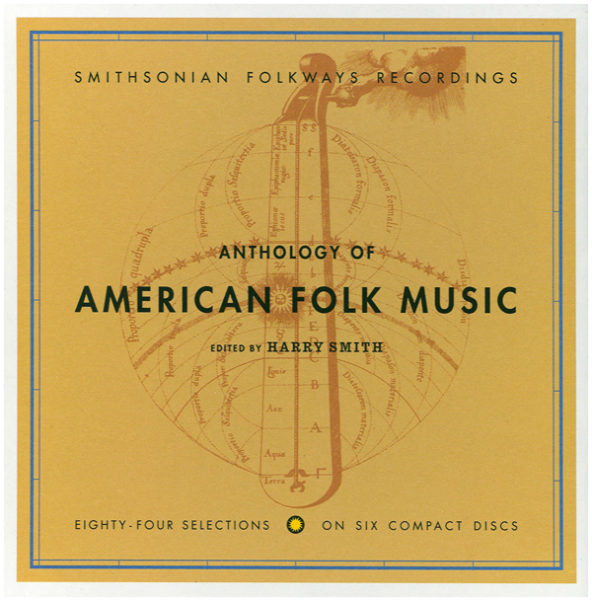
In a Previous Post '10 Album Series: Great Music For Grim Times' I sung the praises of the Anthology of American Folk Music, a six-album compilation on vinyl in three boxes - red, green and blue - issued by Folkways Records in 1952 - comprising 84 American folk, blues and country music recordings that were originally issued from 1926 to 1933 - selected, compiled and sequenced by Harry Smith from his huge personal collection of 78rpm records. The 'Anthology' was re-released on six compact discs by Smithsonian Folkways Recordings on August 19, 1997.

According to the Folkways website: 'The Anthology of American Folk Music, edited by Harry Smith (1923–1991), is one of the most influential releases in the history of recorded sound.... For more than half a century, the collection has profoundly influenced fans, ethnomusicologists, music historians, and cultural critics; it has inspired generations of popular musicians, including Bob Dylan, Joan Baez, Jerry Garcia, and countless others. Many of the songs included in the Anthology have now become classics, as has Harry Smith’s unique "scientific/aesthetic handbook" of song notes and drawings.

Dust-to-Digital is an Atlanta-based label founded by Lance Ledbetter as a direct result of listening to the whole 'Anthology' in one night and being blown away by what he heard.

The company he now runs with his partner April specialises 'in the meticulous resuscitation and repackaging of historical recordings' which has earned them several Grammys


See their astonishing back catalogue of world music, jazz, blues, folk and beyond. 

Their latest release is 'The Harry Smith B-Sides'  - a boxed set containing the flip sides of every '78 Smith used for the 'Anthology'.
 
The Generalist is grateful to April Ledbetter for getting us two of these handsome box sets. The box itself is substantial and the pattern on the box’s cover is a from a linoleum floor tile Harry Smith designed.

The records come with a very well produced 140pp  booklet with interesting essays and details of every track. On the right are the covers of he four compact discs which, when put together, form an original artwork by Smith.

The idea for the project came originally from a record collector named Robert Nobley, who had a legendary reputation of for fixing cracked 78s.He rounded up enough of the tracks  for two CD-R compilations and sold them via mail order. Ledbetter became good friends with Nobley and in 2004 he spent several months trying to find missing tracks with little success. Nobley died in 2005 and the whole project was stalled. 

In 2013 New York folk aficionados Eli Smith and John Cohen (a friend of Smith's who died in 2019) made contact with Ledbetter who was surprised and delighted to learn that they had found all the B-sides and were looking for help to publish and distribute them.

 It took them five years to license the 84 tracks from four companies including Sony and Universal Music Group in order to be able to release the tracks on vinyl and compact disc but not for streaming and downloads. Three tracks were dropped because of racist language which meant three of the four discs had to be re-manufactured.

Amanda Petrusich writes in the New Yorker: 'The “Anthology” is potent mostly because of Smith’s vision—his taste, his aesthetic, his fussy sequencing—which makes a mirror-image compilation of the sides he rejected a novelty of sorts. But I have found it to be just as moving, haunting, and profound as the original. In some cases, the producers were able to acquire cleaner source copies, resulting in especially rich audio.'
*
The Harry Smith B-Sides is a remarkable and important project that adds further layers to our knowledge and understanding of the vernacular music of (mainly)the Southern states. In these dark damp nights, its great to immerse oneself in the intimate past and absorb this powerful music which seeps swirling into your unconscious. It has magic in its nature as did Harry himself - a mystic, an enthnomusicologist, an experimental film maker, a painter, a before-Beat but Be-Bop bohemian. he was always trying to connect everything which is one of the reasons he's close to  my heart. Celestial patterns, languages, knots - all were collected. Connects in my mind with memories of the Ladbroke Grove of yesteryear with John Michell's sacred geometry, John Chesterman's relativistic networks and the Index of Possibilities.  A life-long cannabis smoker who died in 1991 in the Chelsea Hotel, it was great to discover that Harry smoked his first cannabis cigarette during a Woody Guthrie concert in San Francisco. JM
*

You can find out a great deal more about Harry Smith on this great archive site. 

Here are the opening paragraphs:

Harry Smith: An Ethnographic Modernist in America

Harry Smith was an artist who delved into multiple disciplines in a quest to understand the structure and essence of what he considered universal patterns. He looked at the world through the eyes of an ethnographer and cultural anthropologist and had a voracious appetite for information. Eschewing standard ethnographic practices Smith explored both “high” and “low” art forms, mixing the local and the global and recombining these with a hallucinatory notion of “making it new.” For a select few in various disciplines Smith’s work has been recognized as dense, complicated and visionary. But in the years since his death, we have begun to develop a more holistic view of the connections between the various aspects of his artistic output.

Harry Smith was a musicologist, an experimental filmmaker and compiler of folklore; he was also adept as a painter, linguist, anthropologist, and magician. He collected books, records, artefacts, and sound recordings using them as the basis of his works of art, as well as the raw materials for his anthropological and musicological research. His Anthology of American Folk Music was credited as triggering the folk music revival of the 1960s and in the past decades has become the primary and defining document in the alt-country/singer-songwriter movement.

MORE TO FOLLOW/13th Dec 2020

Sunday, November 29, 2020

LIVING WITH TREES: COMMON GROUND and LITTLE TOLLER BOOKS


The Generalist has been aware of and a fan of the work put out by Common Ground since its foundation in 1983. Founded by Sue Clifford, with a background of environmental planning and architecture; Angela King, a former fashion designer in New York. The late Roger Deaking also played a founding role as editor, film maker, writer and musical adviser. They were all involved with Friends of the Earth at one point or other. 

You can recognise a Common Ground publication by its neatness of design. its surefootedness in laying out a cohesive and carefully-planned argument in service of its core values. As the name would suggest, they are interested in community involvement with the local environment, in bringing together people and the natural world, in local distinction.

They use creative projects and artistic and poetical tactics to endear you, to draw you into their vision of a regenerated green world.

Trees have always been  an aspect of nature that they have explored in a series of publication: 'Nutshell (1989), The Community Orchards Handbook  (2204) Arboureal (2006) and two large-format newspaper 'Pulp' (1988) and Leaf (2016-2017)

'Living With Trees' is a good-sized 230pp chunky full-colour paperback which smells sweet and pulls all this previous work together and adds a great deal more. Presented in five main sections - each one made up of connected essays, colour photos, marginal inky illustrations with small pull quotes -  it's highly readable and well-designed.

We begin with history of a our forested land, about historic woods and the fragments of ancient woodland that survive. Only13% of the UK is woodland. We have 16 million conifers and 15m broadleaf trees. Biodiversity has crashed.

'Trees In Our Lives' is focused on the trees in your garden, street and neighbourhood. It's about defending the Urban Forest, about creating tree maps and community tree nurseries.


Next comes 'Among The Trees' which is about art and sculpture, making with wood, Forest Schools and Community Woodlands. 

'Working With Trees' focuses on climate change, tree diseases, forestry practice and restoration, sustainable management, wood recycling.

'Into a Land of Trees' calls for more trees and woods, particularly on farmland, in urban environments and on upland and encourages rewilding.

The book's author Robin Walker is a forester and a writer and the book is right up to date with current issues and movements and our new understanding of the delightfully named Wood Wide Web, the underground network of mycelium that link woods and forests together.


This fine book is published by Little Toller Books  down in Beaminster, Dorset who, by the looks of it, have a wealth of other good-looking books in their catalogue and in their newly-launched  bookshop


Sunday, September 20, 2020

WILLIAM S.BURROUGHS INFLUENCE ON COUNTER CULTURE MUSIC


It's been a long time since there was something to get excited about in the publishing world but the launch of the new White Rabbit  imprint is worth celebrating as it's being run by Lee Brackstone who has already carved out a reputation as one of the best publishers in the business due to his success over many years at Faber where he had a fine list that contained many gems including 'England's Dreaming', the great history of punk by Jon Savage, He writes:

‘I feel blessed to have this opportunity to create what will be a radical and surprising list from scratch in a new environment. I believe we are living through a great moment for music writing, and I intend to build a list that is expansive, experimental and commercially ambitious. I wanted a name that captures a psychedelic sensibility with a literary feel. Alice in Wonderland was the first book I remember reading as a child and Grace Slick is a righteous force in the history of rock n roll. FEED YOUR HEAD!’ 

His launch title is an indication of the kind of quality and originality that Brackstone is seeking. 'William S. Burroughs and the Cult of Rock 'N' Roll by Casey Rae. Judging by his Wikipedia entry, Rae has a wide range of interesting credentials and experience which he brings to bear on this fresh study of Burroughs' effect on the modern music counter-culture.

Casey Rae (born May 23, 1974) is a music business executive, musician and cultural critic, as well as a technology, music industry and media professor. Rae currently serves as Director, Music Licensing for SiriusXM, the North American satellite radio service. He previously held the post of Chief Executive Officer for the Future of Music Coalition, a national nonprofit education, research and advocacy organization for musicians. He is an adjunct professor in Georgetown University's Communications Culture and Technology graduate program and faculty and course author at Berklee College of Music. Rae has written several scholarly articles on matters relating to intellectual property and new digital business models and has testified before Congress on copyright. He has maintained a website, The Contrarian Media, since 2006, which publishes articles on issues ranging from the economics of cultural production to the surveillance state to esoterica. Rae is also the owner-operator of Lux Eterna Records, a Washington, DC-based record label specializing in art-rock, experimental pop and avant-garde music. Over the years, Rae has contributed music criticism to Dusted Magazine, Pitchfork and Signal to Noise. His first book, The Priest They Called Him: William S. Burroughs & The Cult of Rock 'n' Roll is published by University of Texas Press in 2019. A second nonfiction work, Zen of the Dead: The Grateful Dead and the American Pursuit of Enlightenment will be published by Oxford University Press.

The Generalist is of the generation who grew up with Burroughs. My tiny mind was first blown by Naked Lunch and I reviewed Junky and The Wild Boys for the underground press. 


I was fortunate to interview Burroughs for the Sunday Times while having tea with him in the Chelsea Arts Club, when he was promoting The Place of Dead Roads.[See 
https://hqinfo.blogspot.com/2005/06/meeting-with-burroughs-at-chelsea.html] 

Also was at the Final Academy event in London in 1982.

The Generalist Archive contains a respectable mini-library of Burroughs own numerous works which include collections of his letters and some important and substantial biographical material particularly Barry Miles large tome (which doesn't spare the gruesome details), Ted Morgan's Literary Outlaw and Victor Bokris' With William Burroughs: A Report from the Bunker. Rae acknowledges these sources and others which I haven't seen. 

Unmentioned is the wonderful Mentored by a Madman: The William Burroughs Experiment  by A. J. Lees. A world expert on treatments for Parkinson's Disease, Lees has drawn inspiration and insight from Burrough's work in his struggle to understand this debilitating condition. [See https://hqinfo.blogspot.com/2016/05/mentored-by-madman-wiiliam-burroughs.html]


Casey Rae's book is a multi-faceted investigation of great interest which carefully and cleverly sketches out Burrough's main biographical story, his many travels and the evolution of his own work. Highly accessible for a younger audience.

The core of his investigation is, as the title suggests, an analysis of Burroughs' influence on music and musicians. A lesser writer would just have reeled off the endless string of artists who have sought audience with him. 

The book is scattered throughout with names in passing along with more substantial pieces on key individuals including Kurt Cobain, Bob Dylan, Lou Reed, Jimmy Page, David Bowie and Patti Smith. In these cases he also gives us mini- bios which hold interest in their own right.

There is of course the CBGBs crowd in the Bowery coming round for supper in the Bunker: Debbie Harry, Chris Stein, Richard Hell and other punks galore -  Joe Strummer, Black Flag, Damned, Dead Kennedys et al.

Then of course there's Tom Waits (who he collaborated with), brainiacs like Brian Eno and the guys from Devo, Robert Fripp, fellow heroin addict Jerry Garcia, Philip Glass and Laurie Andersen,

We are reminded that he invented the term Heavy Metal,  that Steely Dan was the name of a dildo in Naked Lunch and that The Soft Machine nicked their name from one of his books as did many other bands.

Of course Genesis P.Orridge was one of his greats acolytes. He also resonated with Coil, Ministry, Thurston Moore, the Disposable Heroes of Hiphoprisy. Enough already.

To creative musicians of the '60s and 70s, Burroughs was not only an extraordinary wordsmith but he was also a pioneering explorer of  myriad substances, cults and trains of thought who somehow survived a miraculous amount of dangerous encounters on many levels.

Burroughs whole purpose was to disrupt the Control systems and spread an understanding of the other worlds and realities he spent his life dipping into or inventing. In Tangiers, he absorbed the magic of the musicians of Joujouka - which he described as a 4,000 year old rock band - along with Brian Jones and Ornette Coleman and worked on what became his seminal work 'Naked Lunch'.

*

All the above is of great interest but Casey Rae is a deep diver whose thesis is that Burroughs ideas, concepts, attitudes and imagination have, like a virus, infected not only rock 'n' roll but many other genres of music as well.

This is because Burroughs and Brion Gysin were the inventors and originators of cut-ups in words, sounds and images. Burroughs and his young lover Ian Somerville explored sonic sounds using equipment in Ringo Starr's flat in London when Paul McCartney came round. This was just before Sgt Pepper. Burroughs made it to the cover. Thus his influence stretches out to language (natch), electronics and, in fact, to our modern world. 

Rae writes: 'Burroughs did not live to see the internet become the force for creative, social, economic, cultural and political disruption that it is today but he would no doubt  have recognised it for what it is : a cut-up. 

'He predicted a future where minds would be literally infected by "very small units of sound and image" distributed en masse and electronically.

"What do we call it when one of these "small units" hold brief sway over our consciousness. We say it "went viral". Somewhere in space-time, the old man twists his lips into something resembling a smile'

Casey Rae has the broadband intelligence to present us with a multi-level ground-breaking work that rewards careful study It was Burroughs who said 'The time has come for the line between literature and science, a purely arbitrary line, to be erased'. Rae's insightful investigations reveal a whole new understanding of the one of the 20th century's greatest literary pioneers. A stone cold classic.


Saturday, September 05, 2020

ALTERNATIVE PUBLISHING: BEAT SCENE / BILL BUTLER / STEVE PEREGRINE TOOK


The Generalist blog is riddled with stories about the Beats, who have been an inspiration to me since I was a teenager. I have accrued a substantial library of books, records, videos, posters and Beat memorabilia but my collection, knowledge and understanding is nothing to compare with Kevin Ring's dedication to the Beat Cause. He started producing his magazine 'Beat Scene' in 1988 and it's still riding high and never fails to be interesting. This is a summer 2019 issue, published to mark the 50th anniversary of Kerouac's death.

It's latest form is a chunky  perfect-bound magazine, published four times a year : £8 for a single copy; £30 for four issues. Contact Kevin here: kevbeatscene@gmail.com

Kevin also publishes a substantial series of chapbooks [named  for street literature in the 18th century], limited numbered editions. He was kind enough to send me two gems. The first dates from May 2008 and the Pocket Book series.


'Go' by John Clellon Holmes, first published in 1952 is considered the first Beat novel. I loved it. Holmes and Kerouac met at a party when they were both young. 'Remembering Jack Kerouac' is a little gem, consisting of two lengthy letters, written to Jay Walsh (publisher of a Jack Kerouac newsletter in New York). Two of many. Walsh wanted to know more about Kerouac and Holmes responded with a stream of letters most of which have been long forgotten. In his short intro, Kevin says of these two letters:'Importantly they are from a man who was a longtime friend of Kerouac's who knew him as well as anybody. So many works on Kerouac today are written by people who never knew him, many written by individuals born after he died. Holmes was there, his words are from the source. I love this little book. It brings Kerouac to life.


That is a wonderful aperitif to this long-awaited biography of Bill Butler and the Unicorn Bookshop in Brighton, written by Terry Adams. I have written a couple of detailed posts on Bill and his marvellous bookshop which opened in 1967.

See: https://hqinfo.blogspot.com/2012/05/bill-butler-unicorn-bookshop-better.html

It's where we went to print our own magazine 'Swan' on the Gestetner duplicator, to get Beat books from America, psychedelic posters and to chat with Bill and Mike, one of the first 'out' gay couples in the town.
Bill was a big guy, former US Marine, published poet, publisher and one of the drivers of the underground press and scene.

I was working at Frendz magazine in 1972 when they published a big profile of Bill which Terry refers to. This book is the first substantial biographical profile since.

Bill was a truly great guy who died too young. One of his great mottoes was 'Move The Word'. That's still what it's all about.

There has been a gradual revival of interest in Bill and the shop. The original shop was painted with a mural by John Upton and was repainted a while back, I was asked to give an opening talk.

[See: https://hqinfo.blogspot.com/2017/04/bill-butler-in-brighton-unicorn.html]

I knew Terry had been to the shop in the old days and found out he was also a collector of Unicorn material, including many posters. This book had a very long gestation period and has been a labour of love. Its a run of 125 numbered copies.

Terry sent me an email: 'Knew I'd never be able to do a "Chapter one...Bill was born etc, Chapter two etc etc"...type thing. So just started at a point of interest to me and let it flow(ish). Probably a bit like an evening in the pub telling my favourite Bill / Unicorn anecdotes. I enjoyed doing it over a 10 day period last time I spoke to you, and I guess that's the main thing...plus I have packed a lot in, which is good to get out there.'

Bill was hounded by the police. Terry takes us through the raids and the trials. He gives us a sense of the times, the atmosphere of intimidation. Bill's piratical publishing included work by Kerouac and Dylan, Ballard and Burroughs.This book gives a good feeling of the underground days in Brighton. Could be useful in these virus-ridden times.
Stay cool.

Contact:-
kevbeatscene@gmail.com
£8 including postage.


*

My last post was about Hawkwind and the Ladbroke Grove scene so it's appropriate to thank Fee Warner for sending me  a copy of this tribute to Steve Peregrine Took, one half of the original Tyrannosaurus Rex.

Called 'A Trip Through Ladbroke Grove' The Life and Times of an Underground Hero. Dedicated to the people who loved him, lived with him, worked with him and put up with him.'

I always remember him  with fondness. He was certainly a handful. I once got stuck in a lift with him and Tony Secunda. That's another story. .

It would be fair to say this is not a conventional biography. The layouts are lively all-over-the-place collages of info, photos, drawings, using different coloured inks and typefaces. Why not! It was all a bit crazy back then.

I think it's also fair to say that Fee is on Took's side and feels he hasn't had enough of the limelight. I certainly have enjoyed dipping into this extensive catalogue of incidents from what you could call a colourful life. One of the things she highlights is Took's musical abilities. Turns out he was an accomplished multi-instrumentalist. It is not unusual in the music business to come across highly-talented people who tend to overdo things a bit or a lot. You had to be tough to survive the touring schedules and conditions of the time.

This second edition is revised and no doubt further corrections may be in order (or out of order). My contribution is the Crow cartoon on p58. Not by Barney B but by Edward (Barker). Crows were one off his main signature animals along with curly haired men (vaguely resembling Mick Farren) who looked as if they pissed and out of their heads. I enjoyed making another trip through the Grove in my mind. It's now in the Archive. Gratefully received.


Tuesday, August 18, 2020

HAWKWIND RULES

Who would have thought at the time that such a book would exist.  An encyclopaedic multilevel 500 page volume on the history of Hawkwind which I'm privileged to have a copy of.

It's elegantly produced, finely illustrated (great cover work from John Coulthart) and packed with original interviews and interesting essays not only on the rise of Hawkwind and their long legacy and numerous line-ups but also on the underground culture  and science fiction scene that surrounded them..The limited print run edition has already sold out but a paperback version is due in a while.

We were there in the early '70s in the Ladbroke Grove scene, working on Frendz magazine in our office on Portobello Road. During that early period Hawkwind would assemble there before going down the road to the Mountain Grill for a meal before heading off for the gig. Mike Moorcock was also a regular visitor as he lived down the road at the time he was editing New Worlds'  magazine and was interacting with the band himself, co-writing some of their material. The interviews with Mike are brilliant

When 'Silver Machine' hit the charts, I was briefly recruited  to join Stacia and Renée LeBallister as a dancer on that successful tour. I lasted seven shows before both sides agreed that was enough. I have written before on my links with the band and about my bolero jacket which was specially made for me. I saw their all-night shows with the Pink Fairies at the Seven Sisters Club (also worked on the door), at the first Glastonbury Festival, hung out in their geodesic at Bickershaw Festival in May 1972 and got spiked up by them at a benefit concert they played with Mighty Baby in West London.

My tiny memories are not included in the book (no worries) although a copy of the piece I wrote on Hawkwind for the NME is published under my pen name Dick Tracy.

[You can now see many of my Dick Tracy articles @ generalistarchive.co.uk]


See Previous Posts:

There are three accounts of my Hawkwind connections
https://hqinfo.blogspot.com/2009/02/my-bolero-jacket-1-hawkwind.html

https://hqinfo.blogspot.com/2009/02/my-bolero-jacket-2-beatles.html

http://rockpopfashion.com/blog/?p=133

Wednesday, June 03, 2020

10 ALBUM SERIES:GREAT MUSIC FOR GRIM TIMES

It has passed on now but, for a while, back in the early day of the virus, many of us were encouraged to choose some of our most memorable albums on Facebook. This my selection. Hope you enjoy:

1. Indo-Jazz Suite (1967): First heard when 17 at boarding school, at a time when I was trying to get high by smoking crushed-up joss sticks. I don't remember buying it. It has my name on the back in biro, an upside down pencil drawing of someone's head and the name Jeffries. Suspect he might have lent it me and I never gave it back! This original mono copy is now rare. A treasure.


2. JouJouka: This album is a live recording of the Moroccan group the Master Musicians of Joujouka in performance on 29 July 1968 in the village of Jajouka in Morocco and released on Rolling Stones Records in 1971, It was produced by Brian Jones.

I guess this was my introduction to world music. It opened my ears. I have always loved it and have never been able to listen to it without going into some kind of trance. It's magic music for the soul. You can hear the dogs barking. 
You can listen to the whole album here:   https://www.youtube.com/watch?v=LwEoDGeNyrE


3: Christo Redentor. This glorious completely instrumental album, recorded in Nashville and LA, featuring the top session musicians from both camps, was created and led by young guitarist Harvey Mandel. This ambitious and unusual record, released in 1968, was the theme tune of spring 1969 for me as I recall. I had been working as a trainee librarian in Brighton Public Library since the previous September and was to leave in May. Lunchtime I'd weave my way through the ornate grounds of the Pavilion and down to the Laines where I would hang out in a tiny boutique that played good music. All names escape me at present. This is where i was first captured by the strange cool allure of this wonderful album.The whole is a psychedelic quilt of grooves that have subsequently been sampled heavily, especially the track that always moves me 'Wade In The Water'. I was DJng at that time as Freaky John May and, from then to now, WITW is always the first track I will put on to give the room immediately a warmth and a cool groove that tells you you're in for a good night, So many thoughts and feelings wrapped up in this one. Read more here: http://therisingstorm.net/harvey-mandel-cristo-redentor/


4. Anthology of American Folk Music
It is my great pleasure to introduce you to what is considered one of the most influential releases in the history of recorded sound. In 1952, this 3-album compilation of what Greil Marcus later dubbed 'old weird American music' brought unknown music from the '20s and '30s into the modern limelight. It was put together by the remarkable Harry Smith a genius beatnik outsider, multi-talented and scholarly, who was an avid collector of '78s. When his money ran short, he tried to sell the cream of his collection to Folkway Records. Instead they suggested he produce this marvellous compilation which they released on the new-fangled LP format. The Anthology has profoundly inspired and influenced Dylan and generations of popular musicians. These songs lie at the roots of American music. They are moving, inspiring, chilling, powerful. This record is not cheap but it's the best money I've ever spent. It will blow your mind. Read more about Harry here:   https://en.wikipedia.org/wiki/Harry_Everett_Smith…
Also fabulous is the DVD of 'The Harry Smith Project Live', a series of three five-hour concerts in London New York and LA in 1999 and 2000, staged and produced by Hal Wilmer and Nick Cave, in which modern day musicians perform some of the albums' highlights. Involved were Lou Reed, Elvis Costello, Beck, David Johansen of the New York Dolls, Philip Glass and many others. Its brilliant. Read more here: https://pitchfork.com/…/albums/9587-the-harry-smith-project/

 5. The Rock Machine Turns You On.
This album did what the title promised. It turned me on to a whole lot of stuff. The first budget sampler album from a mainstream record company, released in 1968, 

It features Bob Dylan, Moby Grape, Spirit, The United States of America, The Zombies, The Peanut Butter Conspiracy, Leonard Cohen, Blood, Sweat and Tears, The Byrds, Simon & Garfunkel, Taj Mahal, The Electric Flag, Roy Harper, Tim Rose, Elmer Gantry's Velvet Opera. Still sounds great.


6. Will the Circle be Unbroken
This is truly a remarkable record. I am not a huge country fan but this is something else. Firstly its a three album set. You don't come across those often. Its also a kind of summit meeting of the two cultures: the straights and the freaks. The brain child of Bill McEuen, the manager of the long-hair Nitty Gritty Dirt Band, he decided that he wanted the band to record a three-disc acoustic set in Nashville with the country performers he most admired. First he got Roy Acuff (who had sold more than 25 million records) and his prestige persuaded other country greats to join in the project. These include Maybelle Carter, Earl Scruggs and brothers Kirby, Randy and and Gary, Merle Travis, Doc Watson and some wonderful Nashville sidemen. This is finger picking and fiddling at its highest level, beautiful and extraordinary playing in fact and also some great down-home chat in-between tracks. This album is rare and pricey but have just discovered a very affordable upgraded version on CD with extra tracks. In addition, there are albums 2 and 3 plus a 'Will the Circle be Unbroken Farther Along' (2003) all of which I'm itching to listen to. Enjoy.

7. Farewell Aldebaran.
It's time to go out there where this album lives. Forget trying to classify it. I have had three copies of this gem in my life so far. I lost the first vinyl somewhere, bought the second off a strange guy in Shepherd's Bush and lost that somewhere else. Many years later, got the re-issue CD which kept disappearing into my stacks. Suddenly it turned up again.
So there's Judy Henske and Jerry Yester, experienced singer/songwriters. They had a baby in Jan '68 and decided to decamp from Greenwich Village to the San Fernando Valley where this album was written during the Year of Revolution. Spring of '69 they signed to Zappa's label Straight Records and recorded it in Sunwest Studios in Hollywood..
Jerry had been in the Loving Spoonful and he arranged and co-produced it with Zal Yanovsky from that same band. Judy Henske, dubbed "Queen of the Beatniks", came from a family of poets. Her magical imaginings conjured up remarkable unexpected lyrics which she sang with her incredibly powerful and haunting voice,honed in nightclubs and late-night dives.
The outcome is poetically described by the Liner Notes writer Barry Alfonso as being 'A gorgeous blossom of exotic folk-pop...Snarling rockers, Genteel Ballads and Gothic mood pieces'. It's a stone cold cult classic which fascinates and compels me still with its strange swirling moods and styles.My advice is don't try and resist. Just give in to it.
[The re-release CD from Omnivore Recordings is beautifully put together with a great booklet with all the lyrics and there's five instrumental demos as extra tracks]

8. Songs To A Seagull: This holds a special place in my heart. It was in the window of a record store in Brighton. I came back at lunchtime and bought it. First thing: It's a heavy cardboard sleeved edition for distribution in Canada! Rare. Second thing: The cover painting by Joni is is exquisite and I love the fact that, in the picture, the name of the album is made up of birds. Wikipedia has just informed me that there was printing error which explains why part of the title is cut off.
Also learnt that in the track title 'Sisotowbell Lane', the name stands for "Somehow, in spite of trouble, ours will be ever lasting love"
The very next day after this purchase I came down with heavy flu that kept me in bed for several days. At that time I had a beautiful old-school record player on a little table right next to the bed. In a delirium I listened to this album again and again and again and again. It was so different and so inspiring and filled my head full of visions. I have loved Joni ever since like millions of others for her wonderful artwork and her rapturous songs which are imprinted on my consciousness.
Produced by David Crosby with Steven Stills on bass, the album was recorded in 1967 at Sunset Sound and released in March 1968 by record label Reprise. Joni was hanging out with Crosby at the time and later with Graham Nash.
Before the album Mitchell had already written songs that were hits for other artists - ”Both Sides Now" and "Chelsea Morning" for Judy Collins, "Eastern Rain" for Fairport Convention and "Urge for Going", "The Circle Game" and "Tin Angel" for Tom Rush - but she chose to record none of them for her debut. [https://www.discogs.com/master/220439?filter=true]
'Mitchell was "discovered" c. 1968 when ex-Byrd David Crosby pulled up in a sailboat outside the Florida club she was playing and took her to L.A. At the time, folk was out of fashion yet Mitchell managed to pull down an unprecedented major label deal for a girl and her guitar: total and complete artistic freedom, with the caveat that Crosby would produce her first album. It was rare for a woman to be writing and recording her own material at the time, let alone to be an unaccompanied solo act.' 'https://pitchfork.com/…/…/17269-the-studio-albums-1968-1979/


9. East-West.
Back in the day I really dug the Butterfield Blues Band and particularly this remarkable album which blew minds back then and still does the business now.
What makes it extra special for me is the fact that the BBB actually played live in the Town Hall in Lewes on Saturday 19th November 1966, their last ever gig in Britain and I have a copy of the poster signed by the band to prove it. 
They came over to promote this album on a Georgie Fame package tour and afterwards played a number of London gigs, including Eel Pie Island, and hung out with Eric Clapton and the Cream. Why they made Lewes their final gig is an intriguing question.

For reasons too lengthy to explain, last Xmas and New Year I became fixated with this fantastic Chicago blues outfit and ended up buying numerous albums, two documentaries and a massive biography. What makes them and this album so great?
This band is special, Paul Butterfield was and is regarded as one of the greatest harp players, white or black. Michael Bloomfield is similarly considered to be one of the great guitarists. That's what Eric Clapton and Bob Dylan thought. Elvin Bishop, the other guitarist, grew up in this band and is also highly rated and admired. MIke Naftalin is cool and hot on organ and piano, and, in the engine room, Jerome Arnold on bass and Billy Davenport on drums, lured away from Muddy Waters' band, are driving those beats. This was one of the early mixed race bands, kicking off in the middle of the Civil Rights movement, in Chicago, a hotbed of unrest.
The album is a joy and is doubly interesting because of the 13:10 minute title track - featuring extended soloing by Butterfield, Bloomfield and Bishop - which explores Eastern influences and intertwines them with the blues - a pioneering recording. At their height and in concert, the band were known to improvise on this for up to 45 minutes. Enjoy.

10. Another side of Bob Dylan.
It was inevitable in an exercise like this that Bob Dylan would appear somewhere in the ratings. This particular album had a stunning affect on me because it came out in 1964 when I was 14 and, more importantly, I had just got my first guitar (thanks mum). Mine was a musical family. My mum was a singer and my dad was a choir master and organist. I had a strong voice and a passion for music and an ambition to try and write my own songs.
This album completely floored me with its remarkable, powerful and unusual songs, many of which I learnt to sing and play. In addition, the back cover was covered in poetry, another thing I was dabbling with myself. At the time it stopped me in my tracks. I thought I'd never be able to match this strange eloquence and style which seemed to open doors that I didn't even knew existed.
As things have turned out, I have continued to play and sing to this day. I happily made up songs after a few drinks at parties but they just flew out the kitchen window and for many years I never wrote anything down. It was only when I formed my own proper band BOHO in 1999 that I began songwriting in earnest and have now got some tunes to my credit that I am pleased and proud about.
Strangely, in later years, I met and interviewed Ramblin Jack Elliott                 https://www.telegraph.co.uk/…/music/3…/Woody-Bob-and-me.html

I discovered a set of Dylan previously unseen pictures by Douglas R. Gilbert from exactly the time in Woodstock when Dylan had just finished the album. One photo even shows him typing the poems for the back cover. This resulted in a book 'Forever Young' in which I am credited. You can read the full story here: https://hqinfo.blogspot.com/2005/09/lost-dylan-photos.html