The other sections are Dear Directors with 6 essays, Thoughts on Form, with 10 Essays and the World of Cinema with13 Essays.
He says he not great at words and, in an essay called 'Visual Thinking' he says he runs videos in his head,
An alternative news and ideas channel on art, science, culture, politics and the environment, by freelance journalist, magazine editor and author John May.
In the 60s Worthing was a good place for music. It had a large Assembly Room and a Pier Pavilion which promoters would hire to put on bands of all descriptions. Here's some examples: Cream, The Who, The Byrds from California, The Jeff Beck group, Small Faces, Black Sabbath, Fleetwood Mac. Underground groups from London like the Edgar Broughton band and Mott the Hoople.
We formed a group called the Worthing Workshop and started putting on our own events at these and other venues in pubs and clubs. Nightime 'meeps' on the downs with LSD. Free festivals in the park in the town. We hooked up with the art school and put on Hawkwind. We set up a short-lived folk-club in a bar near the station. It was opened by Shirley Collins, now widely regarded as the Queen of British Folk.
Several of us were to move into the music business in some way or other principally Ian Grant and Alan Edwards who at various times worked together to stage and promote bands such as Big Country and the Stranglers.
At the age of 20 Alan had returned from a trip to the hippie trail and discovered the London punk scene, cut his journalistic teeth on the music paper 'Sounds' and developed his skills by establishing a public relations agency called the Outside Organisation.
This book catalogues his remarkable career in the celebrity entertainment world of music and sport. His closest contact was David Bowie who he collaborated with for thirty years. Mick and Keith of the Stones also used his skills as did the Spice Girls
Alan is a grand storyteller and his knowledge, tactics and experience have made him a number one entertainment PR. Good going man!
Ian went on to handle many bands with great success. I worked on the underground press, the NME and many other projects including an official portrait of Big Country entitled 'A Certain Chemistry'. I continue to enjoy recalling those younger days and caring for my archive of memories.
The back blurb reads: 'In 1987, GUN N' ROSES blasted their way out of the ruins of the Los Angeles Heavy Metal Scene - and announced to the world that they were the future of rock 'n' roll.
'Fifteen million copies of their first album, and half a decade of sex and drugs later, no other band can match them for excitement...energy...controversy...or excess.'
The story begins with Axl's slagging off his own band in front of 83,000 people in the autumn of 1989 and using racist and offensive language. Rumours had gone round that the Guns would be opening for the Rolling Stones USA tour. In the end they played only four Los Angeles dates. The contrast between the two bands is carefully studied throughout.
This remarkable book not only provides a close-up picture of the band members and their full-on sex and drugs habits but also brings to life their battles against the music business. Sugerman also makes comparisons with poets from the past like Shelley who was an opium addict. How drugs like heroin in music began with jazz. He delves into the origins of music and recognises that rock stars have links with the shaman of the past. His detailed interviews brings the band's characters to life. Surely this is one of the greatest music books about one of the greatest bands of our time who are always on the edge, right where they belong.
[See my earlier review of Sugerman's 'Wonderland Avenue']
No wonder he was asked by band and family to write the authorised biography of the remarkable and much loved Charlie Watts, who passed away at the age of 80 on the 24th August 2021. He missed only one Stones' performance in 57 years.
Sexton has cleverly and carefully weaved a complex tale of the working life of the Stones. . Over the years the band has become a huge operation capable of handling remarkable tours across large parts of the globe, entertaining vast crowds of hundreds and thousands in colossal venues or open air festivals. Who can forget it when the band finally took over Cuba.
Behind the band and the band's story is Charlie Watts who, by all accounts, is considered to be one one of the greatest drummers of modern times. not something that he would say of himself,
Just listen to any Stones track and you'll hear Charlies' perfect grooves which were vital to Keith and Mick. He was the rock of the Rolling Stones.
By all accounts he was very polite and modest. His quiet nature was highly valued.
It is better known to many that Charlie was one of the world's best dressers with a huge collection of carefully selected suits, shirts and shoes from the leading brands around the world.
Charlie was also well known as a huge collector of many objects and things. He was very generous to his friends and families.
When he did travel he did drawings of every hotel room he slept in.
When the Stones started doing bigger venues he used in artistic abilities to help decide the designs, and backdrops. A man of great taste.
In the spare time in-between The Stones fixtures Charlie developed a wide variety of Jazz ensembles who also travelled extensively and produced many albums.
CHARLIE IN LEWES
I have a personal interest in Paul’s excellent book as I have been a Lewesian since 1985. Charlie and his wife Shirley enjoyed two years in Lewes [1965-1967].
I am very pleased that Paul has included some material from two editions of my successful but short-lived local paper the Lewes Musical Express which documented the town’s musical history and current musical events of the time. I hope he does not mind me adding some reciprocating quotes.
‘In June 1965 the Watts were ‘thinking of buying the 16th C Old Brewery House in Southover Street. Lewes. The manor house had survived when the Verral & Sons brewery buildings were demolished in 1905.
‘It was exactly what they wanted in an East Sussex town far removed from the Wild West End (and indeed from the Wild West of London)’.
‘They made an immediate offer, moved in by October. Shirley began her long passion of breeding horses. ‘Charley spent much of his time rummaging in antique shops in Lewes and Brighton.
Paul mentions Charlie doing a BBC interview in 1966 on a bench outside the house
‘In 1967 they moved to the village of Halland, 7 miles north-east of Lewes, into Peckhams, a centuries-old manor house that NME’s Keith Altham says was once used by the 1st Archbishop of Canterbury.
‘He told Keith “It’s a very old town, the County seat of Sussex and its being overrun. I don’t like the houses in suburbia. I wouldn’t live in one for free.”
‘Charlie bought Peckhams from Lord Shawcross, a former Attorney General for England and Wales. Here they had room to indulge Charlie’s almost compulsive tendencies as a collector. Paul writes that at that time they had three Collies, one donkey and a racehorse.
‘They also bought a farm in France where they lived between tours and recordings. They were required to return To Peckhams after a burglary of antique guns and American Civil War relics.
‘In 1976 they moved to Foscombe House in Gloucestershire.
Paul writes: ‘While resident in E.Sussex and ever neighbourly to those who respected his boundaries, Charlie befriended Norman Ashdown who staged concerts in the area.’
Norman’s son Michael who I interviewed for the Lewes Musical Express said
“ I don’t know how it started but they were big mates and certainly in first name terms. I know dad used to consult quite a bit and Charlie would give him information about producers, managers and agents – who to avoid as well as who to go with and suggest people that were reliable. He’s got a lot to say about Charlie Watts.”
“ On Friday Dec 15th 1967 Norman staged a concert by the Alan Price Set.’ Michael told me “One of the reasons Dad wanted them was quite self- indulgent because he was a great fan of Alan Price. Charlie Watts was there. I remember him coming in with a bottle of scotch and going in the dressing room”
Paul’s book refers to in an interview by the NME: that night.
“I’ve got time to do things that I’ve never been able to do before..I’ve swept in and out of dressing rooms with Rolling Stones. Now I am able to talk to people like Alan and just listen to the band. He was very good. I really enjoyed that evening.”
Paul then refers to the Lewes Musical Express and another example of Charles’s obliging nature. “He was often driven round Lewes by the horse-loving father of Doug Saunders, the guitarist/vocalist with the late 70s Mod revival band The Lambrettas”
“ When I was a kid,” said Doug, “I used to get taken to one of their houses, either the one by The Swan or the bigger place at the end of the Broyle at Halland. I knew he was a pretty big star and thought it weird that he was so very ordinary and was making a cup of tea for us. I’ve got a shirt which Charles got from Mick Jagger and which, for some reason, he gave to my dad.”
Paul writes: ‘The Summer of Love drew to a close. Charlie was on amusing form with the Melody Maker about its presence in his neighbourhood.
“ When Flower Power started it was probably fantastic” he mused. “But now it has now become a funny word like rock’n’roll. There is even a shop in Lewes which has got “Herrings are Flower Power” written up in white stuff on the window. I suppose they’ll have “Sprats are LSD next.”
********************************************************************
My archive is stuffed with a cornucopia of Beat literature and music history books and drug material but this book had missed my notice. I have spent the last couple of months off and on absorbed in its world.
Danny Sugerman's autobiography Wonderland Avenue /Tale of Glamour & Excess was followed by several books about Jim Morrison and the Doors, including No One Here Gets Out Alive (co-authored with Jerry Hopkin) and The Doors: The Illustrated History]
The cover notes of the Morrow edition reads as follows:
Danny Sugarman had it all: a gorgeous house in Laurel Canyon, all the money, drugs, fast cars and pretty girls a young man could want. He was a success in the record business and he had been as close to Jim Morrison and the Doors as you could get without being a member of the band - until Morrison died and Sugerman had to continue all alone. Wonderland Avenue is the story of how Danny lost everything and ended up in a mental ward with a $400-a- day heroin habit.
Praise for the book:
"Jim Morrison comes back to life in this hard-hitting, unique, and bizarre account of Danny Sugerman's coming of age in L.A. in the sixties" - OLIVER STONE
" This wonderful book is just like the fast-lane scene it d scribes - big bawling, excessive, scandalous, irreverent, entertaining, and scary - Wonderland Avenues is absolutely fascinating" - TIMOTHY LEARY
'Reality beats fiction with maniacal laughter and crazy crying on Wonderland Avenue. This book is a black diamond reflecting the high life and low life of siren-soaked Hollywood nights and scalding Los Angeles mornings." - MICHAEL McCLURE
" Danny Sugarman spent his youth in Hollywood's rock and roll fast lane, following the example of his mentor and idol Jim Morrison. Although he crashed at age twenty-one, Sugarman ultimately survived and has given us this savagely engrossing account of his wild misadventures. Wonderland Avenue shatters the myth of the glamour of hard drugs and Hard living. a most entertaining and Informative book." - WILLIAM BURROUGHS
![]() |
Daniel Stephen Sugerman (October 11, 1954 – January 5, 2005)
He began working with the Doors answering their fan mail at the age of 12 years old, Five years later, following the death of Jim Morrison in July 1971 he took over as the Doors' manager and then to manage Ray Manzarek's solo career and first album.
He was also Iggy Pop's manager for a while before their drug and alcohol addictions meant they both ended up in a mental hospital.
Later Sugarman managed The Joneses a L.A based glam/punk band, founded by Jeff Drake, who supplied them both with high quality heroin.
He had appeared to go out of his way to appear visually like Jim Morrison. Same type of haircut, similar clothing. The similarity was uncanny.
Sugerman died in Los Angeles, from Lung Cancer.
“He was a fine, good and decent man,” Doors keyboardist Ray Manzarek told Rolling Stone. “Smart as a whip with a very high I.Q. He was my great friend. I’ve known him since he was fourteen years old, and he gradually developed into one of the new breed of Jewish American Buddhists. His heart was in the heavens and he is now in the light with the Buddha and Jim Morrison.”
Rumours abounded that he sold his soul to the devil at the crossroads in exchange for his extraordinary skill with the guitar and his haunting vocals. There were only 2 photos of him.
He played piano and other instruments and could play country and church songs. He could pick up and play any piece of music. He travelled to New York and Canada playing in pubs, clubs and juke joints, busking in the streets, jumping the trains. By all accounts he visited a lot of women on his way through. His two wives+ children died. He was poisoned stone dead for eyeing up a barman's wife. That's how the skeleton of the story went.
These four books published in 2004, 2019, 2020 2023 have changed, enlivened, expanded, corrected and deepened our understanding of Robert Johnson.
Escaping The Delta: Robert Johnson and the Invention of the Blues.by Elijah Wald [2004]:
The three main chapters of this chunky 342pp epic are The World That Johnson Knew, Thomas Johnson: The Life Remembered and The Blues Roll On.
He comes straight in with the fact that 'For its First Fifty years Blues was primarily black popular music. Everything suggests that Johnson hoped to make it on the commercial blues scene but he failed
In the 1960s a world of white and international listeners discovered the blues, and for roughly the last 40 years, the style has primarily been played for a white cult audience... Wald considers Johnson to be a bridge between these two very different worlds. His readable texted is packed with fresh perspectives and valuable after notes. Links to all his other books can be found here: https://elijahwald.com/
click to https://elijahwald.com/rjohnson.html [Author's detailed exposition if the book]
********************************************************************
UP JUMPED THE DEVIL; The Real Life of Robert Johnson.
by Bruce Conforth and Gayle Dean
This highly detailed account of Johnson's life has been widely considered the most accurate story of the musician's life, They worked on it for 50 years, interviewing as many people who new RJ as possible.
There is a lengthy review on the book in the Chicago Review Press:
https://www.thecountryblues.com/articles/up-jumped-the-devil-the-real-life-of-robert-johnson/
****************************************************************************
BROTHER ROBERT: GROWING UP WITH ROBERT JOHNSON
This is a valuable intimate memoir by Robert Johnson's Stepsister Annye C Anderson. She is 95 and is planning to produce a second volume. Its a great insight into Johnson's family.
****************************************************************************
BIOGRAPHY OF A PHANTOM: A ROBERT JOHNSON BLUES ODDYSSEY
by Robert "Mack" McCormick There's such a complex story here. A battle for rights. Mack spent 50 years on this book project of all his investigations. He died in 2015 after many years of legal battles over the rights to Johnson's work. This link explains the whole story very well. Macks' monster archive is now in the Smithsonian Museum
https://www.youtube.com/watch?v=Xb8gtrmiohQ


Mick Brown was a top rate journalist for the Sunday Times for ten years and works as a main feature writer for the The Telegraph's magazine and many other outlets.
His string of remarkable journalistic journeys includes his book American Heartbeat [1993] which documents his travels across and up and down America from Woodstock to San Jose by Song Title on the grounds that the geography and emotional landscapes of America have been mapped out like no other country's in music and song.
In February1998 I received a curious and completely unexpected invitation... Would I like to interview Carlos Castaneda?' To the uninitiated, the invitation will mean nothing. But those who came of age in the Sixties counter-culture will recognise that it was like being invited to peruse the Cretan Minotaur.'
This article
was published in 19 Magazine on May 5th 1973.
Text is by
Mick Brown and photos by Jean Kisch and John Tibera
EVERYTHING ABOUT EVERYTHING
If you're the slightest bit interested in yourself, your body, the planet you inhabit and anything connected with it, you should be interested in a publication scheduled to appear in October. Titled The Catalogue: An Index Of Possibilities, it is basically a reference work on everything you ever wanted to know. The publishers responsible for collating 'the whole extent of human knowledge' (their words, not mine) into the five volumes which constitute The Catalogue were all formerly connected with the late, lamented underground paper Frendz. John May was editor, John Trux business man-ager and Mike Marten and John Chesterman were occasional contributors.
INSPIRATION
The Catalogue's inspiration was the American Whole Earth Catalogue (the last volume of which is available here in Penguin), which established itself as an indispensable aid to Americans on a back-to-the-land kick, giving practical advice on everything from where to buy specific tools to methods of growing food organically or building geodesic domes:
The Whole Earth Catalogue was fine, for America; but, because there isn't the land here to get back to, and most of the tools listed were only available in the States anyway, the book was of little practical use to British readers. The Catalogue, claims Mike Marten, is more concerned with information than tools, and is part of a more radical philosophy than frontiersmanship alone.
"It comes down to the fact that the information you need to change anything, even your immediate environment—where you live, what you do—is very difficult to get hold of in this country, and it's made more difficult because, although we're only a small country, there seems to be greater resistance by people who have in-formation to disseminate it.
"If you take societies, such as the British Astronomical Association, everything is very tight — it's old colonels, old astronomers and the like, all sitting fuddy duddily together in Piccadilly, watching the skies. If you ring them up or write to them they regard you as an intruder —it's almost a closed shop.
"In the States, on the other hand, where it's a part of their philosophy to be as outward about everything as possible, a similar institution would probably deluge you with piles of information —the opposite extreme."
INFORMATION
"What The Catalogue will do is give as much information on the subjects we cover as is practically possible. We'll review books on the subject, and organisations devoted to it—ranging from governmental to the cranky to the alternative; we'll list films and video-cassettes which can be bought or hired, on the subject, details of further education classes readers could take." The Catalogue will be published in five parts over three years.
The first volume concentrates on power and energy systems, also dynamics and forces —both physical and metaphysical. The volume progresses from the theory of relativity and nuclear physics, through the power and energy systems of the earth and body to those of the mind and, finally, to God and the numerous religious interpretations.
"As The Catalogue is intended as a working book wherever possible, practical information will be listed —the open days at Jodrell Bank Research Station, techniques of dowsing, how to construct water wheels, even how to cast astrological charts."
Volume Two deals with structures. "Social structures, business structures. We're going to examine very closely just what organisations, such as The National Health Service, do and how people can get the most from them . . ." Volume Three deals with communication, knowledge and dialogue. Volume Four is Down To Earth—"farming, flowers and beasts". Volume Five is inventions, discoveries, explorations and games.
As well as serving to broaden people’s interests The Catalogue will act as a sort of information pool, firstly generating interest in subjects, making reader’s aware of their own possibilities for further involvement and finally, listing the facilities by which they can do so.
ESSENCE
“We’ll explain the essence of a subject first,” says John May, and then examining it in a number of different ways, all the time leading from the theoretical to the practical, so you get people involved in the ideas of the subject, capture their imagination, then they turn over the page and there’s the address and phone number of people who are actually doing it. It places the onus on the reader so if they want to find out more they can actually do it themselves.”
“The real hope,” says John Trux is that people will use The Catalogue as a tool for getting into all types of a radical activity. A lot of good thins are happening with small groups of people but the only media outlet for hem at the moment is the Alternative Press and the occasional piece in other publications. A lot of radical ideas are feasible if enough people are into them. At the moment, there is either scattered groups of people or not enough people aware of what's happening. We're going to say 'This is happening; if you're interested these are the people to contact."
The American Whole Earth Catalogue started out with a minority, predominantly freak readership, and finished up as one of America's best-selling paperback books in years. John May hopes much the same thing will happen with the British Catalogue. "We're not just aiming at young people, or people in communes, or whatever. We hope our audience will be as varied as our contributors who are a strange mixture —old-age pensioners, lecturers, students, people in mundane jobs who have information on interest-ing subjects to pass on."
By making The Catalogue factual and accurate he aims to set a precedent, which other 'alternative' publications will follow, and also break down the prejudices people have against the underground Press in general.
"Up until now, the whole alternative underground Press scene has been very much 'Wow, man, that's really far out' — all rhetoric and no facts, no careful, critical examination of things."
RHETORIC
"The Catalogue will have the minimum of rhetoric and will examine things such as gurus and psychic phenomena —or any of those sort of fashionable things —carefully and says, 'These are the facts'; not 'Wow, isn't it freaky?'
"As long as people dismiss information and ideas as hippy bull-shit, the longer it'll take to change things. At the moment, it's when The Sunday Times does an article on drugs that people read it and say, 'Yes, that must be the truth'. If they read it in IT they just say, 'Oh, that's them hippies . . .'
We aim to establish ourselves in such a position that when we come up with something startling about, say, social structures, it will be credible, people will believe us. Above all, we aim to make The Catalogue as interesting as possible, so that people do respond and get involved. I don't know how many will actually use it. We hope a lot."
Work on volume one of The Catalogue has already begun, but John May needs information and people willing to recycle it for subsequent volumes. Anybody with anything to offer—even if only help in the office — should contact John May at 2 Blenheim Crescent, London W11 (01-727 4712). •
Mick was one of the most prominent figures of the British counter-culture. A poet, author, musician, activist. In the late 60s Mick headed the protopunk band The Deviants and later released solo material under his own name. he is the author of more than 30 books both non-fiction and fiction. Here are some of them.

Monday 15th May: Spotted a hardback copy of 'The Letters of Allen Ginsberg' in the window of the Bow Windows bookshop in Lewes. Edited by Bill Morgan who was Ginsberg's literary archivist for many years. The letters are lengthy and full of thoughtful topics which make great reading. He is described as one of the most prolific letter writers of the 20th century. letters to Jack Kerouac, William Burroughs, Neal Cassady and Carolyn Cassady, Lawrence Ferlinghetti, Gary Snyder, Gregory Corso, e.e. cummings, Peter Orlovsky, Herbert Hunke, Bob Dylan, Timothy Leary, Jimmy Carter, Paul Bowles, Bill Clinton and many more. He travels extensively and the reader is carried into a wide variety of adventures and countries. When searching for a possible extract I settled on his letter to President Jimmy Carter on October 26th 1979.
'It has recently been brought to my attention that no writer currently sits on the National Council on the Arts. Although the performing and visual arts have their own lobbying groups, there's not a commercial market for poetry large enough to support a heavy pressure group. Some assistance is open to writers within the National Endowment for the Arts, but Literature has the smallest budget in the N.E.A.
'Poetry practices control awareness and purification of the language, it makes up penetratingly communicative word pictures. Because poetry is like the central nervous system of the body politic, poetic projection of image has a compelling role in the history of human actions. That's why Shelly said, "Poets are the unacknowledged legislators of the World". That's why someone representing poetry and prose word arts should sit on the National Council on the Arts and have some say in national arts monies. Maybe it would be better to give no money to art at all, see what happens, if arts have been brought up by national patronage, and made lethargic to the pain of America's present history, politics etc. Painters have an industry with vast slush funds flowing up and down Madison Avenue. Because poetry comes out in little magazines, non commercial, it would be best to beef up the least fat-cat art. If we are going to have subsidiz- ation at all, put a poet to buffer it from commerce, censorship, and government interference. You need somebody with brains on top to figure out how to do it right - namely some writers on the National Council on the Arts.' Sincerely Allen Ginsberg.I asked Jonathan if he had any other Ginsberg work and, within minutes I held in my hand a rare and wonderful book 'The Riverside Interviews 1: Allen Ginsberg' published by the Binnacle Press in 1980. First Edition 1/600 copies.:https//en.everybodywiki.com/Gavin_Selerie
This was the first of a series conducted by Gavin Selerie - a prolific poet and teacher in his own right. see https://en.everybodywiki.com/Gavin_Selerie
The other Riverside Interviews 2: Lawrence Ferlinghetti; 3: Gregory Corso; 4: Jerome Rothenberg [with Eric Mottram]; 6: Tom McGrath [Binnacle Press, produced between 1980 and 1984]
The text is produced on a typewriter. This interview was conducted at Riverside Studios, Hammersmith, London, before Ginsberg's reading on 4th November 1979, and at Miles' flat in the West End after Ginsberg's reading at Battersea Arts Centre. Some additional material was supplied in a conversation which took place after the reading at the Round House on 17th November 1979.
There is a 5 -page intro: Selerie writes on page iv: 'In conversation with Ginsberg, I found that I was dealing with a mind continually alert to new situations and ready to absorb new information.....
'On meeting Ginsberg, I was struck first of all by the authority of his bearings; here was a man who knew things from experience and who could muster facts and examples to support his argument. Then, gradually, the confident assertion of beliefs or opinions seemed to be counterbalances by a certain humility....Ginsberg's knowledge of literature commands respect. The ease with which he quoted from other people's writing underlined his sensitivity to language.'
The follows 42 pages of interview. Ginsberg talks in great depth about making poems, the rhythm of poems and his own experiences in life. I like this extract:
'Ezra Pound was the one who pointed out long ago that poetry, music and dance were one. His proposition was that at one time word, movement and melody were one art or parts of one performance...
'The person who comes nearest to that in pronouncing language aloud is Mick Jagger; or some other rock or popular musicians and ballet people. OK, so just to be classical about it: let us be reminded that in the immemorial mists of history poetry and music and even dance were allied and that this combination is nothing new.'
The book comes complete with photographs by Chris Schwarz. The cover is Ginsberg outside the front of William Blake's cottage at Felpham. November 1979.
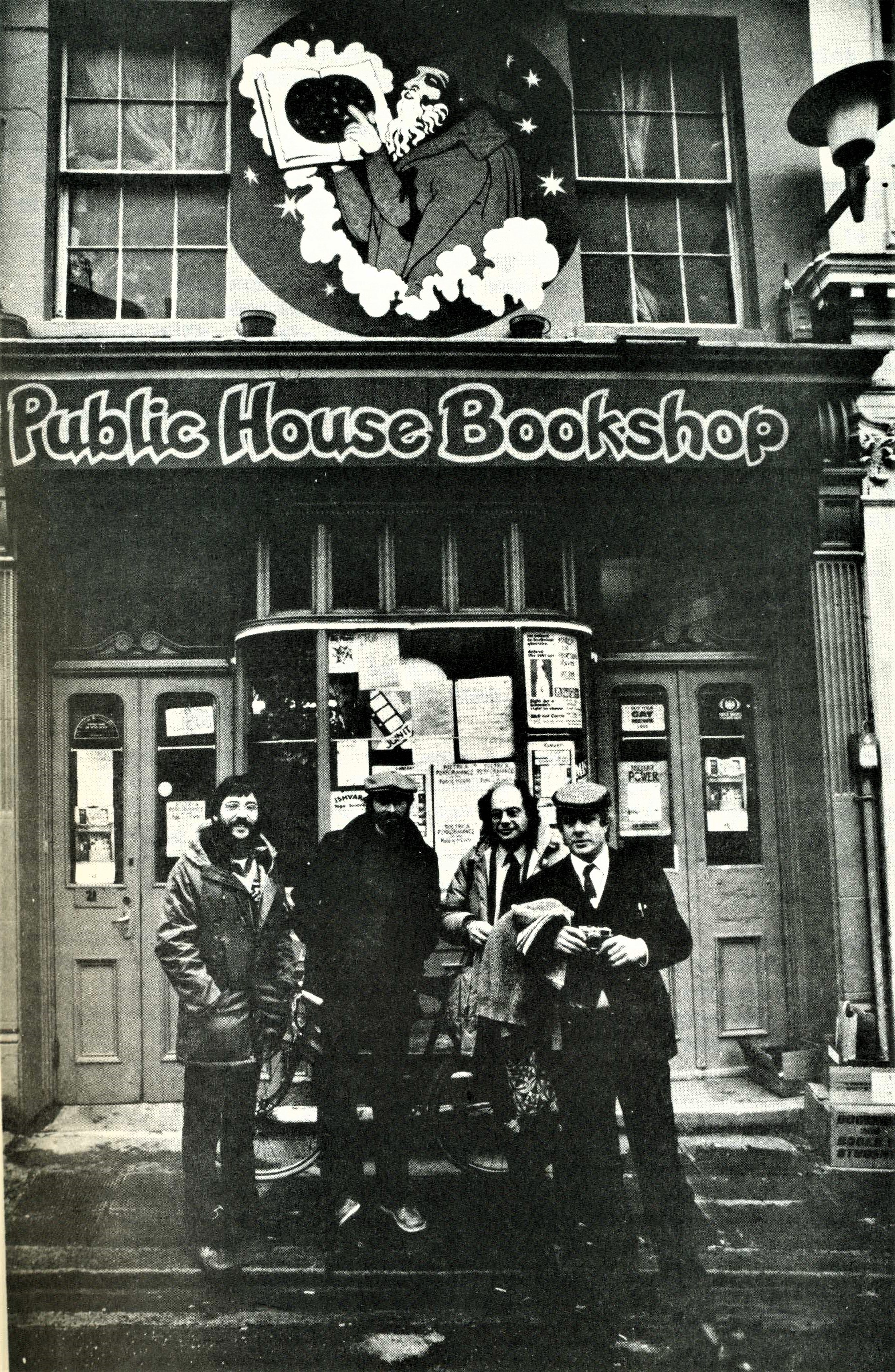
One other is the Ginsberg and three others in front of the Public House Bookshop in Brighton - Richard Cupidi who owned and ran the bookshop, Lee Harwood and Peter Orlovsky.
Back in January/February 2020 I wrote an extensive groups of Climate Crisis posts on the Greening of Transport: Aviation/Shipping/Railways and three posts on cars -Global Overview, Hydrogen Fuel cars and the Fall and rise of SUVs.
This new post concentrates on Electric Vehicles, battery development Rare Earth Metals and China's domination of all three.
CHINA/RARE EARTH METALS
30th January 2021: China controls 95%of the rare earth metals market, making between 80% and 90% of the batteries for electric vehicles and more than half the magnets in wind turbines and electric motors. The production of rare metals will double every 15 years in order to satisfy demand from non-ferrous magnets and lithium-ion batteries. [The Rare Metals War' by Guillaume Pitron (New Scientist)
20th February 2021: Copper demand from renewables and electric vehicles is expected to grow more than seven times by the 2050s. [Financial Times]
3rd March 2021: Three North American companies are setting up a rare earths supply chain to cut dependence on China for the vital metals used in weapons, electric vehicles and other advanced technologies. New Performance Materials of Canada and Energy Fuels of US have found an efficient way to produce rare metals from radioactive monazite sands, a by-product produced from mining sircon, titanium and other, supplied by US based chemicals group Chermours. Energy Fuels has developed a method of extracting the radioactive element to use in nuclear fuel. Monzanite contains about 50% rare earths and 0.3% natural uranium. It also contains 15 of the 17 of the rare earths. Fighter jets rely heavily on rare earths. A Lockheed Martin aircraft contains 417kg of rare-earth materials and a nuclear submarine more than 4 tonnes. [FT]
24th December 2021: Three of the leading rare-earth companies in China have merged to form the China Rare Earth Group. It will control 70% of China's rare earth output of 17 minerals. [FT]
JAPAN]
7th July 2022: China's BYD ("build your dreams") overtakes the world's most popular battery car maker outpacing Tesla - a goal that Volkswagen, Ford and General Motors were aiming to do. BYD delivered 641,000 cars in six months, 300% higher than in 2021 and ahead of Tesla's 564,000.
BYD began as manufacturer of rechargeable batteries and expanded into the car business in 2000. The fact that they make the batteries means they own the crucial supply chain. The company now has around 10 % of global capacity for EV battery production. They also have energy storage divisions and a computer chip unit. Sales are mainly in the domestic market but they have international ambitions. Half the cars they sell are plug-in hybrids which count as "new energy vehicles" [NEVs] as well as pure battery and hydrogen powered models [FT]
1 November 2022: BYD is backed by Warren Buffett and is one of a dozen Chinese brands preparing to storm Europe's markets. One in 20 electric vehicles sold in the region in the first six months of 2002 was a Chinese-owned brand. BYD will begin selling its three models before the end of the year. It is expected that the Chinese share of this market will be one in six cars by the middle of the decade. Nio, a premium brand was launched in Germany, Denmark, Sweden and the Netherlands with Norway to follow. It claims to have orders for 10,000 vehicles. [FT]
7 December 2022: China battery makers' clout raises fears in European motor industry.
China is turning itself into the battery workshop of the world. Europe is the second biggest market for EVs and it is predicted that China will have 322 gigawatt hours of production capacity there by 2031 than any other country. Some 40 % of the value of the electric vehicle is in its battery. In the new world, says Volkswagen's tech head, the electric vehicle world will be defined clearly by battery costs. South Korea will be second largest with 192GWh followed by France and Sweden. the US is 5th thanks to a Tesla plant in Berlin, 6th is Germany, 7th is Norway and the UK is eighth with 20GWh,
VW is leading European manufacturers with plans for five factories in Europe and one in North America. Meanwhile it has a supply deal with China's CATL, the largest battery maker. Europe is planning to end the sale of combustion engines by 2035.
Rising metal prices hinder car affordability
The price of lithium ion batteries rose for the first time in more than a decade. The car industry has long believed that a $100 per kWH battery pack was the point at which electric cars would be competitive price wise with combustion engine vehicles. However lithium prices have increased 10-fold since the start of 2021, nickel has gone up 75 % and cobalt prices have doubled their 2020 average. Battery prices would have been higher if the Chinese industry had not switched to cheaper lithium iron phosphate (LFP) batteries These don't use cobalt or nickel but have a shorter range.
Un 2022 there were 603 gigawatt hours of demand for lithium iron batteries, double that of the previous year. Supply chains are struggling to keep up. The world's largest lithium producers have warned about the difficulties of increasing production to cope with rocketing demand. Europe, US and other countries are making efforts to reduce their dependence on China.[FT]
2023 BYD and peers make their marque as Chinese car sector comes of age.
Chinese consumers will buy 8mn to10mn EVs in 2023 up from 6.5mn in 2022 and 3.5mn in 2021. Sales in Europe are projected to be3mn and 2mn in US. China had the largest sales with a 35% year-on-year rise of rapid growth. So 7 out of every10 electric vehicles are now sold in China. The pace of growth means China is on the cusp of hitting 50 % of car sales being EVs by the end of 2025 - the first major economy to do so.
This would be far ahead of Europe, The market share of battery cars is rising slowly. A third of sales in the final months of 2022 were fully electric or plug-in hybrid.
BYD is spearheading a wave of overseas expansion. Exports are forecast to grow six fold to 300,000 units this year. Further plans to build factories in Asia, Europe and |South America.
The US unveiled restrictions to stop US companies selling technology to China. It followed with state support in the US and Europe to counter China's rise. [FT]
30.3.2023: Tesla loses ground in China after price war.
In the first two months BYD sold more than five times the number of units that Tesla did in China.
In 2022 Chinese car makers accounted for 47 % of total passenger sales volume. BYD's vertically integrated structure - from mines to batteries and chips has given it an advantage as the world transitions away from the combustion engine. BYD chair said he expected first quarter sales to jump 80 % year on year. The company reported a 400% surge in net profit for 2022. However sales are generally down as the country emerges from the pandemic. [FT]