Showing posts with label led zeppelin. Show all posts

Tuesday, August 14, 2018

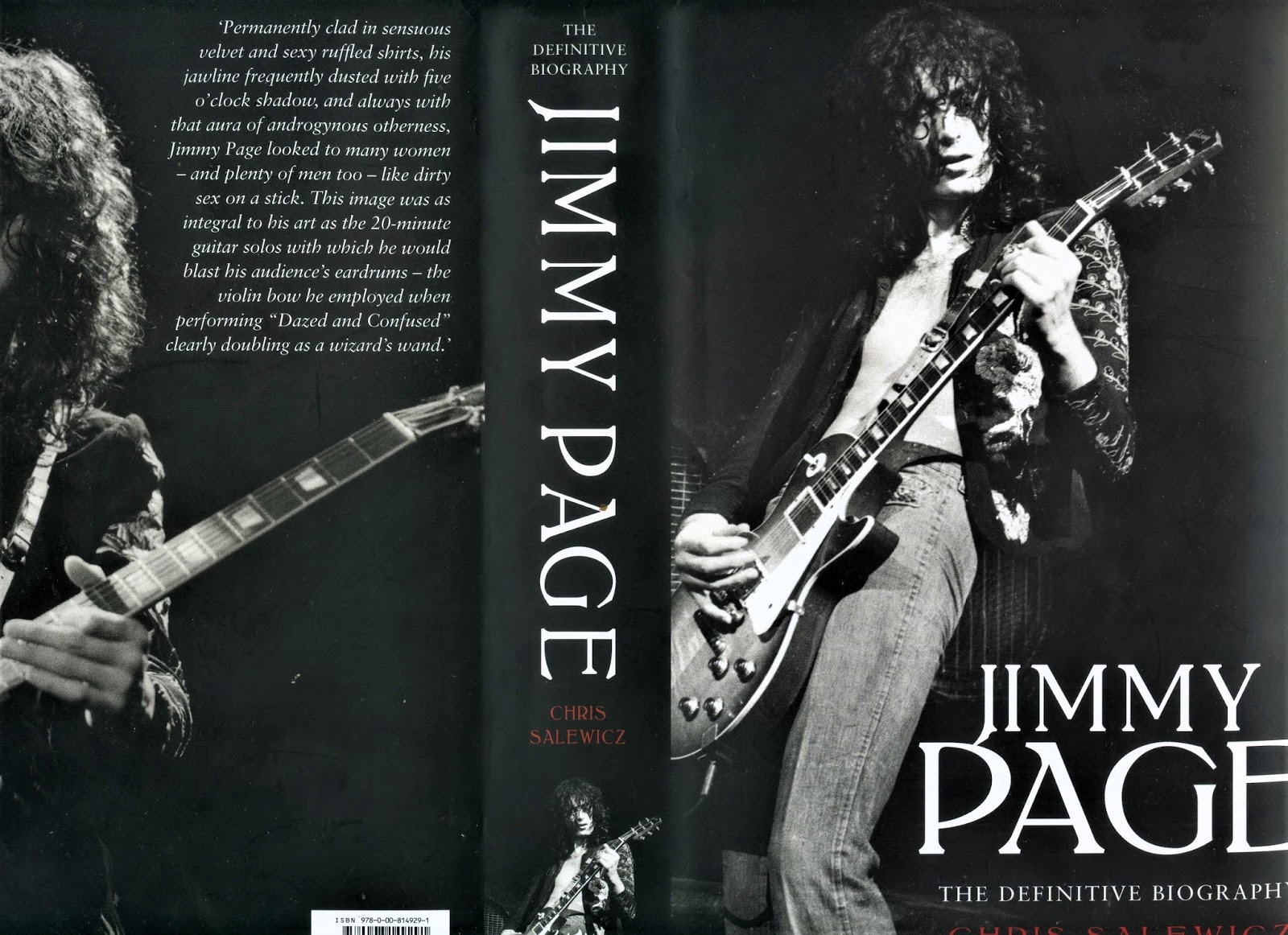
ROCK KING JIMMY PAGE by CHRIS SALEWICZ

Having already got acclaimed biographies of Bob Marley and Joe Strummer under his belt, Chris Salewicz (a mate of mine from the NME of the 1970s) tackles the mystery that is the enigmatic Jimmy Page, creator of Led Zeppelin, around whom swirls a cloud of rumours. The task cannot have been easy. 
Firstly there is a heap of books about the Zeps including Page's 'photographic biography'. The best known is 'Hammer of the Gods' written by Stephen Davis - a prolific rock biographer in his own right - which was based partly on his experiences on tour with the band for two weeks in 1975 but mainly on  the salacious recollections of Zeps' road manger Richard Cole, which the band have dismissed as utter tosh. More substantial is 'Trampled Under Foot' an extensive oral biography by music journalist Barney Hopkins, which The Generalist reviewed at length when it was published in 2012. This post also contains my own small personal recollections of the band and can be found here.

Chris has interviewed Page in the past and includes two of these pieces in the book, but didn't do so for this unauthorised bio. He brings something new to the party methinks in a number of ways. The whole 500-page epic has a insightful narrative arc presented in a sophisticated manner by someone who is extremely knowledgeable and able to extract previously unrecorded stories. Strikingly, he quickly tunes in to the astrological/magical seam that runs through the band and the music because he understands the importance of that and where it was coming from. 

Jimmy Page (born in 1944) discovered Aleister Crowley when he was 15, as did many others of that generation at a time when the occult and the sacred were being revisited. Salewicz suggests that Page was one of a very few who took Crowley to heart and used his vision and concepts to create something astonishing. Page also lived in a house where Crowley had lived and became one of the top collectors of his work and that of the occult artist Austin Osman Spare. He also loves the PreRaphaelites and currently lives in an extraordinary gothic revival Tower House in Kensington, London, a Victorian castle designed by the architect William Burges. [Robert Plant brought his own spiritual dimension to the band with his deep affection for the landscape of the Welsh hills, folk music, Tolkein, Viking culture and the music of Morocco.]

Original ticket for the London premiere of 'The Song Remains The Same'
[The Generalist Archive]
This a book about Jimmy Page rather than Led Zeppelin but LZ in all its aspects was created by Jimmy Page almost as an art project. He was certainly the architect. He assembled the group - an experienced multi-instrumentalist session player and two lads from Birmingham - Plantie, the inexperienced wailer with curls and Bonham, the drummer from Hell. By playing together, the four of them - whose identity was later to be condensed into four magic icons - produced an alchemical reaction that created a fifth dimension - the loudest, most powerful, thundering Visigoth band the world had seen. Driven by Page - a slim immaculate figure, especially in his velvet dragon suit, wearing his double-necked guitar, with cascading locks and androgonous features, playing with unearthly dexterity, exuding an odour of mystique. Not since Paganini, who played the fiddle like the devil... Page was scary but strangely alluring.

The explosive dark power of  the Zeps cauterised major stadiums and blazed a trail across America before capturing the rest of the world. The cliché is that the same dark power destroyed the band. Common sense would quickly suggest that the LZ space plane was bound to implode given their velocity and the industrial amount of white powders that increasingly interfered with the making of the music. It is clear Plant was severely out of it for a long stretch, barely functioning. Now at the age of 73, he gives speeches at the Oxford Union, has been awarded an OBE and has completed a massive remastering of all Led Zeps work.

Chris takes us through the early years: discovering a guitar by chance, appearing on a BBC tv talent show with his skiffle band aged 13, leaving school at 15 when he went on tour for two years with the Crusaders before then going to art college. From early 1963 he was picked up and became the youngest top session guitarist on the scene - he was Lil' Jim Pea to the other top player Big Jim Sullivan.

Jimmy was totally devoted to understanding every aspect of guitar work and studio practice, as was the young John Paul Jones, also working as a session player on the circuit. By the time he formed Led Zeppelin, Jimmy had played so many sessions on so many hit records, a lot of which he wrote the B-sides for, that he'd earned his first million. This enabled him to pay for the recording of their first album even before they went to any record company.

Pre Led Zep he had also gained  touring experience in the US with The Yardbirds - a band which also featured Eric Clapton and Jeff Beck. The three of them lived within a 10-mile radius of each other. [The band's first guitarist was Top Topham who The Generalist interviewed in 2012 ]


Chris takes us on the Zeps' wild ride and the after-show shenanigans which regularly got out of hand. These are delicate matters  but it seems that the damage and sleaze was driven by Bonham and Cole with Page and Plant dipping in and out of the chaos. Page's answer to the pressure turned into a problem with drugs. Not unknown in the music business or any other part of the entertainment field. The book does not avoid talking about the bad taste salaciousness of those wild times but neither does it lay down a heavy judgment call. Many girls involved have their say.

The post-Zep period is by its nature anti-climatic but Plant and Page had major success in the 1990s with the Unledded MTV show and further acclaim came with the one-off 2007 Led Zep reunion. it was fascinating to read of Page and Plant's epic world tour with Moroccan musicians and a Western orchestra. They now have a more equal relationship it seems, particularly since Plant's Grammy award with Alison Krauss.

Chris concludes that: 'Page has emerged as the most revered and respected of all classic rock artists. Despite all the odds, Jimmy Page has become the greatest treasure of British popular music.' His book, a fresh and valuable addition to the existing literature, is now top of the heap.

[Good interview with Chris Salewicz  by Robert Elms on Radio London well worth a listen]

Jimmy Page | Full Address and Q&A at The Oxford Union
Interestingly, 35 minutes in a girl asks him about his involvement with the Golden Dawn. He shuts the subject down quite quickly.

Incidentally it's the 50th anniversary of the first Led Zeppelin rehearsal this month.


Wednesday, July 25, 2012

LED ZEPPELIN: TRAMPLED UNDER FOOT


'One of the reasons people feel there is something satanic about the lure of their music is because its very primal - what it did to your head and the way it captured you. With the Stones, I thought about sex; with Zeppelin you felt....danger' 
 - Bebe Buell, celebrated rock consort and girlfriend of Jimmy Page


THE GENERALIST makes no claims to being a Led Zep expert but I was there at the time. 

I played their first album virtually the day it came out at a gig I was DJing for at the old Hotel on Eel Pie Island. 

I saw them at the 1970 Bath Festival whilst sitting in a tent with about seven heavy trippers and catching a contact high. They headlined on Sunday 28th June. Also on the bill that day: Frank Zappa and The Mothers, Moody Blues, Byrds, Santana, Flock, Dr John, Country Joe and Hot Tuna.

I was also there at one of the two simultaneous premieres in London for their film 'The Song Remains The Same'. They entered the balcony area and the whole audience stood up - except me and my mates. It all seemed a bit pompous at the time -  the film certainly was. 

The original 1976 ticket for Led Zep's film premiere [The Generalist Archive]


This book tells in unprecedented detail, the story of Led Zep, a monstrous rock construction, carefully designed and built to conquer America. Which they did, in a series of lightning raids that elevated them to rock god status - outselling the Stones. Yet mysterious: no singles, no tv appearances, no press. Protected by a man-mountain of a manager and an agressive and powerful 'connected' music lawyer, and handled by the best booking agency in America and Ahmet Ertegun at Atlantic Records, they unleashed their thunderous magic and captured the heart and soul of working-class kids in America, who didn't give a dog turd what Rolling Stone said. They worked it like a military operation, reaching stratospheric heights before the exhaustion kicked in - and the road madness - the drugs, the girls, the mayhem, the violence. In retrospect, ironic that the first Zep album featured the Hindenburg crash on the cover.


To date, the biggest-selling book on Led Zep is 'Hammer of the Gods' by Stephen Davis -  a book, as I understand it, largely based on the memories of Richard Cole, the band's long-time frighteningly agressive tour manager who, after long years of service for relatively modest return was summarily dumped by the band. The story is well told and has helped establish and embellish the mythological status of the band, peppered as it is with hair-raising rock tales and salacious incidents.


This new fat and heavy 550pp+ tome by Barney Hoskyns has these too but its a dark horse of a different order. Firstly its form: an oral history almost entirely based on first-hand quotes from more than 200 witnesses and the principals themselves. The ones who are dead are represented by referenced quotes from the past; the living were assiduously tracked down by Barney and interviewed by phone or in person. It makes me tired just thinking about the work involved in stitching the cut-up transcripts into a seamless narrative.


The structure of the book works: - a great  lick-your lips come-on intro, two chapters pre-Zep, the rise and fall of the band (the bulk of the narrative), ending with the adventures of Page and Plant following John Bonham's death.


Pre-Zep is good stuff. One chapter focuses on Page's rapid rise to becoming the hottest session guitarist around and his adventures with the Yardbirds + the background story to John Paul Jones, also a remarkable session man, multi-instrumentalist, genius musical arranger. For the rest of the book, Jones is virtually absent, a shadow figure but, as Barney makes clear, one who made a major musical contribution to the Led Zep sound. The other charts the interesting Birmingham music scene of the time and Plant and Bonham's musical adventures and background.


The multi-voice narrative throughout is full of contradictions. Was Peter Grant a psychopathic monster or a sad charming man with a frightening appearance. Was Page really into practicing Crowleyesque magic and was he the dark manipulative heart of the band or a nice quiet sweet-natured almost feminine figure. Was John Bonham an out-of-control physically abusive liability or a homesick sweetie who loved his prize bulls and hated flying. By all accounts Planty was a babe magnet but is he as distanced from all the bad behaviour as he would like to make out. Make up your own mind.


Zeppelin's saga is part Spinal Tap, part Good Fellas, part Fear and Loathing and part Dante. Quote after quote emphasises the total overwhelming magnificence and power of their best live performances alongside the olympian drug-taking, pre-pubescent sleaze, physical violence and a body count of those who couldn't keep up the pace or who were summarily dismissed as surplus to requirements. Its a mighty Machiavellian tale which would have been to Caligula's taste.


Happily Barney balances all the mayhem with valuable insights into the actual music making, explaining in some detail how they developed their sound which combined Bonham's huge prowess as a drummer, Page and Jones' complete mastery of their instruments, an Plant's impressive vocal style into complex material that ranged from Delta Blues to Tolkeinesque prog, Moroccan ragas to Welsh folk, the heaviest of metal to the most ethereal of acoustic soundscapes,


There's also valuable material on Zep's relationship to the punk scene and on the story of their Swan Song record label which unleashed Bad Company to huge success but failed to deliver for Maggie Bell and Dave Edmunds. Interesting stuff also on Roy Harper and his relationship to the band -  a 'crucial chum'.

The post-Zep stuff is also of interest as it documents Plant's constant search for a musical way forward, leading to his major hit album with Allison Krause, in the process of which his relationship with Page shifts to one of equals. Surprised that there is no mention of Page's painstaking remastering and reissuing of  Led Zep's back catalogue which introduced their work to yet another new generation.


'Trampled Under Foot' is a remarkable chronicle which adds considerably not only to our knowledge of the band but also to our understanding of what went down in those dark unhinged days of the 1970s. Its a book haunted by the voices of the living and the dead who took that flight to the highest apex of Rock Olympia only to discover a dark vaccuum that led, in so many cases, to paranoia, complete exhaustion, drug-soaked madness and total addiction.


The sun came out, the book arrived and I devoured it in two big chunks over two days during which it became my reality. So its readable and addictive. Its also a roller-coaster ride of emotions which leads you inevitably and quite rightly back to the music itself. And the wonder of it all.


Led Zeppelin at the Royal Albert Hall 1970


'Trampled Under Foot' by Barney Hoskyns is published by Faber & Faber on September 6th 2012.


PS: I do have one ancedote to add to the historical record. As Dick Tracy working for the NME, I wrote a story about this punk band in California who'd had the temerity to record and put out on some itty bitty label a punk version of 'Stairway to Heaven'. As a result the entire weight of the Zep legal apparatus landed on their shoulders. Investigating this, I put in a call to Zep's manager Peter Grant. No response for several days.


Then, late one night, when I was working away in our little rented house in the Cotswolds, the phone rang. It was the dark voice of Peter Grant - intimidating from the start. I can't remember the gist of the conversation but I do remember how it ended. Grant suddenly said: 'I've got to go now. My rabbit's just died of Myxomatosis.'


[I then spent several hours trawling through my NME Archive but could not find either a printed or original typescript version of this story. Happily thanks to the great blog 'The Devil's Music' all is revealed. The band was Roger and the Goosebumps, a pop/rock band from San Francisco active during the 1970s and early 1980s and resurrected in 2006. The band is best known for its single "Gilligan's Island (Stairway)", a song combining the lyrics to the theme song of the television show Gilligan's Island with the music of "Stairway to Heaven". Led Zep did put their lawyers on to them. Read more on the site, where you can actually see a pic of the original single and listen to it. By the way Plant has since gone on record as saying that it's his favourite cover version of 'Stairway.']