Monday, January 09, 2012

CZECH 2: NME ARCHIVE/PLASTIC PEOPLE OF THE UNIVERSE 2

Following my previous post, found the following article I wrote for the NME under the name Dick Tracy, published in the issue dated 6th September 1980

imagePLASTIC PEOPLE 1969

Bohemian Raps

A reader recently wrote to NME asking 'Who hasn't heard of The Plastic People?' Answer: A lot of Czechs who aren't allowed to.

"GENUINE artists have always been those who have drawn attention to the fact that things are not in order. This is why one of the highest aims in art has always been the creation of unrest."  - Ivan Jirous.

ON 1st July 1980 Karel Soukup was arrested in Prague and charged with "singing various songs of anti-socialist content, ridiculing the police, especially the State Security, and using vulgar expressions in his songs" at the wedding party of a friend.

Far from an isolated incident, Soukup's arrest was the latest in a solid onslaught of such incidents stretching back ten years, which have centred round a group of musicians who have refused to conform.

The Plastic People Of The Universe, despite harassments, arrests and imprisonments, have succeeded in maintaining a true underground culture in Czechoslovakia. Their message is clear: it is better not to play at all than to play as the establishment demands.

The first Czech band was The Primitives in 1967, who drew on The Fugs, Zappa, Beefheart and The Doors as inspiration. The Plastic People themselves came together only a few weeks before the Russian invasion in 1968 and have been a thorn in the side of the establishment ever since.

For a while they were tolerated but in 1971 a crackdown began and a new licensing system for bands was introduced. The following were not allowed: English lyrics, English names for groups, long hair, eccentric dress, high volume, pessimism, funk.

Rather than compromise, the Plastic People went underground, even to the point of building their own sound equipment. Around their creative centre, singers, poets and artists got together to produce a stream of samizdats, clandestine exhibitions, secret concerts. One statement reads: 

"The aim of the underground here in Bohemia is the creation of a second culture. A culture that will be totally independent of official channels of communication, social recognition and the hierarchy of values dictated by the establishment."


PPU ve zkušebně v Holešovicích, roku 1972

image

In 1973 two new groups were spawned — Midsummer Night's Dream and DG307 (named after Diagnosis 307, a term used by the official regime for 'psychiatric disturbance') — but that same year saw the first arrests.

Ivan Jirous, artistic director of The Plastic People, was jailed for 10 months — for "insulting a member of the secret police in a pub".

The first big bust came in February 1976 at Jirous' wedding. Police raided the party, searched homes, seized tapes and arrested 19 people, who were charged with breach of the peace. Twelve were released after six months investigative custody while seven others were tried, convicted and sentenced to prison terms ranging from eight to eighteen months, in the case of Jirous. He was arrested again in October 1977 and sentenced to eight months in April 1978. This was increased to 18 months upon appeal.

Further official restrictions on music were revealed in Document 13 from the famous group of Czech dissidents known as Charter 77. This states: "A number of magazines dealing with popular music have been banned outright. Certain popular music critics ... are not allowed to publish articles or lectures on pop music. All newspapers are provided with lists of performing artists that they may or may not write about, and they are even told, in some cases, how they must write about them."

The first Plastic People album, recorded in a Czech castle, produced in France, pressed in Ireland and printed in England, is now available through Rough Trade.

Called 'Egon Bondy's Happy Hearts Club Band' (after the radical Czech poet whose work is featured on the album), it's disturbing music. The LP also contains a fat booklet entitled The Merry Ghetto which comprises poems and samizdats from the underground.

The sleeve notes read: "This record is not a cry of protest. It is a deliberate statement of what is possible, even in what seems an impossible situation." We need messages like this in these frightening times. Hopefully the People's second album, 'Passion Play', will also find a way to the West.

DICK TRACY

Pictures sourced from the official Plastic People of the Universe site, which is in Czech: http://plasticpeople.eu/index.html

Sunday, January 08, 2012

CZECH DELIGHTS: JIRI MENZEL, BOHUMIL HRABAL; VACLAC HAVEL, JOSEF SKVORECKY, PRAGUE SPRING, VELVET REVOLUTION, PLASTIC PEOPLE

image

220px-CloselywatchedtrainsTHE GENERALIST has been bewitched by a movie, which has opened up a kind of Pandora’s box of thoughts and connections which this post will try and explore.

‘Closely Observed Trains’  (aka Closely Watched Trains). directed by Jiří Menzel. This Czech film was released in 1966 and won the Best Foreign Language Film Oscar in 1977.

The movie is set mainly around a small provincial railway station, peopled by a wonderful cast of characters, in German-occupied Czechoslovakia. The principal part of the plot concerns the almost heart-breaking saga of the new recruit to the station, who is trying lose his virginity. Sex and trains are a marvellous combination. There’s a spoiler entry about the film on Wikipedia which explains the outline of the plot but I’d recommend just seeing it. The black and white cinematography is really beautifully framed and lit. The film unfolds in an almost magical fashion. I like Bosley Crowther’s co0ntemporary crit:

"What it appears Mr. Menzel is aiming at all through his film is just a wonderfully sly, sardonic picture of the embarrassments of a youth coming of age in a peculiarly innocent yet worldly provincial environment. ... The charm of his film is in the quietness and slyness of his earthy comedy, the wonderful finesse of understatements, the wise and humorous understanding of primal sex. And it is in the brilliance with which he counterpoints the casual affairs of his country characters with the realness, the urgency and significance of those passing trains."

Its Ken Loach’s favourite film.

See also: Czechoslovak New Wave: ‘a term used for the early films of 1960s Czech directors Miloš Forman, Věra Chytilová, Ivan Passer, Jaroslav Papoušek, Jiří Menzel, Jan Němec, Jaromil Jireš, Vojtěch Jasný, Evald Schorm and Slovak directors Juraj Herz, Juraj Jakubisko, Štefan Uher, Ján Kádár, Elo Havetta and others. The quality and openness of the films led the genre to be called the Czechoslovak film miracle.’

CZECH1040

The film was based on the novel by Bohumil Hrabal (1914-1997), who also co-wrote the screenplay. Hrabal is a major writer of prodigious talent  who is still little-known in the wider world. Much of his work has yet to be translated. These two are both short pithy works of great power, lashed with humour, full of vivid and unexpected scenes and remarkable flights of fancy.

imageThere’s a lovely piece of writing about Hrabal by James Wood in the London Review of Books, which you can read online. These are three short exciting extracts:

Hrabal kept his ear close to the pub table. He sat for hours in his favourite Prague establishment, the Golden Tiger, listening to beer-fed stories foam. Those who knew him recall a man who liked to pass himself off as a beer-drinker rather than a writer, content to sit silently and gather – the community’s generous beggar.

…..a new way of writing, whereby heterogeneous elements could be forced against each other, in a natural, comic manner, arising out of ordinary human business rather than the obviously surreal.

Hrabal began to experiment with an unlimited, flowing style, almost a form of stream-of-consciousness (he admired Joyce, Céline and Beckett) in which characters associate and soliloquise madly. He called it pabeni, to which the closest approximation, according to Skvorecky, is ‘palavering’. This palavering is really anecdote without end. The lovely truancy with which Hrabal’s work vibrates has to do with its hospitality to an abundance of stories. Often, one senses that Hrabal has taken a brief comic tale heard in the pub, and exaggerated its comic essence.

On 3 February 1997, Bohumil Hrabal, sick and in despair, haunted by what he called his own ‘loud solitude’, and obsessed by the idea of ‘jumping from the fifth floor, from my apartment where every room hurts’, fell from the fifth floor of a hospital while he was trying to feed the pigeons.

Then what happened over the last eight weeks during which I not only watched the film twice but also got hold of Hrabal’s books and read them excitedly – while I was in the spell of all this – Vaclav Havel died and his state funeral was held and then, just yesterday, read this obituary of Josef Skvorecky in The Independent. For those who were there at the time and for those who weren’t, some history.

1968

THE PRAGUE SPRING

image

image

‘In the long run, the most noble of the "1968's" where not the French, German, British or American students and intellectuals; the real heroes of that time were Sakharov, Bonner, Landsbergis, Milosz, Kuron, Karpinski and Havel. They helped create a human rights movement that would spread throughout the Soviet bloc and discredit the tyranny. The 1989 revolution would not have been possible without them.’

Source: Eamonn Fitzgerald’s Rainy Day

The Prague Spring was a period of political liberalization in Czechoslovakia during the era of its domination by the Soviet Union after World War II. It began on 5 January 1968, when reformist Alexander Dubček was elected the First Secretary of Communist Party of Czechoslovakia, and continued until 21 August when the Soviet Union and members of the Warsaw Pact invaded the country to halt the reforms. The Prague Spring reforms were an attempt by Dubček to grant additional rights to the citizens in an act of partial decentralization of the economy and democratization. The freedoms granted included a loosening of restrictions on the media, speech and travel.

Czechoslovakia remained occupied until 1990.

1989

THE VELVET REVOLUTION

image

Vaclav Havel In Wenceslas Square in Prague

The Velvet Revolution was a non-violent revolution in Czechoslovakia that took place from November 17 to December 29, 1989. Dominated by student and other popular demonstrations against the one-party government of the Communist Party of Czechoslovakia, it saw to the collapse of the party's control of the country, and the subsequent conversion from Czech Stalinism to capitalism.[1]

On November 17, 1989, a Friday, riot police suppressed a peaceful student demonstration in Prague. That event sparked a series of popular demonstrations from November 19 to late December. By November 20 the number of peaceful protesters assembled in Prague had swollen from 200,000 the previous day to an estimated 500,000. A two-hour general strike, involving all citizens of Czechoslovakia, was held on November 27.

With the collapse of other Warsaw Pact governments and increasing street protests, the Communist Party of Czechoslovakia announced on November 28 that it would relinquish power and dismantle the single-party state.

. On December 10, President Gustáv Husák appointed the first largely non-communist government in Czechoslovakia since 1948, and resigned. Alexander Dubček was elected speaker of the federal parliament on December 28 and Václav Havel the President of Czechoslovakia on December 29, 1989.

In June 1990, Czechoslovakia held its first democratic elections since 1946.

VACLAV HAVEL

image

Vaclav Havel and Lou Reed (2005)

Czech playwright, essayist, poet, dissident and politician.

A Nobel Peace Prize nominee,[2] he was the ninth[3] and last president of Czechoslovakia (1989–1992) and the first President of the Czech Republic (1993–2003). He wrote more than 20 plays and numerous non-fiction works, translated internationally.

Dissident

During the first week of the invasion of Czechoslovakia, Havel assisted the resistance by providing an on-air narrative via Radio Free Czechoslovakia station (at Liberec). Following the suppression of the Prague Spring in 1968, he was banned from the theatre and became more politically active. He was forced to take a job in a brewery, an experience he wrote about in his play Audience.

This play, along with two other "Vaněk" plays (so-called because of the recurring character Ferdinand Vaněk, a stand in for Havel), became distributed in samizdat form across Czechoslovakia, and greatly added to Havel's reputation of being a leading dissident (several other Czech writers later wrote their own plays featuring Vaněk).[12]

This reputation was cemented with the publication of the Charter 77 manifesto, written partially in response to the imprisonment of members of the Czech psychedelic band The Plastic People of the Universe.[13] (Havel had attended their trial, which centred on the group's non-conformity in having long hair, using obscenities in their music, and their overall involvement in the Czech underground).[14]

Havel co-founded the Committee for the Defense of the Unjustly Prosecuted in 1979. His political activities resulted in multiple stays in prison, and constant government surveillance and questioning by the secret police, (Státní bezpečnost). His longest stay in prison, from June 1979 to January 1984, is documented in letters to his wife that were later published as Letters to Olga.

PLASTIC PEOPLE OF THE UNIVERSE

Plastic_People_of_the_Universe2_nc
Plastic People of the Universe. (Retrieved from http://new.lincolncenter.org/live/index.php/lc-ood-images)

image

Source: Without Shoes blog

The  Plastic People of the Universe was formed less than a month after the Soviet invsaion.

Bassist Milan Hlavsa formed the band which was heavily influenced by Frank Zappa ("Plastic People" being a song by Zappa and the Mothers of Invention) and the Velvet Underground in 1968.[2]

Czech art historian and cultural critic Ivan Jirous became their manager/artistic director in the following year,[1] fulfilling a role similar to the one Andy Warhol had with the Velvet Underground. Jirous introduced Hlavsa to guitarist Josef Janíček,[1] and viola player Jiří Kabeš. The consolidated Czech communist government revoked the band's musicians license in 1970.[3]

Because Ivan Jirous believed that English was the lingua franca of rock music, he employed Paul Wilson, a Canadian who had been teaching in Prague, to teach the band the lyrics of the American songs they covered and to translate their original Czech lyrics into English. Wilson served as lead singer for "the Plastics" from 1970 to 1972, and during this time, the band's repertoire drew heavily on songs by the Velvet Underground and the Fugs.

The only two songs sung in Czech in this period were "Na sosnové větvi" and "Růže a mrtví", lyrics of both being written by Czech poet Jiří Kolář. Wilson encouraged them to sing in Czech. After he left, saxophonist Vratislav Brabenec joined the band and they began to draw upon Egon Bondy[2] whose work had been banned by the government. In the following three years, Bondy's lyrics nearly completely dominated PPU's music. In December 1974, the band recorded their first "studio" album, Egon Bondy's Happy Hearts Club Banned (the title being a play on The Beatles' Sgt. Pepper's Lonely Hearts Club Band), which was released in France in 1978.

In 1974, thousands of people travelled from Prague to the town of České Budějovice to visit the Plastics' performance. Stopped by police, they were sent back to Prague, and several students were arrested.[1] The band was forced underground until the Velvet Revolution in 1989. Unable to perform openly, an entire underground cultural movement formed around the band during the 1970s. The sympathizers of the movement were often called máničky, mainly due to their long hair.

In 1976, the Plastics and other people from the underground scene were arrested and put on trial (after performing at the Third festival of the second culture) by the Communist government to make an example. They were convicted of "organized disturbance of the peace" and sentenced to terms in prison ranging from 8 to 18 months.[1] Paul Wilson was deported[3] even though he had left the band in 1972. It was in protest of these arrests and prosecution that led playwright Václav Havel and others to write the Charter 77.[3]

[ Souce: HISTORICAL DIGESTS FROM WIKIPEDIA]

Thursday, January 05, 2012

OCCUPY: THE BOOK

OCCUPY044

‘Occupy: Scenes From Occupied America’ published by Verso was rushed out and into the bookstores before Xmas.

The book is an edited compilation of material from the first three issues of the Occupy Wall Street Gazette [see below] with contributions from some of the world’s leading radical thinkers including Slavoj Žižek, Angela Davis, and Rebecca Solnit.
Much of the book captures the adrenaline and excitement of the Occupy actions in New York, Oakland, Atlanta, Philadelphia and Boston but also highlights the many problems. The consensus decision-making process on which most of the camps were run favoured people with time and patience but infuriated others. The drum circles, a feature of the camps, often drowned out the speakers and annoyed residents in the neighbourhood. The camps also became a refuge for scores of homeless people who found the sites safer places to be than the public shelters. Then there was the issue of how to deal with huge piles of discarded wet and dirty clothes which had to be trucked off the site and laundered elsewhere.

In a speech given by Žižek in Zuccoti Park on October 9th, he warned the Occupiers:

‘There is a danger. Don’t fall in love with yourselves. We have a nice time here. But remember, carnivals come cheap. What matters is the day after when we will have to return to normal lives. Will there be any changes then? I don’t want you to remember these days, you know, like, “Oh, we were young and it was beautiful.” Remember that our basic message is, “We are allowed to think about alternatives.” If the rule is broken, we do not live in the best possible world. But there is a long road ahead. There are truly difficult questions that confront us. We know what we do not want. But what do we want? What social organisation can replace capitalism? What type of new leaders do we want?’

image image

These three issues of the Occupy Gazette are available for download on the n+1 website

TIME2046

OTHER OCCUPY NEWS

* Time magazine have published an Occupy book: What Is Occupy: Inside the Global Movement

*Columbia University are offering a course on the Occupy movement

* Occupy Together website

* Occupationalist is an impartial and real-time view of the Occupy Wall Street movement. Covering history as it unfolds. No filters. No delays.

Tuesday, January 03, 2012

THE GENERALIST: TRAFFIC 2011

Copy of john2 116

Individual Hits

55,131

Downloads

76,635

Good New Year wishes to all my readers worldwide. Thanks to you, this year’s figures are almost greater than those of the last two years combined (2009/2010). Please keep spreading the word and I’ll keep pumping up the volume.

Friday, December 16, 2011

PLANET EARTH: THE DEATH OF AMPHIBIANS

image

This amphibious fungus (Batrachochytrium dendrobatidis) is threatening to make the world’s amphibians extinct.

image

Source: http://mythix.com/projects/amphibian_extinction_crisis

Read this powerful article in full in American Scientist: Lessons of the Lost by Joseph R. Mendelson III

Batrachochytrium dendrobatidis likely is capable of infecting every species of amphibian on Earth (nearly 7,000 species), representing the broadest host-range of any known pathogen.

Herpetologists and wildlife biologists began observing inexplicable disappearances of amphibians around the globe in the mid-1970s and especially by the mid-1980s but were at a complete loss to explain them. Finally, in the late 1990s, an insightful team of pathologists at the U.S. National Zoo, led by Don Nichols, collaborated with one of the few chytrid fungus scholars in the world, Joyce Longcore, and identified this quite unusual new genus and species. Conservationists and disease ecologists were unprepared for the reality of a pathogen capable of directly and rapidly—mere months!—causing the elimination of a population or an entire species that was otherwise robust.

The concept of a lightning extinction was foreign to researchers and conservationists, and we argued vehemently about it throughout the 1990s at symposia worldwide.

Northern Leopard Frog, a North American native species http://frogsaregreen.com/tag/endangered-amphibians/

…the pathogen itself, was not described until 1999. While we were debating the issue, a terrible lesson was playing out for us around the world as an unknown disease decimated amphibian populations.

The concept of “endangered species” does not apply here. We are witnessing the nearly complete elimination of entire clades of species. This is another lesson learned, as we were all trained that such things are only to be observed in the fossil record. This precedent from the amphibians forces us to address the serious implications for possible disease-driven losses among other major clades. Consider for a moment the potential consequences of clade-level extinctions among monocot plants (corn, rice, wheat), pollinating insects, salmonids or scombrid fishes (mackerel, tuna), mammals or birds.

Conservationists have been overwhelmed by the amphibian crisis. In the atmosphere of ongoing declines, we realized that there was no framework to address a challenge of this magnitude or rapidity. Even worse than problems of scope and scale is the reality that conservationists, collectively, are stymied by the central problem of not knowing what to do

There is a parallel between what amphibian taxonomists do these days and what homicide detectives do. Both arrive at scenes of mayhem. Maybe they solve the crime, but they are powerless to undo it.

image

Recent studies show the Earth's warming climate is contributing to the increase of chytrid disease, a fungus infection that is responsible for the extinction of many tropical frog species. The fungus, Batrachochytrium dendrobatidis, infects tadpoles and eventually attacks the skin of adults and kills them. Scientsts know the spore stage can swim through water to infect other frogs, but there is still much to know about how the disease spreads, and if it can survive in other animals.
Credit: Nicolle Rager Fuller, National Science Foundation www.nsf.gov/news/news_images.jsp?cntn_id=105707&org=NSF

THE VANISHING: AMPHIBIAN EXTINCTION

A powerful and moving gallery of photos by National Geographic photographer Joel Satore.

image

Extinction in Our Times: Global Amphibian Decline by James P. Collins, Martha L. Crump and Thomas E. Lovejoy III, which offers a complete history of the phenomenon. See review at Conservation Maven


image

MAMPHIBIAN ARK is a joint effort of three principal partners: the World Association of Zoos and Aquariums (WAZA), the IUCN/SSC Conservation Breeding Specialist Group (CBSG), and the IUCN/SSC Amphibian Specialist Group (ASG).

Our vision is the world’s amphibians safe in nature, and our mission is ensuring the global survival of amphibians, focusing on those that cannot currently be safeguarded in nature.

image

GLOBAL APPETITE FOR FROG’S LEGS COULD CONTRIBUTE TO THE AMPHIBIAN’S EXTINCTION

image

Thursday, December 15, 2011

POP ART: THE FIRST POP AGE

POP ART1035

Some months back THE GENERALIST reported on the death of Richard Hamilton and my investigations into the birth of Pop Art [See Previous Post]

So was excited to receive a review  copy from Princeton University Press of this new book by Hal Foster, an American professor of Art & Archaeology at Princeton, which promised a fresh view of this intriguing art movement. It delivers.

In the book’s opening essay ‘Homo Imago’, Foster writes: ‘I focus my reflections on five artists – Richard Hamilton, Roy Lichtenstein, Andy Warhol, Gerhard Richter and Ed Ruscha – because they evoke, more graphically than any others, the changed conditions of painting and viewer in the first age of Pop, which here I take to have begun in the mid to late 1950s. Stripped to its essentials, my thesis is this: a shift occurred during this time in the status of image and subjectivity alike, and the signal work of these five artists registers it most suggestively’

POP ART2036

So the form of the book is five substantial critical investigations, all illustrated with a generous helping of artworks by each – some well-known, most fresh and interesting. Most striking in this regard are Lichtenstein’s sculptures, like ‘Surrealist Head’ (1986), none of which I had ever seen before. Quite a revelation.

Foster views the works of these artists as ‘a paradigm in picture making.’  He describes this work as ‘an attempt to give these artists more formal due, and more theoretical aspect, than they are usually afforded, to demonstrate the nuances of the imaging and their understanding alike’

The parallel he draws is with the work of Leo Steinberg, the art history professor, who wrote the book ‘Other Criteria’ in 1972, which profiles Pollock, Rauschenberg and de Kooning amongst others, and which introduced the idea of the ‘flatbed picture plane’

He examines the leitmotifs of existing Pop criticism and says these are structured around binaries: high & low culture, form & content, immediacy & meditation, printing & photography, manual & machines, private & public, contemplation & distraction, critique & complicity.’

Foster expands and deepens these ideas. He says that Pop is ambiguous and non-judgemental towards popular culture being ‘neither critical nor complicit’. His binaries include ‘reverence and cynicism, delight and disdain, distance and immersion'.

Pop, he says, does not return art to representation after the abstraction of the previous generation. Rather. it combines the two: ‘It differs from them both and disturbs them’

POP ART5039

(Left) A detail from a serial image of Elvis by Andy Warhol. The image is taken from the 1960 Don Siegel movie Flaming Star. It was first exhibited at the Ferus Gallery in Los Angeles in 1962. In the original there were 16 identical images which serially faded across a 37ft canvas. A kind of art parallel to Jack Kerouac’s scroll.

These artists were confronting the ‘inflated images of consumer society’ with its media celebrities and brand-name products. They examined and probed ‘the changes that the new image technologies wrought on human nature’. He says they took apart ‘ the cliches of celebrity and commodity to see how they work and put them back together with differences.’

In the process, says Foster, there was a shift in the function of the artist from romantic creator to trained designer and points out that Hamilton and Lichtenstein trained as draftsmen, Warhol was an illustrator and Ruscha a graphic designer. (He could have added that Rosenquist began by painting billboards).

There’s so much more insight and depth to explore in this deft, nuanced work. These essays will repay repeated reading. If I had to draw a parallel it would be with Greil Marcus’ ‘Lipstick Traces’ – both books combine new scholarship with fresh insights and stylistic innovation, to refresh our perspectives.

The book also contains more than 50pp of references and notes which contains a mine of sources of great value.

This is certainly a major contribution to our understanding of the Pop Art shift and its continuing significance and importance. It seems to have taken us more than fifty years to really appreciate how profound the changes were. We have Hal Foster to thank for opening our eyes and minds with this important and iconic volume.

ADDITIONAL NOTES:

1. Marcel Duchamp was a mentor and exemplar for many of the Pop Artists. Hamilton made his first visit to the US in 1963. He travelled with Duchamp and met Warhol, Lichtenstein and ‘other young bucks of American pop art’.

2. There is a very good overview piece on Pop Art on the wonderful site The Art Story. The essay quotes Hal Foster at length and provides a good summary of the ideas in this book: ‘The critic Hal Foster has anatomized Pop art as consisting of essentially five different image types, each of which is preoccupied with a slightly different problem, and each of which has been importantly influential on subsequent artists. ‘

3. Whilst researching for this piece, discovered this excellent profile/interview with Ed Ruscha by Rachel Cooke for The Observer in 2010.

"I like to think the California sun has burnt out all unnecessary elements in his work," says film director David Lynch. "[He is] the visual deus ex machina of what has become the most over-scrutinised city on earth," says novelist James Ellroy. "The coolest gaze in American art," said the late JG Ballard.

4. Read my Previous Post Masters of the Avant-Garde, a review of ‘Ahead of the Game’ by Calvin Tomkins, which profiles Marcel Duchamp, John Cage, Jean Tingueley and Robert Rauschenberg.

Saturday, December 10, 2011

RUSSIA: VADIM GORBATOV/WILDLIFE ARTIST

GORBATOV1032

Whilst rifling through the Archive for material on Bulgakov (see last post) I unpacked the time capsule of material relating to my Greenpeace trip to Moscow in 1988 and came across this photo. That is me with Vadim Gorbatov, the leading wildlife artist in the USSR. As I recall he arrived with two huge folders of his artwork which it was my privilege and pleasure to go through with him. A dazzling experience. He gave me two packs of postcards of his work and two wonderful posters which I still treasure. These are three of the cards that I particularly like.

GORBATOV3034

(Top) The Five-toed pygmy jerboa which has the delightful Latin name of Cardiocranius paradoxus. According to the Encyclopaedia of Life, these jerboas ‘are found only in a few areas in Asia. In Russia they are found in the Ubsu-Nur Depression of the Tuva Autonomous Region in the extreme south-central part of the country. In Kazakhstan, their range is restricted to a small area north of Lake Balkhash, where the species was first discovered. They are also found throughout western and southern Mongolia, as well as in the Nan Shan Mountains of northern China. ("Five-toed Dwarf Jerboa", 1999; Gromov and Eszhanov, 2004; Gromov, 2002)’

(Centre) The White-naped Crane (Grus vipio) breeds on the borders of Russia, Mongolia and China. It is in the Vulnerable category of the IUCN Red List because, according to Birdlife International, ‘it is thought to be undergoing a continuing population decline largely as a result of the loss of wetlands to agriculture and economic development.’

(Bottom) This striking painting depicts either a male Bighorn sheep (Ovis canadensis) or a Siberian bighorn (Ovis nivicola) aka snow sheep. The confusion arises because the Latin name on the back of the card reads Ovis canadensis borealis. The wonderful Ultimate Ungulate site lists no sub-species of that name. There is a borealis of the snow sheep but that Latin name would be Ovis nivicola borealis. How confusing and pedantic is that. In the course of trying to unravel this, I learnt that, according to the latest gene sequencing techniques: ‘the history of true sheep (Ovis) began approximately 3.12 million years ago (MYA). ‘The evolution of Ovis resulted in three generally accepted genetic groups: Argaliforms, Moufloniforms, and Pachyceriforms.

;The Pachyceriforms of the subgenus Pachyceros comprise the thin-horn sheep Ovis nivicola (snow sheep), Ovis dalli (Dall and Stone sheep), and Ovis canadensis (Rocky Mountain and desert bighorn). North America wild sheep (O. canadensis and O. dalli) evolved separately from Eurasian wild sheep and diverged from each other about 1.41 MYA. Ancestral stock that gave rise to snow sheep, Moufloniforms, and Argaliforms occurred 2.3 MYA, which then gave rise to two different extant lines of snow sheep that diverged from each other about 1.96 MYA. The more recent nivicola line is genetically closer to the North American wild sheep and may represent a close association during the refugium when Alaska and Siberia were connected by the Bering land bridge. The earlier period of evolution of the Pachyceriforms suggests they may have first evolved in Eurasia, the oldest ancestor then giving rise to North American wild sheep, and that a canadensis-like ancestor most likely gave rise to nivicola. ‘

Phylogenetic Analysis of Snow Sheep (Ovis nivicola) and Closely Related Taxa

T. D. Bunch, C. Wu, Y.-P. Zhang and S. Wang/ Journal of Heredity. http://jhered.oxfordjournals.org/content/97/1/21.short

GORBATOV 005

GORBATOV 007

image

A more recent picture from the artist’s own website: www.vgorbatov.ru

Sending you greetings from across time and space.

SEE PREVIOUS POST: ARCHIVE: RUSSIAN CONSERVATIONIST ALGIRDAS KNYSTAUT...

Read my interview with Russian conservationist Algirdas Knystautus, author of a book on the Natural History of the USSR. It was published in The Guardian on March 31st 1987

Friday, December 09, 2011

RUSSIA: SURKOV, BULGAKOV & PELEVIN

image

image

Source: www.tumblr.com/tagged/vladislav-surkov

This post began when I read an article about Vladislav Surkov in the London Review of Books, entitled ‘Putin’s Rasputin’ by Peter Pomerantsev. You can read the whole article here.

Surkov, a former theatre director and PR man, is described by Pomerantsev as ‘Putin’s chief ideologue and grey cardinal’ and says he is also known as the ‘puppetmaster who privatised the Russian political system’

‘In his spare time Surkov writes essays on conceptual art and lyrics for rock groups. He’s an aficionado of gangsta rap: there’s a picture of Tupac on his desk, next to the picture of Putin. And he is the alleged author of a bestselling novel, Almost Zero.

‘The novelist Eduard Limonov describes Surkov himself as having ‘turned Russia into a wonderful postmodernist theatre, where he experiments with old and new political models’.

Surkov is at the centre of the show, sponsoring nationalist skinheads one moment, backing human rights groups the next. It’s a strategy of power based on keeping any opposition there may be constantly confused, a ceaseless shape-shifting that is unstoppable because it’s indefinable.

This fusion of despotism and postmodernism, in which no truth is certain……

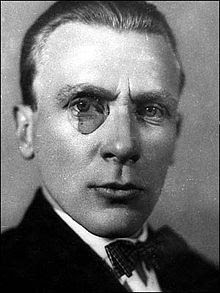
фотография с моноклем 1920-е г. г.

…which reminded me immediately of the work of one of my favourite novelists Mikhail Bulgakov. His take on the absurdity, humour, suffering and violence of the Russia of his day and of the pomposity of power meant that virtually none of his works were published openly in his lifetime. Fortunately much of his great work is now available in good translations.

BUKGAKOV6025

His masterpiece is ‘The Master & Margarita’ which I read when I was in my late teens and reread just recently. Its a magnificent work of the imagination made up of intertwining tales.

The first concerns the Devil’s visit to Moscow. His sidekicks include a human-sized black cat that talks. They create complete havoc, mischief and mayhem and their exploits are fantastical, hilarious, scary and astonishing by turns.

Then there is  is a book within a book, a retelling of the biblical story of Jesus and Pontius Pilate, his sentencing and crucifixion and the strange remorse of Pilate – a beautiful and vivid piece of writing.

BUKGAKOV12031

There are many different translations. Michael Glenny’s (cover above) seems to be rated as one of the best. The cover (left) is from the original edition I had, which fell apart over the years. I kept the cover.

Bulgakov began writing this book in 1928 and continued working on it until his death in 1940. The first uncensored version was not published in  the Soviet Union until 1989. It was first published in the West in the 1960s and perfectly chimed in with the mood of that time. It became a cult book of the period.

These two are also great:

BUKGAKOV8027

Copy of BUKGAKOV8027

‘Heart of a Dog’, written in 1928 was first published by Grove Press in New York in 1968;in Russia until 1987. It concerns a mad professor who implants a human heart and pituitary gland into a dog with bad results. Pavlov was doing real-life dog experiments at the time. This is the Picador Classic edition, translated by Mirra Ginsburg (1999)

‘Black Snow’ is Bulgakov’s hilarious fictionalised portrait of Stanislavsky and one of his productions which Bulgakov wrote after his experiences working at the Moscow Arts Theatre, a post personally arranged for him by Stalin. This is the 1999 Harvill Press edition translated by Michael Glenny.

BUKGAKOV7026

As chance would have it my friend Lin  gave me a copy of this extraordinary sf novel ‘The Fatal Eggs’ by Bulgakov which has only recently seen the light of day. A professor discovers a strange ray which has an extraordinary effect on living cells. Panic and mayhem ensues. Bears comparison to H.G. Wells (a writer Bulgakov admired) and Karel Čapek’s strange novel ‘War with the Newts’ [See Previous Post: LARSEN, MISHIMA & ČAPEK]

In this edition there is a very interesting foreword by Doris Lessing about the relationship between Stalin and writers in general, Bulgakov in particular. She writes:

‘I have believed for a long time that Stalin wanted to write but had no talent. It would account for his obsession with literature. He personally oversaw everything published in the Soviet Union.’

One should mention the publisher Hesperus Press who ’are committed to bringing near what is far – far both in space and time’ They publish short classic works, around 100pp pages in length, by both great and unknown authors, works that are little-known in the English-speaking world, in fresh translations. Interesting stuff.

JM RUSSIA1020

Bulgakov remains a potent figure in the Russian underground imagination as I discovered when I visited Moscow in 1988 as a rep for Greenpeace at the first Soviet and Eastern bloc record fair [See Previous Post: ARCHIVE: GREENPEACE MUSIC for more details.]

It was that trip where I met musicians and artists, one of whom gave me these amazing illustrations for ‘The Master & Margarita’ These are four from a larger set. I’m afraid I have no notes of the artist’s name

BUKGAKOV2021

BUKGAKOV3022

BUKGAKOV4023 

This is the original programme leaflet from a production of ‘The Master & Margarita’ by the Four Corners Theatre Company at the Almeida Theatre in London in July/August1992.

BULGAKOV1019

image

www.popuw.com/pocp.html

Viktor Pelevin, one of the great cult novelists of modern Russia, is a modern-day Bulgakov. Highly recommended. I read three or four of his books including these two some years back. Time for a reread.

BUKGAKOV9028

Sunday, December 04, 2011

INTERNATIONAL TIMES

flag 2nd flyer

International Times – one of the great underground papers – is now online. A fantastic database of every issue, page by page. To check the search engine and for my own archival interests, tried to find the contributions I made to the paper. Found some as follows:

Back in 1969, I wrote two short pieces about the activities of our Arts Lab, the Worthing Workshop

In 1972: a news piece entitled FRENDZ – Still Rocking. In fact, this was wishful thinking as the paper closed that year.

In 1973 I was listed as one of a number of Associate Editors and wrote, amongst other things, two features – one of squatting and one on terrorism. These were experiments in a style where I intertwined fact and fiction.

In 1974, I was listed as one of a number of Contributing Editors. Credited as a researcher on an article called ‘Paranoi9d Panorama’. Also contributed a long book review on the chequered career of former Chancellor of the Exchequer Reginald Maudling.

THE GENERALIST ARCHIVE

IT1016

An almost complete page of IT stickers. According to the International Times Wikipedia entry: The paper's logo was a black-and-white image of Theda Bara, vampish star of silent films. The founders' intention had been to use an image of actress Clara Bow, 1920s It girl, but a picture of Theda Bara was used by accident and, once deployed, not changed.

PREVIOUS POSTS:

The Underground Press Gazette