Sunday, October 18, 2009

VERNACULAR ARCHITECTURE

loft_storehouse-709089

A storage building at the large open-air Folkemuseum in Oslo [Source: Dr Anne Galloway's Purselipsquarejaw blog]

One main reason for less posts than usual of late is the fact that I have been writing a book on vernacular architecture, which is to be published in May 2010 by Thames & Hudson in the UK and Rizzoli in New York. [There is also an Italian edition]

The book is entitled 'Handmade Houses & Other Buildings: The World of Vernacular Architecture' and is a fully illustrated guide to a selection of vernacular buildings around the globe.

This is a fascinating subject and a very timely one. Vernacular architecture can be simply defined as the architecture of the people, largely designed and built by communities, families and self-builders. The majority of the world live and work in such buildings; a small minority inhabit buildings designed by architects.

A broad generalisation would be to say that vernacular architecture has been sidelined and ignored by the architectural profession but there are signs in many parts of the world that this is changing.

It is certainly a subject that is little known to the mainstream and I am hoping my book will make this important subject accessible to a broader audience.

The Generalist will be featuring regular posts on Vernacular Architecture as there is an incredible wealth of stories out there.

SQUATTER CITIES

roadjunkyfavelas

One of the most important issues of our time is the squatter cities of the world, where vast number of incoming country people fabricate dwellings from scrap and waste materials. These evolve overtime and become more substantial. This is the new vernacular architecture of our time.

This subject ties in with the last two posts, as Stewart Brand has given a TED talk about squatter cities.

favela-morumbi-sao-paulo_thumb

A view of Favela Morumbi, one of the largest shanty town zones in Sao Paulo. [Source: 'Slum Tours of Sao Paulo' by Paul Kedrovsky]

He says the move to the cities is the largest movement of people in history. It is happening at a rate of 1.3million people a week which makes 70m people a year. We have recently passed the point when more than half of the world's population live in cities. Brand sees this as a major 'tipping point.' Here, he says, are people working to get out of poverty as quick as they can. There's no unemployment in squatter cities - everyone works. Brand views this as the 'dark energy' of economic theory. One-sixth of India's GDP, for example, comes from the squatter city of Mumbai. In addition, when people move to cities, the birthrate drops dramatically. He claims that the world population will reach 8 or 9 billion and then drop off dramatically.

Another key figure to pay attention to on this subject is 1327_253x190 Robert Neuwirth, author of the a book on the subject entitled 'Shadow Cities.' To write the book he actually lived in squatter communities on four continents over a two-year period and thus is able to report from the ground. His aim is to humanise these maligned settlements and says these are vibrant self-organising communities living in places where there are no regulations.See his TED talk here

There's a film he shot in Lagos on YouTube here.

neuwirth2

'Start with discarded cardboard boxes. Move to sticks covered with plastic sheets. Then, maybe, to mud-patty
walls. A few years on, to scavenged metal and brick. Finally, bring in concrete, rebar, plastic pipe and prefab windows. This is the natural progression of the architecture of some of the most vibrant neighbourhoods on earth.'
[Source: Onesmallproject]

He also has been running an excellent Squatter City blog for the last four years. He reported yesterday on the police helicopter that was shot down over the favelas of Rio.

According to his article 'Architects of Our Future' in New logo Internationalist: 'Mumbai is the headquarters of a worldwide squatter organizing effort called Shack/Slum Dwellers International (SDI). SDI got its start under a different name back in the 1970s. The movement is now international with chapters in 14 countries.'

REINVENTING THE BRICK

home-brick Was fascinated by a recent article in The Times entitled 'Reinventing the humble brick to cut carbon emissions' by Mike Harvey.

Bricks made mostly of fly ash - a by-product of coal-fired power plants, considered a pollutant - have been developed by CalStar Products in California.

Clay bricks have been made the same way for 3,000 years. These new bricks are chemically manufactured and, the company claim, require 90 per cent less energy and generate 90 per cent less CO2 than traditional bricks.

The Brick Industry Association of America object to the company calling it a 'brick'; they think it should be called a 'fly ash modular unit.'

Saturday, October 17, 2009

STEWART BRAND: REINVENTING ENVIRONMENTAL THINKING

14214786-14214788-large

Listen to an interview with Brand talking about the 1960s on this Rolling Stone podcast.

Brand concludes the ’60s produced at least one good thing: The Grateful Dead: 'Communes failed, drugs went nowhere, free love led pretty directly to AIDS. A lot of people thought Mao Tse-tung was a hero. Domes leaked. Graphic art was dreadful, except for Andy Warhol and Robert Crumb, the underground cartoonist. The rest was basically tie-dye. Music was good.'

StewartBrand

Has 70-year-old Stewart Brand lost the plot? Some might think so on the evidence of his new book 'Whole Earth Discipline'  [Viking 2009] and judging by his TED presentation at the US State Department, both of which are of great interest, even if you completely disagree with his take. [From the TED link you will find further biographical details, links to other TED speeches and numerous Brand websites.]

 41jPzpLf-VL._SS500_ In essence, Brand believes that we have to do a number of things if we are to save the planet from extinction: embrace George Bush's plan for building a network of nuclear micro-reactors across the globe; expand the use of genetically-modified crops; support plans to geo-engineer the planet as a way of tackling the problems of global warming. Brand perceives these to be highly practical tools that we must urgently employ if we want to survive.

PREVIOUS POSTS:                                                                                                 THE GLOBAL NUCLEAR ENERGY PARTNERSHIP  (July2007) / PLANET NEWS (Sept 2007) about The Climate Engineers, an excellent and detailed essay by James R. Fleming in the Wilson Quarterly

First knowledge of this came to The Generalist via an excellent interview  in the brilliant Seed magazine, in a piece entitled  'A Manifesto for the Planet' by Maywa Montenegro

Brand says he'd 'accumulated a set of contrarian views on some important environmental issues— specifically, cities, nuclear energy, genetic engineering and geoengineering ...That led me to the larger strategy of trying to move the environmental movement from a romantic identification with nature toward a more scientific basis. And moving on from that, toward an engineering approach to solving environmental problems.'

Brand believes we must abandon 'faith-based' environmentalism', forsaking ideology for the good of the planet.

Seed: Can you tell me about your vision of the Greens and the Turquoises?
SB: I question whether “green” or “environmentalist” will be a big enough tent to contain a growing variety of disunity within the modern environmental community. People who are fiercely against nuclear have very little good to say to someone who is otherwise totally green but likes nuclear.

'So one approach is to say, okay, there are different flavors of green—the traditional “Greens” and this other thing. I wanted a name for them, so I just called them “Turquoises,” mixing green and blue. There’s enough work to keep both of them busy with more projects than they can possibly handle. Traditional Greens are already good at things like preserving, protecting, and restoring natural systems. The Turquoise types may be the ones who find new ways to push these projects in cities. Here I think they can collaborate completely, or almost completely. '

*

md-fall-1968-1010-cover Stewart Brand has always been a seminal figure in the world of 'The Generalist' not least for being the founder in 1968 of 'The Whole Earth Catalog' - one of the major publishing enterprises of the 1970s and beyond. Its many forms and editions were always intellectually stimulating, full of ideas, books and tools that cried out to be studied and used. From this sprang the CoEvolution Quarterly, to which I contributed an article. (SEE PREVIOUS POST: THE BERING BRIDGE PROJECT )

For full history and current status of publications see: Whole Earth Mag from where you can download a pdf copy of the Whole Earth Catalog cheaply.

But Brand, who I once had lunch with in a smart Mayfair restaurant (for a piece in the Sunday Times in December 1980), was a broader influence than that. SEE NEXT POST: The Whole Earth Enterprise.TRUX SPACE GAME344

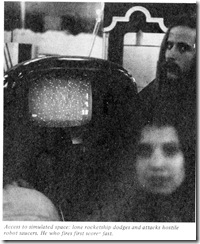
Image from An Index of Possibilities shot in an amusement arcade in Leicester Square London c. 1972/73 showing an early electronic computer game. Can anybody identify it ?

We had read his piece in Rolling Stone  - 'Space War :  Fanatic Life and Symbolic Death Among the Computer Bums'  [7th December 1972] about the very first computer game, and followed his interests in the emerging digital culture, leading, amongst other things, to the founding of the WELL, which makes him one of the inventors of social networking.

BRAND MEDIA LAB345 BRAND SOFTWARE CATALOG346

Books from The Generalist Archive:  The Media Lab (1987) and The Whole Earth Software Catalog (1984). The latter is a treasure trove for those interested in retro computing.

Brand's huge range of achievements are studied in great detail in the excellent and important book 'From Counterculture to Cyberculture: Stewart Brand, the Whole Earth Network, and the Rise of Digital Utopianism' by Fred Turner [University of Chicago Press. p/b 2008] which credits Brand as being a key linking figure between two worlds.

The blurb describes its as:  '...the previous untold story of a highly influential group of San Francisco Bay entrepeneurs...Between 1968 and 1998, via such familiar venues as the Whole Earth Catalog, the computer-conferencing system WELL, and, ultimately, Wired magazine, Brand and his colleagues brokered a long-running collaboration between San Francisco flower power and the emerging technological hub of Silicon Valley. Thanks to their vision, counterculturalists and technologists alike joined together to reimagine computers as tools for personal liberation, the building of a virtual and decidedly alternative communities, and the exploration of bold new social frontiers. Turner's fascinating book reminds us that the distance between the Grateful Dead and Google, between Ken Kesey and the computer itself, is not as great as we might think.'

SEE PREVIOUS POST: What the Dormouse Said: Counter-Culture and Computing Extended review of the book by New York Times science writer John Markoff [Viking Books. 2005]

Brand is an important figure. His new ideas, which will be unpalatable to many, nevertheless have a force to be reckoned with. His impressive track record of being ahead of the curve gives added weight to his thesis. The Generalist will be following his work and the progress of these ideas in future posts.

STEWART BRAND (2): THE WHOLE EARTH ENTERPRISE

19domains.1-500

       Stewart  Brand on-board his house-boat in Sausalito.  2009.  Source: 70point8percent blog

THE WHOLE EARTH ENTERPRISE

This article was originally written on the 17th December 1980 for the Focus section of the Sunday Times.

Like an alternative Henry Luce, Stewart Brand began his Whole Earth enterprise with two friends in a garage in San Francisco in 1968. By the time the 'Last Whole Earth Catalog' appeared in 1971, the book had become the standard reference point for a generation of young Americans.

It provided them with the tools, both physical and intellectual, to explore new experimental lifestyles, develop alternative sources of energy and promote the new ecological insight gained from NASA imagery. Whole Earth became an image, an attitude, a lifestyle of the times. The book became a publishing phenomena,selling 1,600,000 copies.

In 1974, Brand launched the 'Whole Earth Epilog' and a spin-off publication, 'Co-Evolution Quarterly', currently selling some 40,000 copies an issue, and has just sunk $80,000 ( half of which is his own) into 'The Next Whole Earth Catalog', a monster book weighing 5 1/2 lbs with 6O8 pages containing evaluations of some 3000 products.

The range and length of subject matter provide a useful indicator of social changes as viewed from Marin County. Items on solar energy have boomed from two to 63. Computers have shot up from two to twelve pages. Domes have disappeared - they leaked -and free schools have gone, to be replaced by an interest in home teaching. Neil Postman's 'Teaching As A Subversive Activity' has been superseded by the author's new book,' Teaching As A Conserving Activity'.

Brand writes: 'Many years ago China was the model for radical America; now America is the model for technical and economic China. The interest in crafts and practical tools remains, as does growing cannabis. As Brand wryly points out: 'Tens of thousands of Americans have been introduced to the joys of gardening by first growing their own dope. Later they diversified to food.'

There's more coverage of sex,  Brand being in favour of sophisticated recreation and against accidental procreation. Underground architecture, care of the dying, wind surfing, and fantasy games are some of the new buzz topics. There's essays on how to use animals that have been run over on the highway, an attack on metrication, an essay on the Four Illusions of Money and a detailed piece on amateur insemination programmes whereby gay women can make themselves pregnant plus details on how to urinate in zero-gravity, written by an ex-astronaut.

But the major theme of the book is: 'Large scale boom and bust. Small scale adaptability.' Brand is critical particularly of the nature of modern publishing with its emphasis on novelty, which allows many classic books to go out of print. For the record, he considers 'A Pattern Language' by Christopher Alexander et al, a fascinating study of architecture and planning, to be the best and most useful book in the whole Catalogue.

ca.res.arch1small 

Christopher Alexander is Professor in the Graduate School and Emeritus Professor of Architecture at the University of California, Berkeley. He is the father of the Pattern Language movement in computer science, and A Pattern Language, a seminal work that was perhaps the first complete book ever written in hypertext fashion. He has designed and built more than two hundred buildings on five continents. For more see Pattern Language site

He has a clear idea of his target audience, which consists partly of his contemporaries 'who have aged into positions of responsibility (one of us governs California) with most of our generation's premises surprisingly intact', plus the new college age population and thirdly, the 'vast citizenry' who are feeling the pinch of Inflation.

Brand doesn't foresee deep economic hardship ahead but Random House Editor-in-Chief Jason Epstein does and he is distributing the book because he thinks people will need it to save their lives. Brand's attitude may reflect his own personal changes to a more affluent lifestyle and certainly has much to do with his links into the Californian power structure.

6a00d83451c3ab69e200e54f5e2da58834-640wi

Gregory Bateson/ Source: Bruce Eisner's Vision Thing

This volume may be dedicated to Gregory Bateson - a pioneer in anthropology, psychology and cybernetics, who died recently -but there's no doubt that Brand's new mentor is his longtime friend Governor Jerry Brown.

05brown2.650 

Jerry Brown running for governor in 1974/  Jeff Robbins [Associated Press]

At one point he writes of him: 'The special appeal of the man, besides his intelligence, is his willingness to learn before your very eyes and include you in the process.1 Both Brand and astronaut / contributor Rusty Schweikart are paid advisers to Brown and all three share a mutual obsession with space colonies and other offworld projects, which are examined in depth in the book and reflected in the cover imagery and perhaps the title itself.

apollo9schweikartblack

Rusty Schweikart/ Source: Apollo Astronaut Autographs

One of the most interesting themes in the book is what Brand describes as 'trees-as-a-solution-to-everything' which includes a profile of the Hoedads, named after the basic tree-planting tool, a 200-person cooperative in the State of Oregon, involved in reforestation.

But surely a book of this size must have only added to the global tree problem? Brand's thought about that one. He's worked out that the first print run required 6,610 trees, some 14 acres of forest, to produce it. If he gets his target readership of 140,000, then it will only need 5% of them to plant one tree, for there to be a net tree gain on the whole project.

Smart thinking.

Saturday, September 12, 2009

THE FUTURE OF JOURNALISM

When I started The Generalist i had certain ideas in mind - and a certain excitement, as if, at this stage in my writing life, i was finally going to to  be able to realise a kind of journalism that i had always glimpsed but it was impossible to realise with technologies we had at our disposal before the 90s. This Manifesto expresses some powerful thoughts which I feel perfectly in  tune with. It reaches to the heart of what the Generalist is  all about.

Internet Manifesto

How journalism works today. Seventeen declarations.

Deutsche Fassung | Version française | Versión en español | Versione in italiano | Versão em português | Česká verze | Ελληνική έκδοση |Русская версия | Versiunea in limba romana | 日本語版 | ฉบับภาษาไทย

1. The Internet is different.

It produces different public spheres, different terms of trade and different cultural skills. The media must adapt their work methods to today’s technological reality instead of ignoring or challenging it.  It is their duty to develop the best possible form of journalism based on the available technology. This includes new journalistic products and methods.

2. The Internet is a pocket-sized media empire.

The web rearranges existing media structures by transcending their former boundaries and oligopolies. The publication and dissemination of media contents are no longer tied to heavy investments. Journalism’s self-conception is—fortunately—being cured of its gatekeeping function. All that remains is the journalistic quality through which journalism distinguishes itself from mere publication.

3. The Internet is our society is the Internet.

Web-based platforms like social networks, Wikipedia or YouTube have become a part of everyday life for the majority of people in the western world. They are as accessible as the telephone or television. If media companies want to continue to exist, they must understand the lifeworld of today’s users and embrace their forms of communication. This includes basic forms of social communication: listening and responding, also known as dialog.

4. The freedom of the Internet is inviolable.

The Internet’s open architecture constitutes the basic IT law of a society which communicates digitally and, consequently, of journalism. It may not be modified for the sake of protecting the special commercial or political interests often hidden behind the pretense of public interest. Regardless of how it is done, blocking access to the Internet endangers the free flow of information and corrupts our fundamental right to a self-determined level of information.

5. The Internet is the victory of information.

Due to inadequate technology, media companies, research centers, public institutions and other organizations compiled and classified the world’s information up to now. Today every citizen can set up her own personal news filter while search engines tap into wealths of information of a magnitude never before known. Individuals can now inform themselves better than ever.

6. The Internet changes improves journalism.

Through the Internet, journalism can fulfill its social-educational role in a new way. This includes presenting information as an ever-changing, continual process; the forfeiture of print media’s inalterability is a benefit. Those who want to survive in this new world of information need a new idealism, new journalistic ideas and a sense of pleasure in exploiting this new potential.

7. The net requires networking.

Links are connections. We know each other through links. Those who do not use them exclude themselves from social discourse. This also holds for the websites of traditional media companies.

8. Links reward, citations adorn.

Search engines and aggregators facilitate quality journalism: they boost the findability of outstanding content over a long-term basis and are thus an integral part of the new, networked public sphere. References through links and citations—especially including those made without any consent or even remuneration of the originator—make the very culture of networked social discourse possible in the first place. They are by all means worthy of protection.

9. The Internet is the new venue for political discourse.

Democracy thrives on participation and freedom of information. Transferring the political discussion from traditional media to the Internet and expanding on this discussion by involving the active participation of the public is one of journalism’s new tasks.

10. Today’s freedom of the press means freedom of opinion.

Article 5 of the German Constitution does not comprise protective rights for professions or technically traditional business models. The Internet overrides the technological boundaries between the amateur and professional. This is why the privilege of freedom of the press must hold for anyone who can contribute to the fulfillment of journalistic duties. Qualitatively speaking, no differentiation should be made between paid and unpaid journalism, but rather, between good and poor journalism.

11. More is more – there is no such thing as too much information.

Once upon a time, institutions such as the church prioritized power over personal awareness and warned of an unsifted flood of information when the letterpress was invented. On the other hand were the pamphleteers, encyclopaedists and journalists who proved that more information leads to more freedom, both for the individual as well as society as a whole. To this day, nothing has changed in this respect.

12. Tradition is not a business model.

Money can be made on the Internet with journalistic content. There are many examples of this today already. Yet because the Internet is fiercely competitive, business models have to be adapted to the structure of the net. No one should try to abscond from this essential adaptation through policy-making geared to preserving the status quo. Journalism needs open competition for the best refinancing solutions on the net, along with the courage to invest in the multifaceted implementation of these solutions.

13. Copyright becomes a civic duty on the Internet.

Copyright is a cornerstone of information organization on the Internet. Originators’ rights to decide on the type and scope of dissemination of their contents are also valid on the net. At the same time, copyright may not be abused as a lever to safeguard obsolete supply mechanisms and shut out new distribution models or license schemes. Ownership entails obligations.

14. The Internet has many currencies.

Journalistic online services financed through adverts offer content in exchange for a pull effect. A reader’s, viewer’s or listener’s time is valuable. In the industry of journalism, this correlation has always been one of the fundamental tenets of financing. Other forms of refinancing which are journalistically justifiable need to be forged and tested.

15. What’s on the net stays on the net.

The Internet is lifting journalism to a new qualitative level. Online, text, sound and images no longer have to be transient. They remain retrievable, thus building an archive of contemporary history. Journalism must take the development of information, its interpretation and errors into account, i.e., it must admit its mistakes and correct them in a transparent manner.

16. Quality remains the most important quality.

The Internet debunks homogenous bulk goods. Only those who are outstanding, credible and exceptional will gain a steady following in the long run. Users’ demands have increased. Journalism must fulfill them and abide by its own frequently formulated principles.

17. All for all.

The web constitutes an infrastructure for social exchange superior to that of 20th century mass media: When in doubt, the “generation Wikipedia” is capable of appraising the credibility of a source, tracking news back to its original source, researching it, checking it and assessing it—alone or as part of a group effort. Journalists who snub this and are unwilling to respect these skills are not taken seriously by these Internet users. Rightly so. The Internet makes it possible to communicate directly with those once known as recipients—readers, listeners and viewers—and to take advantage of their knowledge. Not the journalists who know it all are in demand, but those who communicate and investigate.

Internet, 07.09.2009

Translated from the German by Jenna L. Brinning

Leave a comment on the internet manifesto!
70 comments have been made so far.

2009 CC-BY

Saturday, September 05, 2009

INSIDE DOPE: DRUG LAWS & DRUG WARS2

narco-nation

Opium poppies, Helmand province, Afghanistan.      Source: The Last Crusade, illustrating a story 'US Marines Protect Afghan's Poppy Harvest (7th July 2009) which begins: 'Hey, guys, don’t pick the poppies.That’s the order from the Obama Administration to the 4,000 Marines presently engaged in Operation Khanjar or “Strike of the Sword,” an invasion of the Taliban infested Helmand Province in southern Afghanistan. '

The Generalist likes to be ahead of the national press. In the case of my last post it was 7 days. 

SimonJenkins-capd The article in question was by Simon Jenkins, a stalwart Guardian columnist, TV regular, Chairman of the National Trust etc. The article was entitled 'The war on drugs is immoral idiocy. We need the courage of Argentina.' Subtitle: 'While Latin American countries decriminalise narcotics, Britain persists in prohibition that causes vast human suffering'

Jenkins picked up on the shift in Latin America towards decriminalisation for personal possession of a wide range of drugs (see Previous Post) and added some useful things to my knowledge. For instance:

* In Ecuador, they have pardoned 1,500 "mules", mainly women, used by gangs to transport cocaine over international borders.

* The former Brazilian president Fernando Henrique 1246384004198 Cardoso has chaired a study report entitled Drugs and Democracy: Towards A Paradigm Shift: A statement by the Latin American Commission on Drugs and Democracy. Under the heading 'A Failed War' the statement begins:

'Violence and the organized crime associated with the narcotics trade are critical problems in Latin America today. Confronted with a situation that is growing worse by the day, it is imperative to rectify the “war on drugs” strategy pursued in the region over the past 30 years.

'Prohibitionist policies based on the eradication of production and consumption have not yielded the expected results. We are farther than ever from the announced goal of eradicating drugs. '

Jenkins concludes; 'From the death of British troops in Helmand to the narco-terrorism of  Mexico and the mules cramming London's jails, the war on drugs can be seen only as a total failure, a vast self-imposed cost on western society. It is the greatest sweeping under the carpet of our age.'

UPDATE: This story also picked up yesterday by The Observer: SEE: 'Is America Ready to admit defeat on its 40-year war on drugs' Also Cardoso's statement: 'The war on drugs has failed. Now we need a more humane strategy.'

SEE: International Drug Policy/Animated Report 2009film2
'Produced by an Oscar-winning studio for the Global Drug Policy Program of the Open Society Institute, [an organisation founded by George Soros ] this video highlights some of the disastrous effects of drug policy in recent years and proposes solutions for a way forward. '

The-Candy-Machine-by-Tom--001

Today's Guardian carries a review of 'The Candy Machine by Tom Fieling which adds further fuel to the flames. The review by Dominic Streatfield [who is the author of 'Cocaine: An Unauthorised Biography' begins:

'It's hard to imagine a policy as comprehensive in its failure, as overwhelmingly counterproductive, as the war on drugs. Tom Feiling has the statistics. In the last 35 years, the US has spent $500bn attempting to reduce the availability and purity, and increase the price, of illicit drugs. Yet cocaine purity is up, the drug is as available as it ever was and its price dropped 50% in the decade up to 2003. Cocaine, formerly the preserve of the super-rich, has become democratised. The result has been an explosion in demand and a corresponding explosion in supply. Nothing, it seems, can stop the flow.'

He concludes: 'What matters, however, is whether he is successful in making his case: that prohibition is "unworkable and counterproductive". I believe he is. Recent news reports from Argentina and Mexico indicate that their governments may be coming to the same conclusion: legalisation must, surely, be a less damaging route.'ALeqM5htXWJMDQsj3s2282GBbiAx2JeVbQ
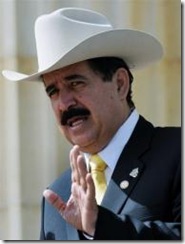
In October last year (I have just discovered) , the Honduran  President Mauel Zelaya proposed legalizing drug use, which he said would free up Honduras's financial resources and defang international traffickers. (AFP)

I learnt his information from the site of Transform Drug Policy Foundation which claims to be the UK's leading centre of expertise on drug policy and law reform.

They have obviously had an effect on Simon Jenkin's thinking. They have published a report (downloadable) entitled:

After the War on Drugs - Options for Control  which, they claims, 'is a major new report examining the key themes in the drug policy reform debate, detailing how legal regulation of drug markets will operate, and providing a roadmap and time line for reform.' Underneath is the following quote:

“First Class'. Everyone knows that prohibition has failed, and this report sets out, for the first time, how we can replace it.”  -  Simon Jenkins, former editor The Times and Columnist in the Evening Standard, The Times and The Guardian

Their site contains an valuable time line:

A history of drug prohibition and a prediction for its abolition and replacement

A Comment to my Previous Post has tipped me off to the  prince-of-pot case of  Marc Emery which I was previously unaware of. The full story can be found on the site Criminal Justice, which has embedded YouTube video on the man they call 'The Prince of Pot'. In brief. Emery has a major marijuana seed business and publishes Cannabis Culture magazine which he has been sending to all Canadian MPs for the last 12 years. According to Criminal Justice:


- Marc Emery brought a capitalist approach to the marijuana legalization movement by starting "radical retail" outlets such as Hemp BC, and got politically involved by helping organize the Canadian Marijuana Party and creating the BC Marijuana Party, the latter which he still leads today.


- Marc Emery created his seed business with the purpose of using the profits to fund the cannabis movement worldwide. Through the sale of cannabis seeds, Marc was able to finance numerous drug law reform groups and events around the world, mostly in Canada and the United States. He funded global rally/march promotion, American and Canadian ballot initiatives, election campaigns, lobbying groups, conferences, drug rehab clinics, class action lawsuits, protests, patient bills and bail fees, and more. In total, over $4,000,000 was contributed to various activities and organizations.

'On July 29, 2005 his business in Canada was raided by the United States Drug Enforcement Administration. He and co-defendants, Greg Williams and Michelle Rainey, were charged with "'Conspiracy to Distribute Marijuana", "Conspiracy to Distribute Marijuana Seeds" and "'Conspiracy to Engage in Money Laundering." Yet today there have been no charges ever filed against them in Canada.'

The US are seeking his extradition.

Here is yesterday's report from the  'New Times Broward Palm Beach News blog.

'If you don't know the back story, later this month in no prison for pot Seattle, Marc Emery, the so-called "Prince of Pot," is scheduled to be sentenced to five years in American prison for selling marijuana seeds through the mail. The Canadian - and publisher of Cannabis Culture Magazine - claims to have sold more pot seeds than anyone else in the world. But what in Canada is a $250 fine, has led to a four-year court battle in which the Drug Enforcement Administration has sought Emery's extradition for federal prosecution.'

See: Fort Lauderdale Protest for the 'Prince of Pot by Michael J. Mooney/Crime.

Also yesterday saw publication of a story in SF Weekly, the San Francisco News Blog entitled 'Chronic City: The Expensive Farce of Marijuana 'Eradication' In California.' by Steve Elliott. The article reads in part:

camplogo-thumb-200x76 Every year since 1983, the Campaign Against Marijuana Planting (CAMP) has engaged in a quixotic quest to "eradicate marijuana" in California. And every single year -- all 26 of them -- it has failed miserably as marijuana became more and more available.

The waste, arrogance and abuse associated with the program -- which has unfortunately become the largest law enforcement task force in the United States, with more than 100 agencies participating -- have become legendary. Ordinary families have been terrorized by paramilitary units, peaceful homeowners have been buzzed by low-flying helicopters, and community relations between citizens and law enforcement have suffered almost everywhere CAMP has laid its heavy hand.

Thursday, August 27, 2009

INSIDE DOPE: DRUG LAWS, DRUG WARS

Portugal 409 mod 500              
Source: suburra.com/.../drug-freedom-works-in-portugal/

Drugs in Portugal: Did Decriminalization Work?

Portugal has the most liberal drug laws in Europe. In 2001, it became the first European country to officially abolish all criminal penalties for personal of drugs including marijuana, cocaine, heroin and methamphetamine. Has it worked. Yes!
Time/Maia Szalavitz/ 26 August 2009

Read or download the full report by the Cato Institute in the US: Drug Decriminalisation in Portugal: Lessons for Creating Fair and Successful Drug Policies by Glen Greenwald

MEXICO

Photo: Susana Vera, Reuters

Mexico quietly decriminalizes drug use

Now marijuana, cocaine, LSD, and heroin will be tolerated for personal use. It's part of a bid to free up resources and jail space so that authorities can focus efforts on big-time traffickers.

Christian Science Monitor/Sara Miller Lima/24 August 2009

art.fernandez.gi              

Argentine President Cristina Fernandez de Kirchner

Argentina and legalizing pot

Argentina follows Mexico toward decriminalizing marijuana. What does this mean for the war on drugs?

Argentina’s Supreme Court ruled that it’s unconstitutional to punish adults for private marijuana use, a big step toward decriminalizing the drug. The ruling is based on the “privacy clause” of Argentina’s constitution—private pot use doesn’t “offend public order or morality”—but it comes just days after Mexico eliminated criminal penalties for holding small amounts of drugs. And Brazil and Ecuador are close behind.

The Week/27 August 2009

See also: Latin America on Its Way to Legalizing Drugs, Experts Say [Latin American International Herald Tribune]

Colorado's Marijuana Economy: An Explosion of Ganjapreneurship

Medical marijuana has been technically legal in Colorado since kathleen2000. Medical marijuana dispensaries in the state are expected to double to 60 by the end of 2009. Illegal Marijuana farmers are now selling legally to the dispensaries.

Pic: Kathleen Chippi who runs One Brown Mouse Cannadis Healing Arts Center

'Considering the prevalence of the underground market, legitimizing the business has the effect of tightening controls over it, regulating who can legally purchase, sell, or grow it, which puts unscrupulous drug dealers out of business, this reducing the availability of product through any but official channels. The controls that come with legalization effectively reduces its availability, rather than the contrary. '

Two part article. Part of a series 'Recession Road Trip' by Christina Davidson/ The Atlantic/ 26 august 2009

It's Time to Legalize Drugsleap-badge

By Peter Moskos and Stanford "Neill" Franklin. Moskos is a professor at John Jay College of Criminal Justice and the author of "Cop in the Hood." Neill Franklin is a 32-year law enforcement veteran. Both served as Baltimore City police officers and are members of Law Enforcement Against Prohibition.

Having fought the war on drugs, we know that ending the drug war is the right thing to do -- for all of us, especially taxpayers. While the financial benefits of drug legalization are not our main concern, they are substantial. In a July referendum, Oakland, Calif., voted to tax drug sales by a 4-to-1 margin. Harvard economist Jeffrey Miron estimates that ending the drug war would save $44 billion annually, with taxes bringing in an additional $33 billion.

Washintgon Post/August 17, 2009

marijuana_420_01 

Mark Leffingwell / Daily Camera / AP

The Great American Pot Smoke-Out  has been held on April 20th for many years. This gathering of  thousands of people  at the University of Colorado in Boulder in 2009. Photo was taken at 4:20 p.m., when the entire crowd exhaled at once. See full set of pics at Time/Photos.

DRUG WARS

afghanistan-opium-fields       US Soldiers inspect Afghan poppy fields.

US puts Afghan drug lords on hitlist to disrupt Taliban finances

• 50 traffickers with links to insurgency targeted
• Move marks major shift in counter-narcotics strategy

The question of how to deal with the opium poppy harvest and drug trade in Afghanistan, the source of 90% of the world's heroin, has been a highly controversial issue for years.

Richard Norton-Taylor and Jon Boone in Kabul/The Guardian 10 August 2009

Drug-traffic-routes-and-cartel-areas        Map showing operations of organised crime in Mexico. Source: Stratfor Global Intelligence   Read: On The Trail of the Traffickers about the Mexican drug war. More than 11,000 people have been killed since late 2006.


Wednesday, August 26, 2009

WILCO TRIUMPH

                                                                                                                                  Copy of wilco 108This is mainman Jeff Tweedie of Wilco holding his  wee birthday cake on stage at the Troxy in East London last night, surrounded by a shower of spangles, accepting the warm love and best wishes of the crowd.

It was a standout performance for band that quietly and steadily have become one of the great bands in America of today. To describe their music, they have their roots and feet in Americana, their heads in experimentalism, on a par with Radiohead.

With their three-guitar line-up, backed by keyboards, bass and Copy of wilco 139drums, they create sonic symphonies, great swelling rousing swirls of beaty noise. Next they break it down to sweet and affecting highly crafted songs of the prairies, for those nights when the wind is howling outside your log cabin. The band as a unit are tight, drilled and honed by long roadwork,  expertly skilled and adept at negotiating the slides , breaks and seques a Wilco song requires, like experienced white-water rafters caught in a tricky current. They do this with a lot of heart and humour. They seem open, relaxed and were obviously enjoying themselves.

Copy of wilco 146This was a stand-out performance and, for some reason, it made me feel that this is what it must have been like to see the Byrds in the Avalon Ballroom.

Copy of wilco 064 The Troxy, by the way, is a great old-fashioned art deco venue, with balconies and a great wide floor. We found a sweet spot where the sound was perfect and the bass moved right through your body.

Unable to take an SLR camera into the place, I was working with Copy of wilco 037my small Sony digi, which I hadn't used for almost a year, and just experimenting with settings at random. I like the results. They seem to capture the moods and colours and energy of the music.

We - Emma, Kailash, Louis & I - were the only ones dancing, like loonies, in our corner of the arena. It was a joyous experience.wilco 003

Monday, August 10, 2009

GLAD DAYS: Tom Paine & William Blake, The Dirty Strangers & John Sinclair

 gladday2

'Glad Day' or 'The Dance of Albion' by William Blake (c.1794)

Two beautiful glad days, with a large moon in the sky. Things are afoot.

Thursday night, torrential rains. I'm in the bar when friends arrive and tell me they're just off to the Lewes Little Theatre to see 'In Lambeth' by Jack Shepherd, there's tickets left, would I like to come. No question.

132 Some background. Jack Shepherd has always been one of my favourite British actors. He has produced a huge volume of work in his long career and is a man of great integrity and character. His play 'In Lambeth' is of special interest. I first saw it on the BBC years ago (happily this version is now available on YouTube).

image-bar_lambeth

'In Lambeth' is based around a meeting between Tom Paine and William Blake. The scene is Blake's back garden and the play begins with he and his wife sitting up an apple tree in the nude. Tom Paine turns up for supper (by arrangement or unexpectedly, I'm not sure).

The play, written and directed by Jack, who also plays PaineTom Paine in this production (the BBC film starred Bob Peck) is based on the story of a 'real' meeting between Paine and Blake when, legend has it, Blake warned Paine not to go back to his lodging and to escape to France before he was arrested. Paine takes Blake's advice and just escapes from Dover ahead of the clutches of the secret police of those days.

 200px-William_Blake_by_Thomas_Phillips Whether this incident happened is questionable. Blake and Paine certainly travelled in some of the same circles. Modern biographers of Paine and Blake ( and Peter Ackroyd respectively pay it little mind).

The first major biography of Paine was  the 2-volume 1892 edition of 'The Life of Thomas Paine' by Moncure Conway, he records that Paine gave a speech to the 'Friends of Liberty' of "inflammatory eloquence". The following night, at the house of friend called Johnson, a number of sympathisers to his cause were present, including the 'mystical William Blake.' Conway then quotes Gilchrist's account:

"On Paine's rising to leave, Blake laid his hand on the orator's shoulder, saying, 'You must not go home, or you are a dead man,' and hurried him off on his way to France, whither he was now in any case bound to take his seat as a legislator. By the time P:aine was at Dover, the officers were in his house... and, some twenty miniutes after the Custom House officials at Dover had turned over his slender baggage, narrowly escaped from the English Tories. These were hanging days! Blake on the occasion showed greater sagacity than Paine, whom, indeed, Fuseli affirmed to be more ignorant of the common affairs of life than himself even. spite of unworldliness and visionary faculty, Blake never wanted for prudence and sagacity in ordinary matters.'

This goes to heart of the great interest of the play. Here are two men living in revolutionary times - the birth of a New World. Paine  believes in political and social action, changing the world through practical efforts, repealing bad laws, extending the social franchise. Blake is more concerned with changjng the individual from within. Both speak with great eloquence and the dialogue and interchange between them is fascinating, moving and very contemporary.

This production was first- rate. Luke Shaw was brilliant as Blake and Lisa Bealby as his wife Catherine was equally excellent. Shepherd as Paine was expertly done. We were captivated and held by their wonderful performances.

It was a night of torrential rain. In the interval I was out having a fag in my hoodie (how sad is that, in the rain!) when a big guy with a leather jacket came out for a smoke. This was Vinnie. We fell into conversation. He said things in this country have got to change. He's been reading Marx and was studying Rousseau and related thinkers. He spoke in a heavy Scots accent and was full of righteous anger about the state of our country.That night I was full of thoughts.

The Friday night - a most beautiful evening, balmy weather, beautiful skies darkening to stars and bright moon.Dirty Strangers565

I'm putting on a gig: The Dirty Strangers (fantastic band) and the legendary beat poet, writer, activist John Sinclair, former manager of the MC5 and founder of the White Panther Party.

In person, John is immediately delightful. A man at peace with himself, open and courteous and with an enthusiasm that is contagious. Laughing at being considered a legend. He says "I am a Bodhitsattva". He has no fixed home, has being taken in by two young people in Amsterdam, financially dirty strangers 005supported by well-wishers. He has an internet radio show and does live appearances. At these he improvises free verse/raps/blues songs and delivers them with spirit and gusto - as we discovered. His book, 'It's All Good', available from Head Press, is an excellent collection of well-written essays on various aspects of his busy and eventful life. He also gave me his CD of 'Detroit Life' by John Sinclair and His Motor City Blues Scholars. He tells me he is writing poems to every single Thelonious Monk track. Some of these are on the album.

dirty strangers 036 Alan Clayton of the Dirty Strangers is a  powerhouse, a man of banter, with a Fred Perry and a porkpie hat. His songs are warm and joyous rock 'n 'roll tunes that make you smile and want to dance. The band as a whole are superb. George Butler on drums,  John Proctor on bass and Scottie Mulvey on keyboards just have a real natural groove with Alan as a full-on frontman pumping it up with a big smile on his face.  Their set with John Sinclair, in which they set up some great blues rhythms while John improvised his beat poems was a stonker. They'd never played together before, had 10 minutes soundcheck time, yet it all melded beautifully and received huge rounds of applause. Catch them if you can at the 100 Club in Oxford Street on August 19th.

dirty strangers 066

dirty strangers 061