Tuesday, May 10, 2016

THE RETURN OF THE ARTS LABS: FURTHER DEVELOPMENTS / ALAN MOORE & THE NORTHAMPTON ARTS LAB


  The time is 1969-1971 and we are running our own Arts Lab in Worthing. (Above) our float in a Bank Holiday Parade; (Left) Our mimeographed magazine 'Swan' ,later renamed 'Scab'; (Right) a flyer for a Hawkwind gig at the Art College; (Below) street-selling underground newspapers.


Something's happening hereWhat it is ain't exactly clear


The story so far:


Back in 31st August 2006 I published the following post


ALTERNATIVE SOCIETY 1970s: Arts Labs

The HQ INFO archive contains Issue 1 of the Arts Lab Newsletter, produced by BIT Information Service (then resident at 141 Westbourne Park Road) in October 1969. It begians as follows:
THE ARTS LAB MOVEMENT 1970 Vision: May 150 Labs bloom!
1969 Facts; 54 Labs: just under a dozen fully-fledged ones in Britain - about a dozen and a half Labs without permanent premises but nevertheless active - and well over two dozen Labs at an early stage, sometimes no more than a nucleus of people meeting and planning their first benefit concert.

The first Arts Lab was established by Jim Haynes and Jack Henry Moore. In this post you can read Jim's definition of an Arts Lab and the entry I wrote about the Worthing Workshop. At the end of the post I wrote:

ISN'T IT ABOUT TIME WE STARTED A NEW ARTS LAB MOVEMENT IN BRITAIN ?


Earlier this year, I published the following post [11th Feb 2016]


DAVID BOWIE & THE ARTS LABS MOVEMENT


This contains a review of the book, reprints Jim's Arts Lab description + more material on the Worthing Workshop and, at the end, asks the same question:

ISN'T IT ABOUT TIME WE STARTED A NEW ARTS LAB MOVEMENT IN BRITAIN?

Last week, I published a related post about a book entitled COUNTERCULTURE UK: A CELEBRATION. The introductory essay concludes : 
'As we transition to a new age in which work becomes more collaborative, information is shared globally and capitalist market forces no longer hold sway, new countercultures will appear, grow, fade and disappear to help us come together and find our way.'


You can find these posts listed as references for the Wikipedia entry on 'Arts Labs'


Today my colleague Tom Muggeridge sent me a link to this interesting piece in the excellent on-line journal 'The Quietus' by the editor John Doran on 


'ALISTAIR FRUISH ON THE SENTENCE AND ALAN MOORE ART'

Alistair Fruish has written a 46,000 word novel composed of just one long sentence, entitled THE SENTENCE which is published later this year. He has also helped edit Moore's massive epic novel Jerusalem

Doran writes: 'When we spoke to Fruish recently he told us that a piece of artwork created by Moore and Victoria Stothard has been put on eBay in order to raise money for the publication of a magazine called Peasants With Pens. This new publication has been created by the newly revived Northampton Arts Lab. For the cover, Moore created the original characters, typography, and layout and then Stothard turned the piece into a striking painting.'

Fruish says: 'This contains work by members of the new Northampton Arts Lab, which includes me and Alan. This new iteration of the Arts Lab idea spontaneously grew out of the countercultural conference 'Under The Austerity The Beach', which took place in Northampton last year. And we are planning lots of things. This auction is designed to raise money to pay for the printing of the first magazine. Which is looking pretty fantastic. The magazine will be out soon and will feature work by Alan Moore, Victoria Stothard, Megan Lucas, a dusted off Martin Marprelate, myself and many more local artists.'


Can you tell me a bit more about the history of art labs and why you thought it was time to reboot them?


AF: The Arts Labs were an alternative arts movement, that sprang up in 1967, when an arts centre was started up by Jim Haynes on Drury Lane in London. Subsequently others were started all round the country. They were an influence on artists such as David Bowie and the Stuckist Charles Thomson, Billy Idol and Brian James of the Damned, as well as influencing a young Alan Moore. 


We are attempting a 21 Century re-boot, because after the Counter Cultural Conference in Northampton last year a group of people came together with the intention of making more things happen here in Northampton. We needed a name and Alan suggested we call it the Arts Lab.'

This in turn has led me to a publishing operation called Intellect Journals, who publish 'Studies in Comics'. [Volume 2 Issue 1/: May 2011]. This contains a piece entitled ' The formation of a dissident cultural practice' by Maggie Gray  which you can purchase on-line as a pdf. The Abstract reads:
'This article addresses Alan Moore’s earliest work for zines and underground papers from 1971 to 1980.
It argues that the hippie counterculture was a formative influence not only on his anarchist politics but his approach to cultural production, and an awareness of its significance is therefore crucial to the critical understanding of his oeuvre as a whole.
Equally Moore’s experience of the underground augments historical understanding of the UK counterculture itself and the role of comics within it, and challenges dominant chronological narratives that insist on a definitive split between its political and cultural wings during this period. This article considers Moore’s output in illustration, poetry and prose, but particularly focuses on his earliest comics, featured in Embryo, anon. and The Backstreet Bugle.
It looks in detail at the Northampton Arts Lab and the underground press as counter-institutions, and spaces in which Moore developed highly politicized aesthetic and creative strategies that he would carry into his later professional work. 
*

According to the  BIT ARTS LAB NEWSLETTER (October 1969), the Northampton Arts Lab Project was run by Richard and Janice Smith, with Jackie Glascock, Pat McCarthy, Ant Knight, John Small + Musical consultants Roy Civil and Pete Gorufalo. The entry reads:


'This is a quite new project that has enlisted about twenty people willing to help [indecipherable]...fighting hard against local lethargy, protection rackets, the tendency to go down to London, and a neighbouring club owner who thinks he is starting an Arts Lab as he pockets half the profit of any event.
"The thing we're planning at the moment", writes Janice, "is an evening of Poetry and Music by local musicians and poets on October 15th (6 piece Jazz group, 8 or 9 poets, small brass ensemble). As we haven't got premises of our own at the moment we're putting it on at the YMCA which is a good room for the sort of thing we want to do. Galleries for the lights etc. We felt that this sort of event at the beginning will involve more people in the actual coordination of the Lab, people really have to participate to get this sort of thing off the ground.
We want to put on a film soon after the poetry and music and then a theatre group but nothing's definite yet. At the moment we're concentrating all our energies into getting a good first event to maintain the initial enthusiasm and impetus.'
PREVIOUS POSTS ON ALAN MOORE & JOHN HIGGS


ALAN MOORE: GENIUS AT WORK


Sunday, May 08, 2016

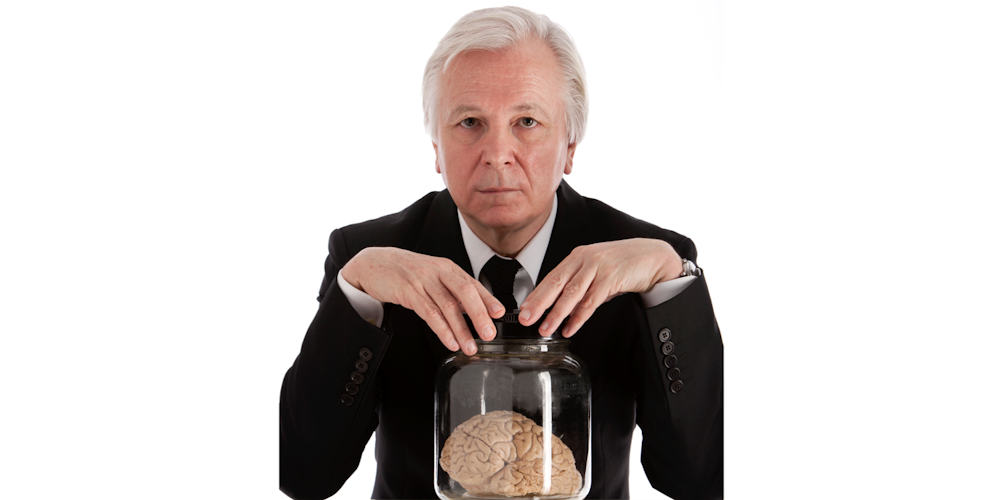
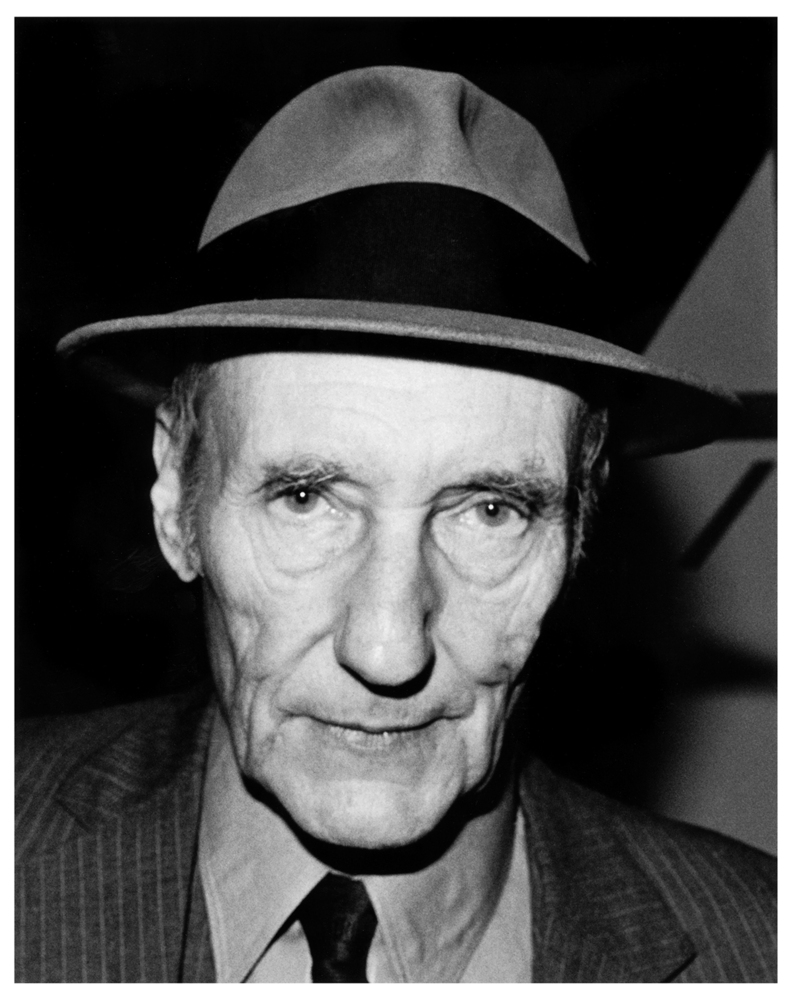
MENTORED BY A MADMAN: THE WILLIAM BURROUGHS EXPERIMENT by ANDREW LEES + THE YAGE LETTERS and THE AYAHUASCA BOOM

It would be hard to overpraise this remarkable and intriguing book and difficult to know where to begin to explain why.

Neurologist Andrew Lees is one of the most respected leading world experts on Parkison's, a condition which he has devoted much if not most of his adult life to, trying to understand its weird particularities and discover new healing strategies to dampen, if not cure, its most disruptive effects.

We follow the events that led him to choose neurology and he, in turn, leads us into the intimate, finest details of the human brain and how Parkinson's works its destructive force.

A deep drinker of experience and knowledge, he is advised by a senior neurology professor to study the thinking and working practices of Sherlock Holmes and to read Proust. 


Lees' training involved intense and detailed observations and reports on patients - every reflex and gesture, use of language, part of body - monitored and documented. Parkinson's is very personal and requires a complete holisitic approach as it manifests itself in a myriad of forms and conditions. 

Parkinson’s disease is caused by a loss of nerve cells in part of the brain called the substantia nigra. This leads to a reduction in a chemical called dopamine in the brain. Dopamine plays a vital role in regulating the movement of the body and a reduction in dopamine is responsible for many of the symptoms of Parkinson's disease.

Lees was great friends with the late Oliver Sachs whose book 'Awakenings' documented the discovery and use of L-DOPA - the first breakthrough treatment which increased dopamine concentration in the brain with dramatic results. It seemed at first to be a miracle cure but, over time, it proved to have peaks and troughs (on/off cycles) and to lose its initial potency. A better way had to be found to continuously stimulate the dopamine system.


Lees did study Holmes and gained from the experience but where does William Burroughs come into it the story. Spookily, Ginsberg, Kerouac and others likened 'Old Bull Lee' (Burroughs) to a real-life Sherlock Holmes. Lees documents the similarities in appearance and lifestyle and the obvious differences:

'Burroughs was peripatetic, addicted to narcotics and more anarchic. Holmes preferred chemistry whereas Burroughs' forensic investigations embraced telepathy and extra-sensory perception. I now saw Burroughs more as a freelance investigator researching anthropology, psychology,l biology, sociology and neuroscience in an attempt to accurately inform his fiction.'

It was Burroughs that, time and again in Lees' life, provided him with deep truths, uncanny tactics and fresh thinking as he wrestled to a deeper understanding of the puzzle of Parkinson's. After all, Burroughs had tried a bewildering range of mind altering and enhancing drugs, had been a full blown junky, and had survived to become a leading documenter of strange worlds and dimensions. He understood addiction and he was able, in highly crafted language to communicate his visions and experiences.

Burroughs had been cured of his junk addiction by a doctor in London who administered a cure involving a drug called apomorphine.

Lees writes: 'Sometimes in my dreams I was in the belly of a whale, watching three dimensional vibrating plankton glide by. One night sitting on the sea bed with a telescope, a diatom with a familiar benzene ring and two hydroxyl groups and a rigid side chain supported by thee carbon rings, unfurled before my very eyes. This was apomorphine and I was convinced it has appeared as a direct consequence of my re-reading of 'Naked Lunch'. 

Lees experimented with a volunteer group of  patients and apomorphine proved to be a powerful remedy for the complications of advanced Parkinson's sufferers. Despite this, says Lees, 'it failed to capture the public imagination or interest the scientific press'.

Burroughs fascination with the natural pharmacopoeia of the Amazon jungle, in particular Yage (now much better known as ayahuasca) led Lees at the age of 66 to make his own journey to the Amazon. He writes: 

'Hallucinogenic molecules could open up frightening new vistas of exploration and, if Burroughs was right, my trip to the Amazon would lead me to unimagined cures. I wanted to see whether yage could infuse my monochromatic research canvas and open up vivid new scientific perspectives.'

Here in the Amazonian port of Leticia in the far south of Colombia, he imbibed the dark liquid:
'As I lurch from bedroom to the bathroom my body seems to be creating lurid serpentine tints that zip across the wall like electric storms. I feel invisible raindrops on my arms as I am propelled on a beautiful aquamarine tide. In the gleaming of day I now know that rational consciousness is parted by the thinnest of films from illusion and dream. Seeing things that are not there can occur in the blind, the bereaved and even in waking dreams. The innate knowledge of the Amazon Indian assisted by the ritual use of sacred plants has given me second sight.  I understood for the first time how during hurricanes, chairbound victims of Parkinson's disease can magically override the poltergeist and escape to safety. The plant teachers...had shifted my understanding of reality. I could now see into my own mind.'
Burroughs was interested at one point in being a doctor and his writings are populated by scary medical types including the uber-figure of the dreaded Doctor Benway. Lees shares his distrust of short-sighted governing bodies, medical authorities and pharmaceutical companies who have, it is plain, blocked many areas of valuable research. 

Burroughs, he writes, 'realised that science was blinding medicine and healthcare was ripping off its customers. I shared his view that the blunt rationalisation of society's control mechanisms was arresting human development and had started to cause self-harm and destruction of the environment.'

This shining gem of a book is irradiated with a deep-seated love and care for humanity. Andrew Lees thoughts, musings, investigations and adventures will touch your heart and open your mind. He has succeeded in erasing the purely arbitrary line between literature and science, has provided convincing evidence of Burroughs seminal influence in so many fields, and has created a classic work that will resonate and excite enquiring minds for decades if not centuries to come. Respect!

FOOTNOTE:


This book is, incidentally, beautifully produced - creamy paper, graceful typography, stylish red and black text -  something that is true of all Notting Hill Editions, a bespoke publisher devoted to the Essay form. Their website contains a valuable and accessible Essay Library which contains 100 examples free  to view. As to what constitutes an essay, Ophelia Field writes:
'The essays vary considerably in length, from one-and-a-half to over a hundred pages. Rather than setting a word limit, we think of Michael Holroyd’s definition of essays as ‘non-fiction short stories’ and so identify an essay in the same spirit as a publisher distinguishes short story from novella. Some cases, certainly, are debatable.'


BURROUGHS & GINSBERG: THE YAGE LETTERS


An original copy of 'The Yage Letters' documenting the correspondence between Allen Ginsberg and William Burroughs re their journeys and experiments with yage - as documented in the back cover notes (above). This is a a City Lights book [2nd printing/May 1965] in the Beat section of The Generalist Archive. I sat on a bench in the sun and more or less devoured it in one sitting (68pp), It is a wonderful ride. The main part of the book are Burroughs letters as he scampers across Latin America in search of the real yage and the secrets it holds. He must have had a remarkable constitution judging by the number of illnesses he picks up, strange meat he imbibes, his diet of various forms of native alcohol and substances, He survives incarcerations in police cells, violent bistros and dangerous muggers, taking all in his stride, This is 1953 in frontier towns in which death hovers round every tree and corner.
Seven years later, in 1960, Ginsberg writes to Burroughs after imbibing yage  (Ayahuasca) in Peru. never one to mess around, Ginsberg has a full-blown series of revelations in which he faces Death and says he 'felt like a snake vomiting out the universe.' After, later, he writes to Bill: 'I don't know if I'm going mad or not and it's difficult to face more - tho' I suppose I will be able to protect myself by treating that consciousness as a temporary illusion and return to temporary consciousness when the effects wear off.'.

Burroughs responds: 'There is no such thing a fear....You are following in my steps. I know thee way. And yes know the area better than you think. Tried more than once to tell you to communicate what I know. You did not or could not listen. 'You can not show to anyone what he has not see.'

Significantly he also introduces him to Brion Gysin's idea of bringing collage to the written composition, thus ushering in Burroughs 'cut-ups' which underpins his seminal work 'Naked Lunch'. He writes: 'You want 'Help'. here it is. Pick it up on it. And always remembere: 'Nothing is True. Everything is permitted.' Last Words of Hassan Sabbah The Old Man of the Mountains.'

*
I had tea with William Burroughs at the Chelsea Arts Club in London [28th September 1982] and met Allen Ginsberg at Barry Miles' flat in London [25th April 1985], the same week I read a biography of Walt Whitman.


SEE PREVIOUS POSTS: 
Both Posted 19th June 2005]


*

AYAHUASCA TODAY


Since those pioneering days, the taking of Ayahuasca has become a worldwide phenomenon.

Ayahuasca, also known as yage, is a blend of two plants - the ayahuasca vine (Banisteriopsis caapi) and a shrub called chacruna (Psychotria viridis), which contains the hallucinogenic drug dimethyltryptamine (DMT). DMT - and therefore ayahuasca - is illegal in the UK, the US and many other countries.

Ayahuasca: The South American shamanic brew which creates out-of-body experiences

Ayahuasca is most commonly consumed as part of rituals designed to communicate with celestial supernatural forces


Why do people take ayahuasca?

British student Henry Miller, 19, died in Colombia after apparently consuming the traditional hallucinogenic drink ayahuasca, or yage. Emma Thelwell, who took the drug herself, explains why it has become a rite of passage for some backpackers.[Excellent piece from BBC online magazine/ 29th April 2014]

A shamanic detox in Sussex
You may not see strange visions of celebs, but an ayahuasca shamanic healing session can leave you mentally and physically rebooted. Stephanie Theobald/The Guardian Friday 12 August 2011

Friday, May 06, 2016

COUNTERCULTURE UK & THE BRITISH BEAT EXPLOSION


 London-based independent publishing company Aurora Metro  and its associated imprint Supernova Books are driven by the accomplished Australian-born producer/ 
writer/director Cheryl Robson - a true creative entrepeneur. After cutting her teeth at the Beeb, she taught filmmaking at the Uni of Westminster, then created a theatre company, producing and developing women's plays, together with this publishing enterprise. Their catalogue showcases  world fiction, young adult fiction, non-fiction culture and plays. These two titles caught The Generalist's eyes:

COUNTERCULTURE UK: A CELEBRATION is a collection of essays by different authors covering the following areas: Art/Black and Minority Ethnic Arts, Comedy, Dance, Disability Arts and Activism, Environmentalism, Feminism, Film, Gaming and the Internet, LGBT Culture, Literature, Music, Negative Space, Theatre, YouTube and Social Media. 

Within these broad labels, the essayists choose their own personal take, most but not all
 following chronological paths. In Film, f'or instance, Ellen Cheshire charts the progression of events in counterculture cinema whilst K. Charlie Oughton goes for 'Subversive Cinema: Cult Film and the Rise of Film Fan Communities.'  Susan Murray's 'The Changing Landscape of Comedy' is dedicated to the late Rik Mayall and is a great read from a chirpy and chippy practitioner. Being of a certain generation, much of the early history I knew but it now seems to have acquired a new context. After all, what do we mean by 'counterculture' in our new stress strewn, paranoid, 24/7, fractured, screen obsessed, austerity ridden, surveillance saturated England/Britain (whatever). The books intro by Cheryl R and Rebecca Gillieron begins thus:
'Tomorrow belongs to those who can see it coming.'
- David Bowie

'What exactly is counterculture?  The term suggests resistance to the norm and has come to encompass everything from alternative lifestyles to large movements advocating social change. Today, in advanced Western democracies, where mass protest seems to have little impact on government policy, the value of group resistance needs to be re-examined. Simultaneously, the ways in which individuals can have a voice and influence society have mushroomed as a result of the digital age.'
*
'The value of this book lies in its overview of the many strands of counterculture which have developed to express creativity, resistance and revolt. Britain's countercultures weave a densely interconnected fabric and share a long and continuous history. The 1960s was definitely a high point for new ideas, innovation and technology, as well as being a time when young people had access to free university education for the first time and were testing boundaries and exercising new freedoms. And the will to disrupt and change society still lives on in the younger generations, as evidenced by punk and he Occupy movement, Individuals continually create new subcultures, challenge the mainstream in new ways and new places, and they will keep doing so as they try to translate their desire to create a better world into action.'
The essay concludes: 'As we transition to a new age in which work becomes more collaborative, information is shared globally and capitalist market forces no longer hold sway, new countercultures will appear, grow, fade and disappear to help us come together and find our way.'


 As the book rightly points out, the term 'counterculture' was originally used by Theodore Roszak in 'The Making of a CounterCulture' [Published in 1969 by the University of California Press].

This is an original copy of the paperback edition, published simultaneously by Anchor Books the same year. I bought it in a
second-hand bookshop  in Lewes. It's still got a torn sticker on the front from the University of Pittsburgh Book Store.

The book opens with two quotes: 


Art Degraded, Imagination Denied:
 War Governed the Nations
* * * *
Rouse up, O Young Men of the New Age! set your foreheads against the ignorant Hirelings! For we have Hirelings in the Camp, the Court & the University, who would, if they could, for ever depress Mental and prolong Corporeal War
- William Blake

'At this point, the counter culture I speak of embraces only a strict minority of the young and a handful of their adult mentors....

....the counter cultural young are significant enough both in numbers and in critical force to merit independent attention. But from my own point of view, the counter culture, far more than merely "meriting" attention, desperately requires it, since I am at a loss to know where, besides among these dissenting young people and their heirs of the next few generations, the radical discontent and innovation can be found that might transform this disoriented civilisation of ours into something a human being can identify as home. They are the matrix in which an alternative, but still excessively fragile future is taking shape... 

...all we have to hold against the final consolidation of a technocratic totalitarianism in which we shall find ourselves ingeniously adapted to an existence wholly estranged from everything that has ever made the life of man an interesting adventure.

If the resistance of the counter culture fails, I think there will be nothing in store for us but what anti-utopians like Huxley and Orwell have forecast - though I have no doubt that these dismal despotisms will be far more stable and effective than their prophets have foreseen. For they will be equipped with techniques of inner-manipulation as unobtrusively fine as gossamer.


*

If Soho was the junction box of British music in the late 50s/early 60s and beyond, with its seedy network of pubs and clubs, the other London hotspot was down the river to the West where jazz, blues and later rock and R&B thrived in various venues including the legendary Eel Pie Island Hotel.
 This genteel 19th century building hosted ballroom dancing during the 1920s and 1930s. When it reopened in 1956, trumpeter Brian Rutland and his Grove Jazz Band, started sessions there. 

That was the beginning of the Eel Pie Jazz Club, later taken over by Arthur Chisnall, under whose stewardship it became a legendary venue. Jazz greats who appeared there regularly included Acker Bilk, Chris Barber, Ken Colyer, and George Melly. Up until 1957 when a bridge was built, all the equipment and musicians had to be ferried over by boat.


The Cyril Davies Rhythm & Blues All Stars featuring Alexis Korner pioneered the new musical style, followed by John Mayall's Bluesbreakers, Long John Baldry's Hoochie Coochie Men (with Rod Stewart) and, famously, the Rolling Stones and The Yardbirds plus many cult bands.

By 1967 the venue's bohemian reputation and ramshackle nature attracted bikers and squatters and the attention of the police and fire brigade and the hotel was forced to close. The club reopened briefly in 1969 under the title 'Colonel Barefoot's Rock Garden' featuring psychedelia and heavy rock from the likes of Black Sabbath, The Edgar Broughton Band, and Hawkwind. My only visit to the place was in that period, when I deejayed for what I think was some kind of benefit gig, shortly after the release of the first Led Zeppelin album which I played that night.

According to Wikipedia by 1970 the Eel Pie Island Commune had become the UK's largest hippie commune. In 1971, the Eel Pie Island Hotel burned down in a mysterious fire.

Like the previously reviewed book on David Bowie and the Beckenham Arts Lab, this is another valuable street level oral history full of reminiscences from musicians and punters alike. Its full of great black and white pics that capture the atmosphere of those days.

This book was part of a larger project held during the summer and autumn of 2013 organised by Aurora Metro Arts and Media, in association with Arts Richmond and the Eel Pie Club, which included talks, exhibitions and a documentary. 


Tuesday, April 26, 2016

CHERNOBYL AT 30

In the wee small hours of this day, the 30th anniversary of the nuclear accident at Chernobyl, I am reading 'Chernobyl Prayer', the single most powerful book yet written about what happened on that fateful day and its terrible aftermath. 

Belorussian journalist Svetlana Alexievich  recorded more than 500 interviews with eyewitnesses of the disaster and its aftermath and crafted them into a new form of oral history that earned her the Nobel Prize for Literature in 2015. 

Its impossible not to be moved to tears by these accounts. Her valuable work brings us a broader multidimensional view of the catastrophic social, cultural and medical effects produced in the wake of the Chernobyl disaster. 

She writes:

'How many times has art rehearsed the apocalypse, offered different technological versions of doomsday? Now, though, we can be assured that life is infinitely more fantastical.'


The book opens with some hard facts about the small totalitarian state of Belarus, an agrarian land, predominantly rural, with a population of 10 million. 

One in five live in the contaminated zone - a total of 2.1 million people of which 700,000 are children. 

After Chernobyl, the country lost 485 villages and towns, seventy remain buried forever beneath the earth. Radiation is the leading cause of the country's demographic decline. In the worst hit provinces, the mortality rate outstrips the birth rate by 20 per cent.

The Chernobyl disaster released 50 million curies of radioactivity into the atmosphere; 70 per cent of this fell on Belarus, contaminating 23% of the country's land.

As a result of constant exposure to low-dose radiation, every year Belarus sees a rise in the incidence of cancer, child mental retardation, neurospychiatric disorders and genetic mutations.


These quoted facts come from the entry on Chernobyl in the Belorusskaya Entsiklopediya [1996]

Svetlana Alexievich explains her approach and motives in an essay entitled 'The author interviews herself on missing history and why Chernobyl calls our view of the world into question.' Here are two brief extracts:
'I see Chernobyl as the beginning of a new history: it offers not only knowledge but also prescience, because it challenges our old ideas about ourselves and the world. When we talk about the past or the future, we read our ideas about time into those words; but Chernobyl is, above all, a catastrophe of time. The radionuclides strewn across our earth will live for 50,000, 100,000, 200,000 years. And longer. From the perspective of human life, they are eternal.
'This is not a book on Chernobyl, but on the world of Chernobyl... What I'm concerned with is what I would call the 'missing history', the invisible imprint of our stay on earth and in time. I paint and collect mundane feelings, thoughts and words. I am trying to capture the life of the soul. A day in the life of ordinary people. Here, though, everything was extraordinary: both the event itself and the people as they settled into the new space. Chernobyl for them is metaphor: it is home.'
 *
In between reading thinking in that dark night, I listened to 'Up All Night' on BBC Radio 5 where a energy expert was interviewed about the nuclear energy industry post Chernobyl. He said the problem is that the technology evolves very slowly. 

The only new type of reactor that claims to be safer  - the European Pressurised Reactor (EPR) - is dogged with problems and cost overruns. The first two of these are in Finland and France and two others are supposed to be being built in England at  Hinkley Point. These two 1.65GW European pressurised reactors would be among the biggest in the world. The smart money says the project is doomed.

Decommissioning  ageing nuclear plants is an incredibly expensive and technically challenging process. Disposing of nuclear waste also raises major problems.

In the last five years, the massive expansion of solar energy and wind proves that this is the direction of travel - a point underlined by the fact that the Saudi government has announced a $2 trillion investment fund for solar energy aimed at weaning their nation off oil within just 20 years
*
TYPE CHERNOBYL INTO THE SEARCH BOX TO READ A SET OF SIX PREVIOUS POSTS ON CHERNOBYL.

As a result of Chernobyl, I worked with Greepeace running their international publishing operation and producing a number of books including the organisation's official history. One of these was 'The Greenpeace Book of the Nuclear Age' which was at the time the most comprehensive record of civil and military nuclear accidents.


VARIOUS EDITIONS: 
(Top Left) Gollancz (UK)/Pantheon (US); (Top Right)  Selas (Greece), Knaur (Germany)
(Bottom left)  M&P Document  (Netherlands)/Frassinelli (Italy); (Bottom right) Ordfront (Sweden)

Sunday, April 24, 2016

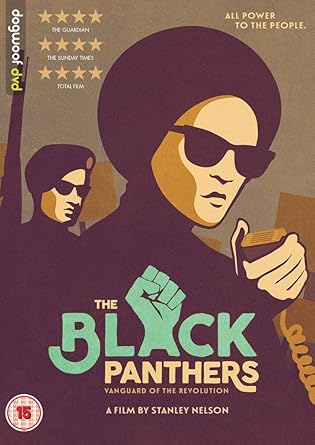
THE BLACK PANTHERS: VANGUARD OF THE REVOLUTION

The Black Panthers: Vanguard of the Revolution [DVD]

This great documentary by Stanley Nelson, first released in 2015, took the film-maker  seven years to produce. Those of us who were around in the 60s and 70s still remember the days when America was close to having a revolution on the streets, with the Panthers on the front line. The film follows a strict chronological structure and is composed of a number of main elements - first-hand original interviews with former Black Panther members and BP historians, hundreds of fabulous black and white photos and yards of original film and tv footage - all seamlessly edited together in what must have been a herculean task. It describes one clear narrative arc but this is a complex topic and still a subject of great controversy on many levels.48th Anniversary of the Founding of the Black Panther Party


Only one of the Panther's leaders is still alive: Bobby Seale , who was the original 1966 Founding Chairman & National Organiser of the Black Panther Party. His story is told in the film but he declined to be interviewed for it. His website encourages you to buy his books and other items to help raise funds for his own documentary: 'SIEZE THE TIME: The Eighth Defendant, presumably based on his books 'Seize the Time: The Story of the Black Panther Party and Huey P. Newton' and his autobiography 'A Lonely Rage' 

Here is the classic photo from November 1966 of the six original members of what was then called the Black Panther Party for Self Defence. Top left to right: Elbert "Big Man" Howard, Huey P. Newton (Defense Minister), Sherwin Forte, Bobby Seale (Chairman) Bottom: Reggie Forte and Little Bobby Hutton (Treasurer) Elbert Hoard is still alive. Sherwin Forte, who appears in the film, was a teenager at that time, as was Little Bobby Hutton, who was subsequently gunned down by a police death squad.
There was so much police violence against the black community that Huey Newton, who had studied law, exploited the  statute which said that anyone could carry a shotgun and, under the Constitution, had the right to bear arms. On this basis, the brothers patrolled the streets in cars and, when there was an incident, they stood nearby with guns, to make sure there was no brutality.

When a move was afoot to try and amend the law to make carrying guns in public a misdemeanour, the Panthers rocked up at the hearings of the California State legislature at the Capitol in Sacramento fully armed and marched into the building and the chamber where the hearing was taking place. The pictures of this are stunning. 
The Black Panther Party took off like a rocket and chapters were opening in major cities all over the US. In fact it grew too fast and became too big too soon for anyone to keep control on what was developing into a chaotic system. Huey Newton had the vision and Bobby Seale was a strong credible figure but at this point a new figure emerged on the stage. Eldridge Cleaver was a force of nature. According to one of the film's speakers he was crazy and uncontrollable, a rottweiler. From here things escalated into open armed war between the Panthers and the police.
In Oakland on 25th October 1967 there was an incident in which a policeman was fatally wounded and Huey Newton was arrested for murder and was facing execution. Thousands flocked to join the party and lead a campaign to Free Huey.
This period was when the Panthers and the 'black is beautiful' cultural wave merged and the classic Panther look captured the mainstream media's gaze. The berets, the shades, the leather jackets and the beautiful afros. It was a stunning look, carried off with style and swagger.
There are many women speaking in the film and, according to Eve Jane Clair's blog post '5 Things You Didn't Know About The Black Panther Party', at the height of the BPP's influence, 60-80% of the membership were women, although one of the film's female speakers makes it clear that male chauvinism was a hard thing to break down.
One of the most important aspects of the film is the revelations concerning the FBI's secret COINTELPRO operations  - a shorthand for counter intelligence operations. J. Edgar Hoover  made it clear that his agency would use every means at its disposal to infiltrate, expose, disrupt, discredit, neutralise and cripple the Panthers. From then on members of the organisations were constantly followed and harassed and phone tapped. As a result, many of the sisters and brothers moved into communal houses - Panther pads - for mutual protection. They launched a paper, the Black Panther News, and it was the money from sales of this that helped them survive.
Then Martin Luther King was assassinated (4th April 1968) and there were riots across America. 
On the night of April 6, 1968, Bobby Hutton was killed by Oakland Police officers after Eldridge Cleaver led him and twelve other Panthers in an ambush of the Oakland Police, during which two officers were seriously wounded by multiple gunshot wounds. The ambush, turned into a shoot-out between the Panthers and the Oakland police at a house in West Oakland. About 90 minutes later Hutton and Cleaver surrendered after the police tear-gassed the building. Cleaver stated that police shot Bobby more than twelve times after he had surrendered and had him stripped down to his underwear to verify that he was unarmed.
Charged with attempted murder, Cleaver jumped bail and fled first to Cuba and then Algeria. where he set up an international office for the Black Panthers. With Huey and Bobby Seale both in prison, David Hillyer became the new leader.
In August 1968 following massive countercultural protests in Chicago on the occasion of the 1968 Democratic National Convention. eight people were arrested and charged with conspiracy, incitement to riot amongst other charges. On of them was Bobby Seale.
Early in the course of the trial,  Seale was denied his constitutional right to counsel of his choice and was thereafter illegally denied his right to defend himself. Seale vehemently and repeatedly protested the Judge's illegal and unconstitutional actions and, on October 29, Judge Hoffman ordered Bobby Seale to be bound, gagged, and chained to a chair. For several days Seale appeared in court bound and gagged before the jury, struggling to get free and managing to make muffled sounds. Then Judge Hoffman severed Seale from the case, sentencing him to four years in prison for contempt of court, one of the longest sentences ever handed down for that offence in the US up to that time. The contempt charges against Seale were soon overturned by the U.S. Court of Appeals. The film features the remarkable court drawings of Franklin McMahon, one of which is reproduced below. 
By this time, David Hiller was replaced by Fred Hampton. One of the FBIs great concerns was the rise of "black Messiah". Hampton was non-confrontation, eloquent and charming he appealed not only to his black brothers and sisters but also to the Hispanics of the Young Lords, to churchgoers and, more worryingly for the authorities, to poor working class whites. His personal bodyguard was an infiltrated FBI agent.
When Nixon was elected in January 1969 on a strong law and order ticket, the Black Panthers became Public Enemies No 1 and the gloves were off. Armed raids began on Panther offices all over the country and, on April 2nd, 21 Panthers were arrested and charged with terrorist activities. They faced a joint total of 360 years in prison; bail was set at $100,000. After a 13-month trial, the jury found them all not guilty. 
On December 3rd 1969, the two Chicago leaders of the party, Fred Hampton and Mark Clark, were killed in a police raid at their Panther HQ. By the end of the decade, according to the party's attorney, 28 Panthers had been killed and many other members either were in jail or had been forced to leave the United States to avoid arrest.  A similar attack came a few days later at the LA office.
The following year in August, Huey Newton's case was given a retrial. The jury deliberated for four days and found him not guilty. Huey now had mythic status and he set the future path of Panthers away from armed struggle and towards looking after people in the community with free food and medical care. This not please Eldridge Cleaver who was still concerned with overthrowing the government. The split between the two factions of the party was actively encouraged by the furtive actions of the FBI who worked hard to raise paranoia levels and widen the rift. Eldridge was expelled from the party and chaos ensued, others left too and the Black Panther Party lost its way. 
Bobby Seale ran for Mayor of Oakland in 1972 and  narrowly lost. Huey Newton started losing the plot and became addicted to multiple substances. As one speaker put it, he started listening to his demons. He had a special guarded penthouse apartment and there were increased rumours and reports of his physical and sexual assaults and pistol whipping. Bobby Seale left and that was the end.
After the departure of Newton and Seale, the party's new leader, Elaine Brown, continued to emphasize community service programs. Black women were a majority in the party by the mid-1970s. By the end of that decade,the Panthers were no longer a political force.
On August 22, 1989,Huey Newton was fatally shot by Tyrone Bobinson shortly after leaving a crack house. His last words, as he stood facing his killer, were, "You can kill my body, and you can take my life but you can never kill my soul. My soul will live forever!" 
 Eldridge Cleaver died of a heart attack in 1998. Fred Hampton's family eventually received $18.5m compensation. Twenty Panthers remain in prison
.Useful Links:
Interview with Marshall "Eddie" Conway was a Leader of the Baltimore chapter of the Black Panther Party. Conway was released from prison on March 4, 2014 after having served 43 years and 11 months
Non-Fiction Film features an interview with the film's director Stanley Nelson
'The film by producer Stanley Nelson, entitled “The Black Panthers: Vanguard of the Revolution,” is a well-produced documentary with a specific focus. Nelson makes good use of footage of actual events and music from the era to serve as both a background and accompaniment for the main ingredient of this film – comments from a number of former Black Panther Party members, featuring mainly some of the so-called “rank and file” members. This is, in and of itself, a unique achievement, as most other films have never done this, but solely relied on interviews with the leaders.

'I think that Stanley Nelson produced the best film he could with the information, materials, time and money that he had to work with. He also did a good job of getting the film out there to allow as much of the public as possible the opportunity to see it.This particular film concentrates on giving the viewer a closer look at the Black Panther Party from a particular perspective. It by no means even begins to tell the “whole story” of the Black Panther Party. No one film can do that – the Black Panther Party was the most revolutionary and progressive group of freedom fighters of modern times.
'To critics and detractors of Nelson and the film, I say this: There is indeed much more of this story to tell, including more of the vital and innovative community programs and the many accomplishments of the Black Panther Party. There are still so many of our comrades locked up in dungeons for more than three and four decades. There are still many more former Black Panther Party members who have important stories to tell, and I would encourage future filmmakers to seek information from them while they are still around.'


Black Panthers unveil 50th anniversary plans with eye to future

April 22, 2016 [San Fransisco Chronicle]

The New Black Panther Party for Self-Defense (NBPP) is a U.S.-based black political organization founded in Dallas, Texas, in 1989. Despite its name, NBPP is not an official successor of the Black Panther Party.[2] Members of the original Black Panther Party have insisted that the newer party is illegitimate and have firmly declared, "There is no new Black Panther Party". The Huey P. Newton Foundation issued a news release denouncing the New Black Panther Party for Self-Defense. Its release reads in part:

“ As guardian of the true history of the Black Panther Party, the Dr. Huey P. Newton Foundation, which includes former leading members of the Party, denounces this group's exploitation of the Party's name and history. Failing to find its own legitimacy in the black community, this band would graft the Party's name upon itself, which we condemn. [T]hey denigrate the Party's name by promoting concepts absolutely counter to the revolutionary principles on which the Party was founded. The Black Panthers were never a group of angry young militants full of fury toward the white establishment. The Party operated on love for black people, not hatred of white people.”
Bobby Seale, one of the co-founding members of the original Black Panther Party, spoke out against the New Black Panther Party. Calling the rhetoric of the New Black Panther Party xenophobic, he spoke of their remarks as absurd, racial, [and] categorical. “ Just to hate another person because [of] the color of their skin or their ethnicity—we don't do that. That's not what the goal objective is. The goal objective is human liberation. The goal objective is the greater community cooperation and humanism. The goal objective is to get rid of institutionalized racism...." [Source: Wikipedia]

According to the Mapping Police Violence website:

Police killed at least 346 black people in the U.S. in 2015


Saturday, April 23, 2016

CULT BOOKS: MATTHEW DE ABAITUA'S SF WORLDS


By way of introduction: Matthew De Abaitua is a lecturer in creative writing and science fiction at the University of Essex. I recall that Matthew did a major project on the history of science fiction for, I believe, the Channel 4's Film Four website. 

For a period of a couple of years, he and his family lived in Lewes (my home town), during which time we often spent long evenings discussing austerity measures and shooting the breeze on a wide variety of topics, which was always a great pleasure. During this period, MD wrote an excellent book on 'The Art of Camping: The History & Practice of Sleeping Under the Stars'. It's not something I've done since Glastonbury 1982 but the book is great. See Previous Post here. 

These are two of the three science fiction novels, written by Matthew, the first one being 'The Red Men' [Gollancz]. We are informed by the author that each one can be read as a stand-alone book. One character is common to all. 'If Then' was published in 2015; 'The Destructives' in 2016 - both by the delightfully named Angry Robot imprint. I read them both in the course of three days, during which time the Queen turned 90 and Prince died. Reading these books did not help my feelings of reality.

To my surprise, 'If Then' is set in and around Lewes. Everything has fallen apart, including the internet and all things digital - a process known as The Seizure - and society is being run by artificial intelligences known collectively as the Process who are using Lewes and other communities as a test bed. The inhabitants are required to have some kind of brain operation that links them into the network and their psychological and biological data is constantly monitored by sophisticated algorithms which assesses each person's value. Those surplus to requirements are annually removed from the community by a bailiff named James, the story's main character, who achieves this by donning a vast set of armour that turns him into an unstoppable beast. Right at the beginning, he meets a World War 1 soldier named Hector who turns out to artificially manufactured. This links later in the story to a replay of that period - but with strange twists.

It's a remarkable read even if you don't live in Lewes - but if you do live in Lewes it's a very strange experience indeed as it takes you down streets you walk on every day and across familiar landscapes. Matthew has successfully plugged into the deeper levels of this ancient town and the primeval downland that surrounds it - a green and white chalk world that has a spirit all of its own.

The book is also embedded in a deep knowledge of British science fiction and the historic period that it so cleverly re-imagines. The ghosts of Kipling and Wells are here but one is also reminded of the sf readings of one's youth - John Wyndham in particular. Its a work that also chimes in with the New Worlds  writers especially the great Mike Moorcock and Keith Roberts, whose book 'Pavane' I loved so much -  a fable of an alternative England of traction engine masters 

'If Then' is by any measure an extremely fine work s which stands shoulder to shoulder with some of the best for several reasons. The overall concept is complex and original and is handled with complete confidence. The characters are fully formed and the sheer quality of both the vivid descriptive passages and the believable dialogue makes the book a complete cerebral and visceral three-dimensional experience.

MD also brings these skills sets to bear in 'The Destructives'. This is also set in a period after the Seizure and part of it is set on the Sussex Coast at Newhaven - except that the whole area has been devastated and is now dominated by a vast city-sized abomination called Novio Magus. As for the rest we're out in the universe - on the far side of the moon and on Europa, one of Jupiter's moons. All the artificial intelligence on earth, known in the book as the 'emergence' has left the mess that is human Earth behind and decamped to a ring of bases near to the sun. They travel through space in sailships. There's a robot called Dr Easy whose job it is to monitor every single action, thought and incident of  Theodore's life, the main character.

Again the story contains the DNA references of past writers in the genre - strains of William Gibson, J.G. Ballard and Samuel R. Delaney. I don't mean that it's derivative rather that it draws strength and lineage from these other works but stands out on it's own, a distinctive and grand work of the imagination. You don't need a VR headset to appreciate this work of art, just eyes and a brain.

See MDA's website: www.harrybravado.com